15 Small Closet Organization Ideas That Actually Last
Images in this post are AI-generated illustrations. Why?
Heads up: this post contains affiliate links. If you buy through them, we may earn a small commission at no extra cost to you. How it works. As an Amazon Associate, we earn from qualifying purchases.
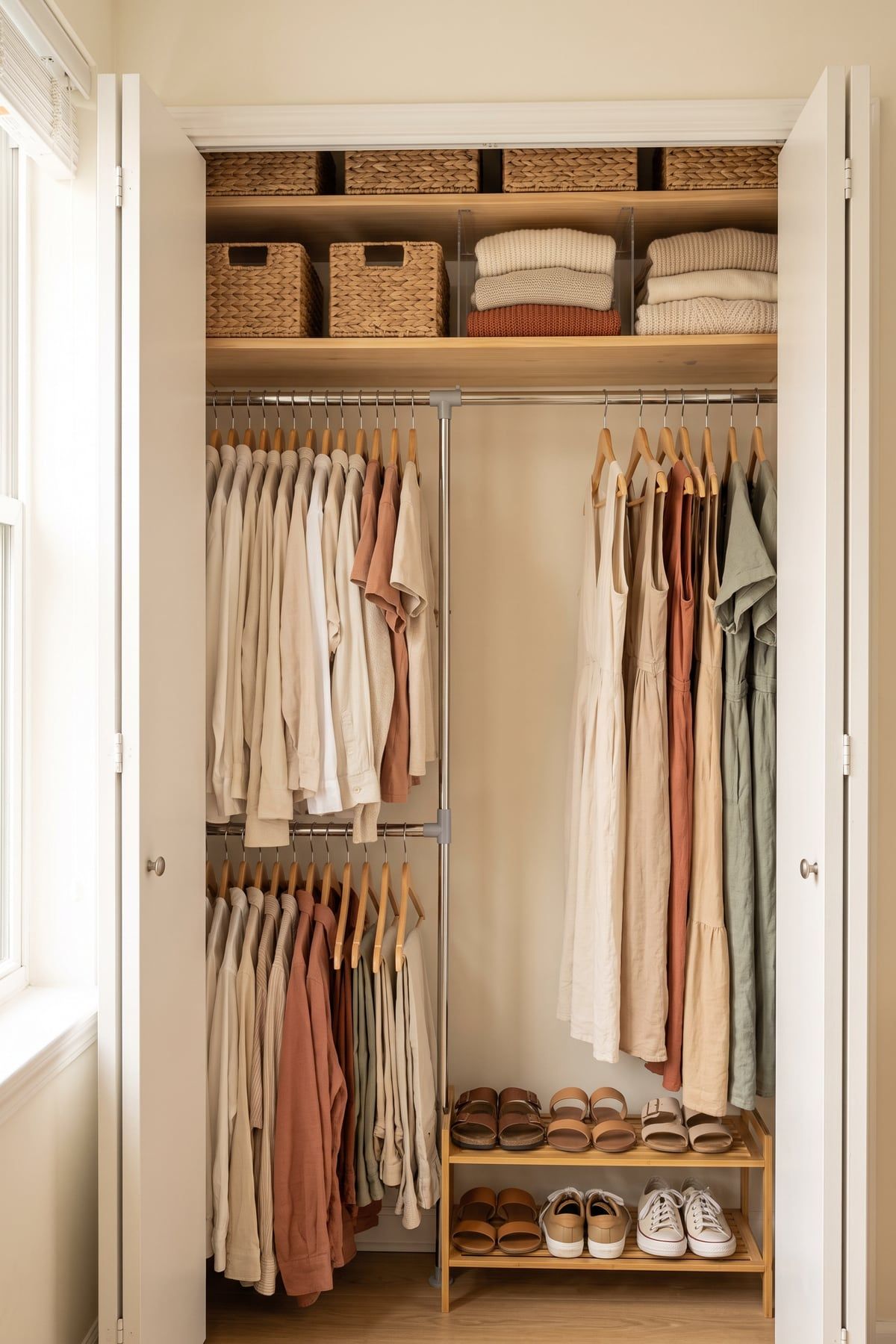
Small closet organization ideas only last when you edit first and then give every category one obvious spot — otherwise the closet is messy again after one week of laundry. Bins and hangers help, but the system matters more than the products. These 15 small closet organization ideas start with less stuff, then double the hanging space, divide the shelves and put the door to work, all without drilling.
In this post
- Closet numbers to know
- Edit firstideas 1–3
- Double the hanging spaceideas 4–7
- Shelves that stay neatideas 8–10
- Floor and doorideas 11–13
- Keep it workingideas 14–15
- Our top picks
- FAQ
Closet numbers to know
Measure your closet before you buy anything; most organizers fail because they don’t fit. Rough guides for a typical reach-in closet:
| What | Typical size |
|---|---|
| Reach-in closet depth | About 24 inches |
| Depth needed for hangers | About 20 to 24 inches (hangers are around 17 inches wide) |
| Shirts and tops, hanging length | About 36 to 40 inches |
| Dresses and long coats | 50 to 70 inches or more |
| Double-hang rods | Upper around 80 inches, lower around 40 inches |
Edit first
The cheapest closet organizer is fewer clothes.
1. Empty it and sort into three piles
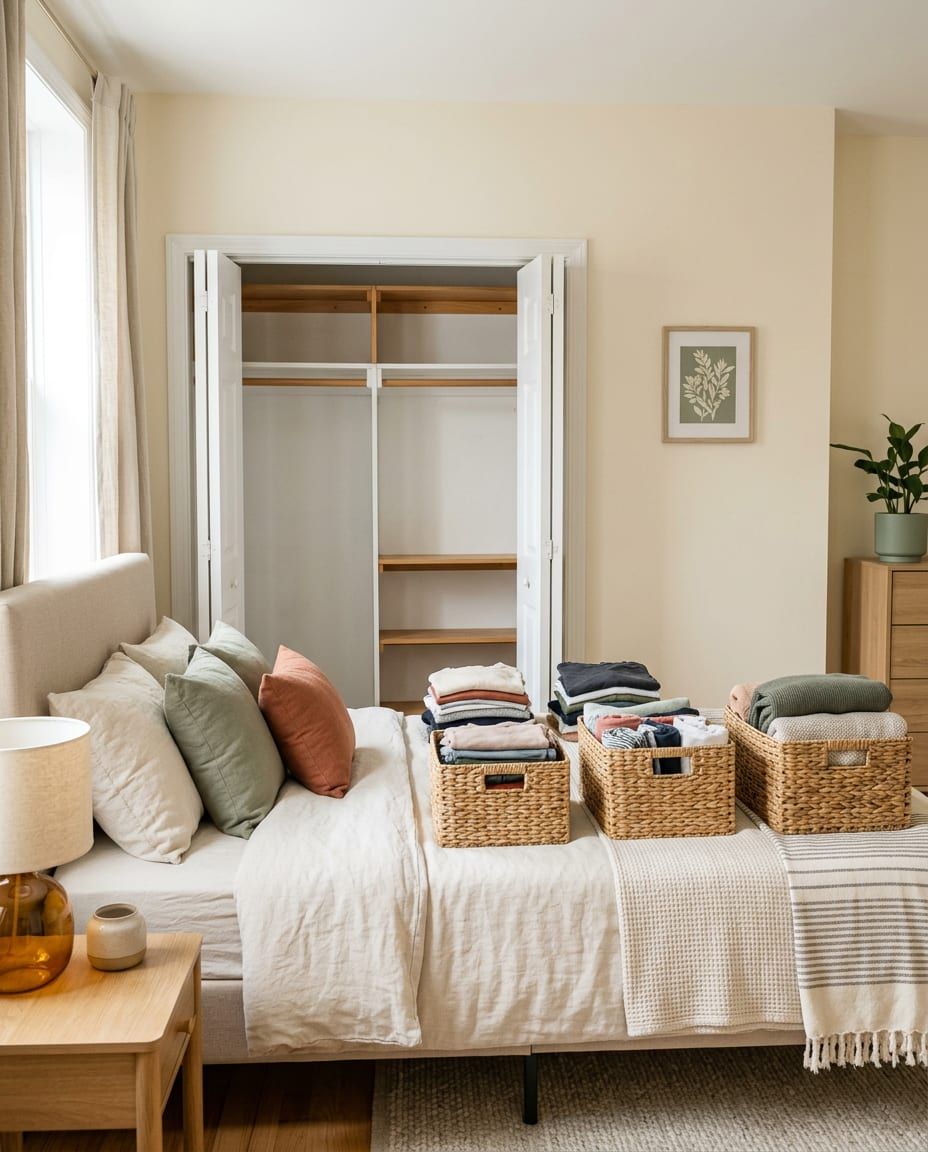
Take everything out and sort it into keep, donate and store. Be honest about fit and how often you wear things: if it hasn’t been worn in a year, it probably won’t be. Wipe the shelves and rod while the closet is empty, and only put back what you actually wear this season.
Why it works: You can’t organize things you don’t wear; editing makes every other idea work better.
2. Turn your hangers around
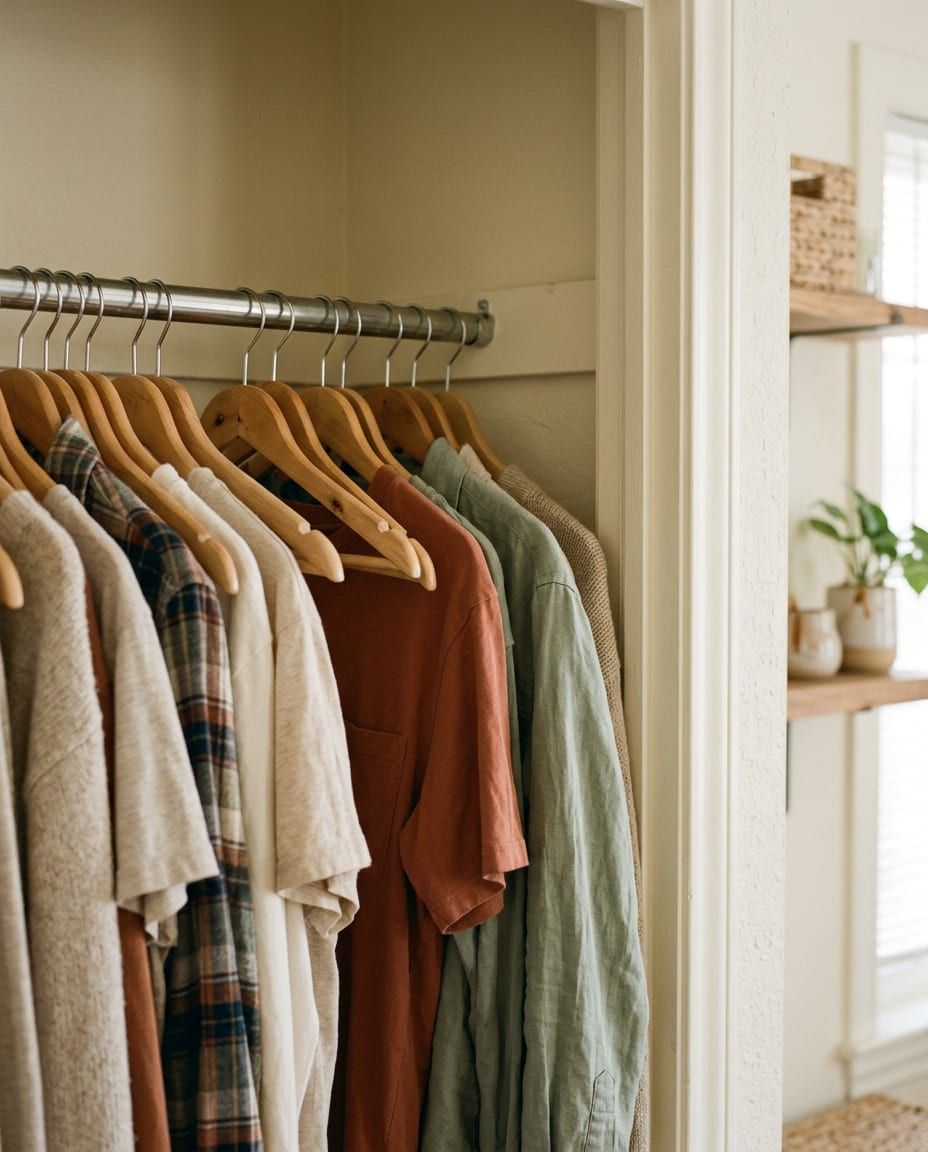
Hang everything with the hanger hooks facing the back of the closet. When you wear something and put it back, turn the hanger the normal way. After three to six months, the hangers still facing backward show you what you don’t wear. It’s an easy, honest way to decide what to donate.
Why it works: It shows you, without guessing, which clothes you really wear.
3. Store off-season clothes elsewhere
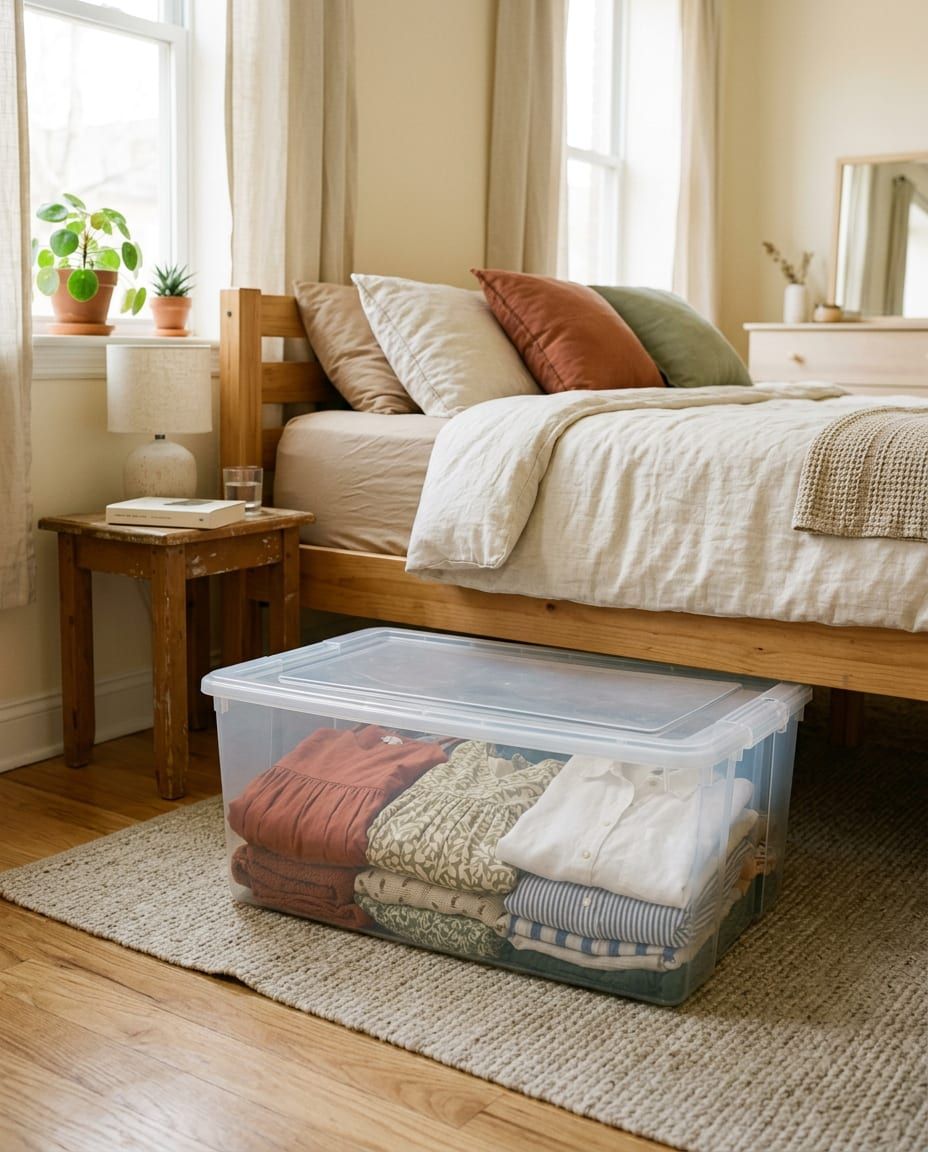
Move summer clothes out in winter and winter clothes out in summer. Lidded bins under the bed or vacuum storage bags on a high shelf work well. Swap twice a year, and use the swap as a quick edit. Our gifts for small apartment dwellers include vacuum bags, if you want a good set.
Why it works: A small closet only has to hold this season, which can free up a lot of space.
Double the hanging space
Most small closets waste the space under short clothes. These fixes use it.
4. Switch to slim, matching hangers
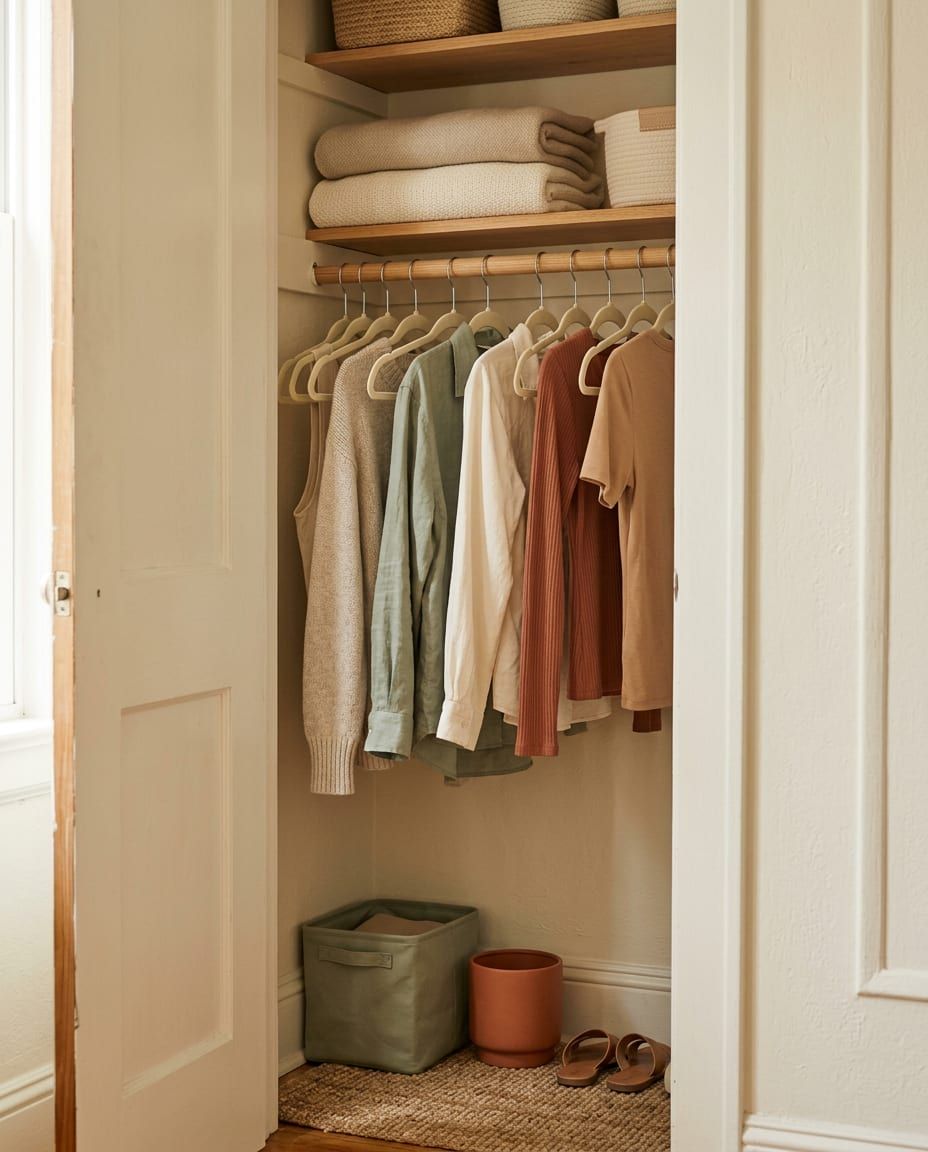
Bulky plastic and wooden hangers take up a lot of rod space. Slim non-slip hangers are much thinner, so the same rod holds noticeably more, and the soft finish keeps tops from sliding off. Switch in one go if you can; a row of matching hangers looks instantly tidier. Keep a few sturdy wooden ones for heavy coats.
Why it works: Slim hangers take less rod space, and matching ones make the closet look calm.
Slim non-slip hangers (set)
Matching and thin; more fits on the rod.
Check on Amazon(opens in a new tab)5. Add a second rod with an extender
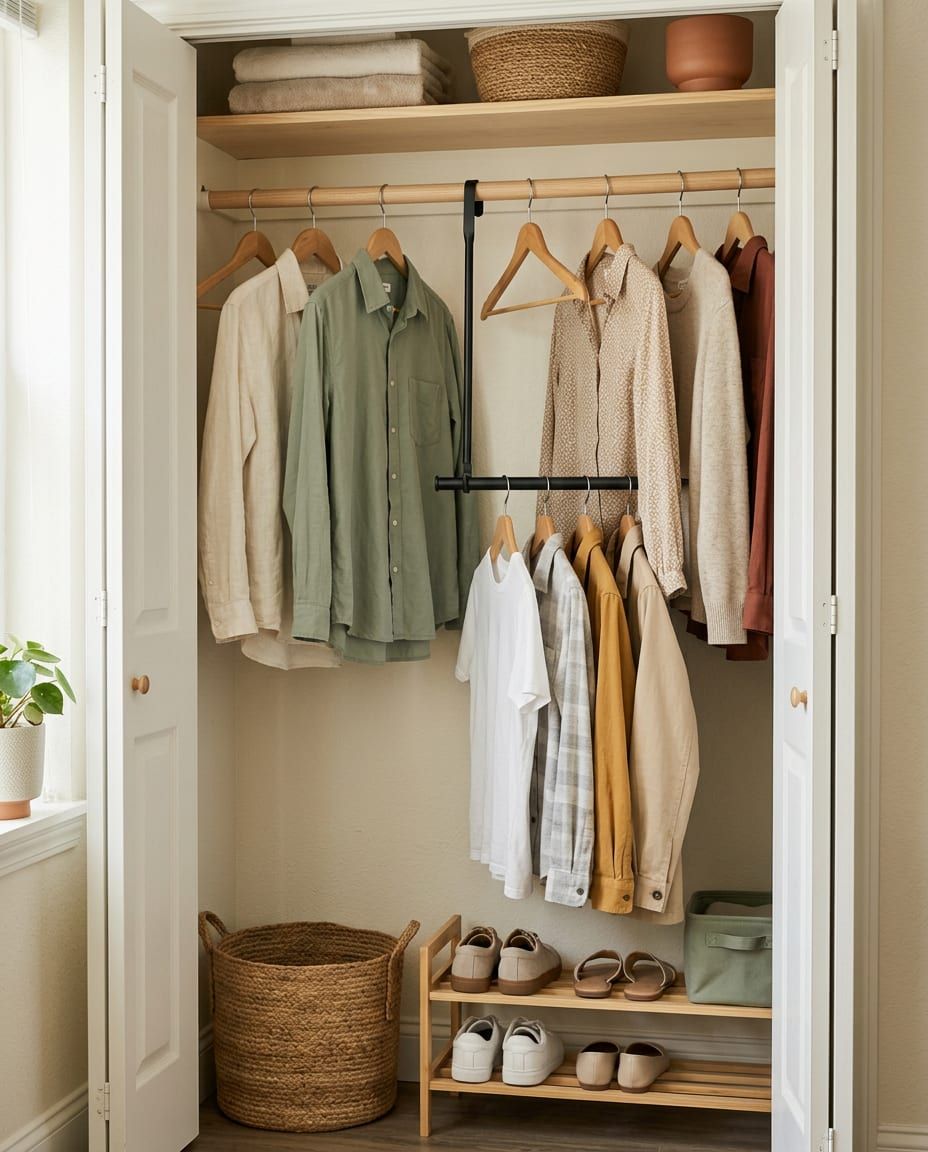
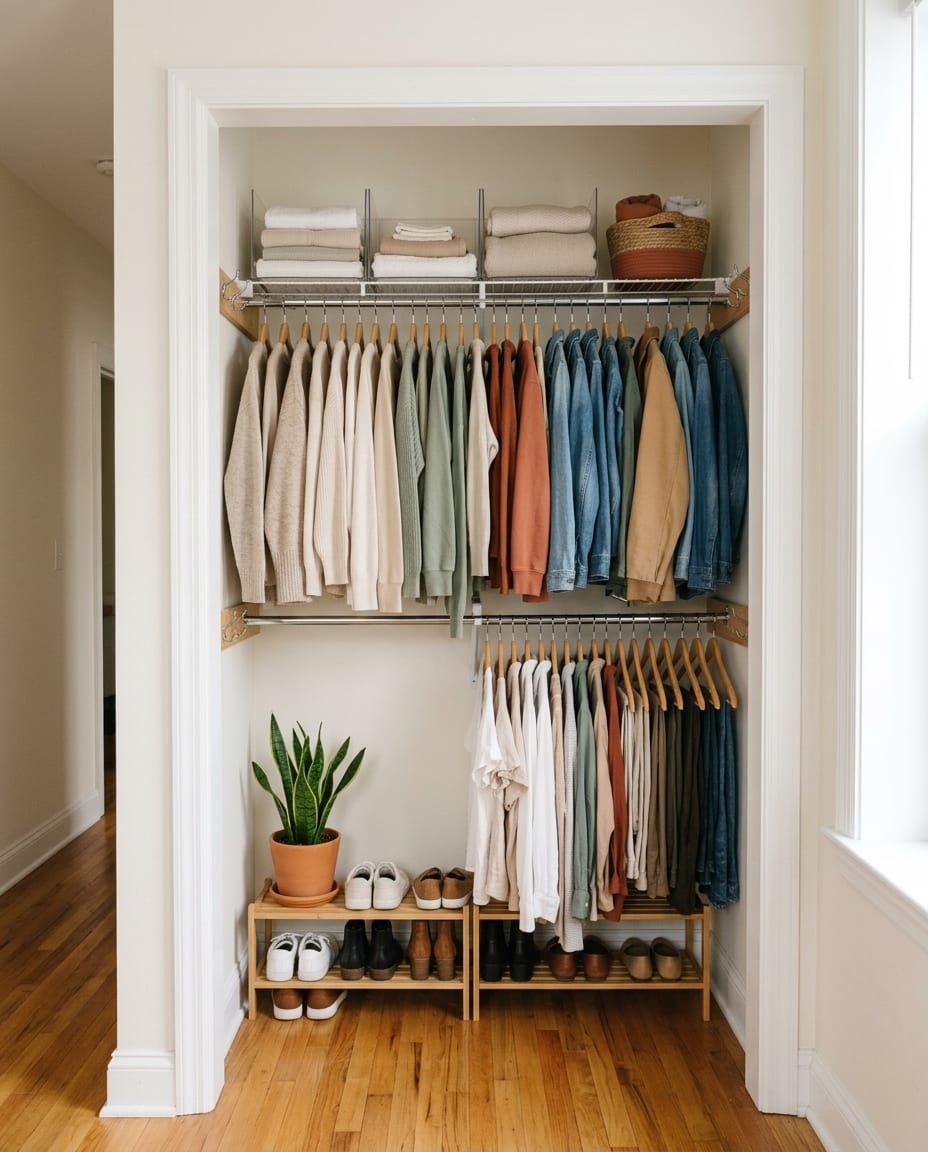
A hanging rod extender hooks over your existing rod and adds a second rod below it, about halfway down. Use it for shirts, skirts and folded pants, which only need 36 to 40 inches of height. Check the weight limit, and don’t overload an older rod with heavy coats on both levels.
Why it works: Short clothes only need half the height; a second rod uses the other half.

Hanging closet rod extender
Hooks over the existing rod to add a second level.
Check on Amazon(opens in a new tab)6. Hang by length
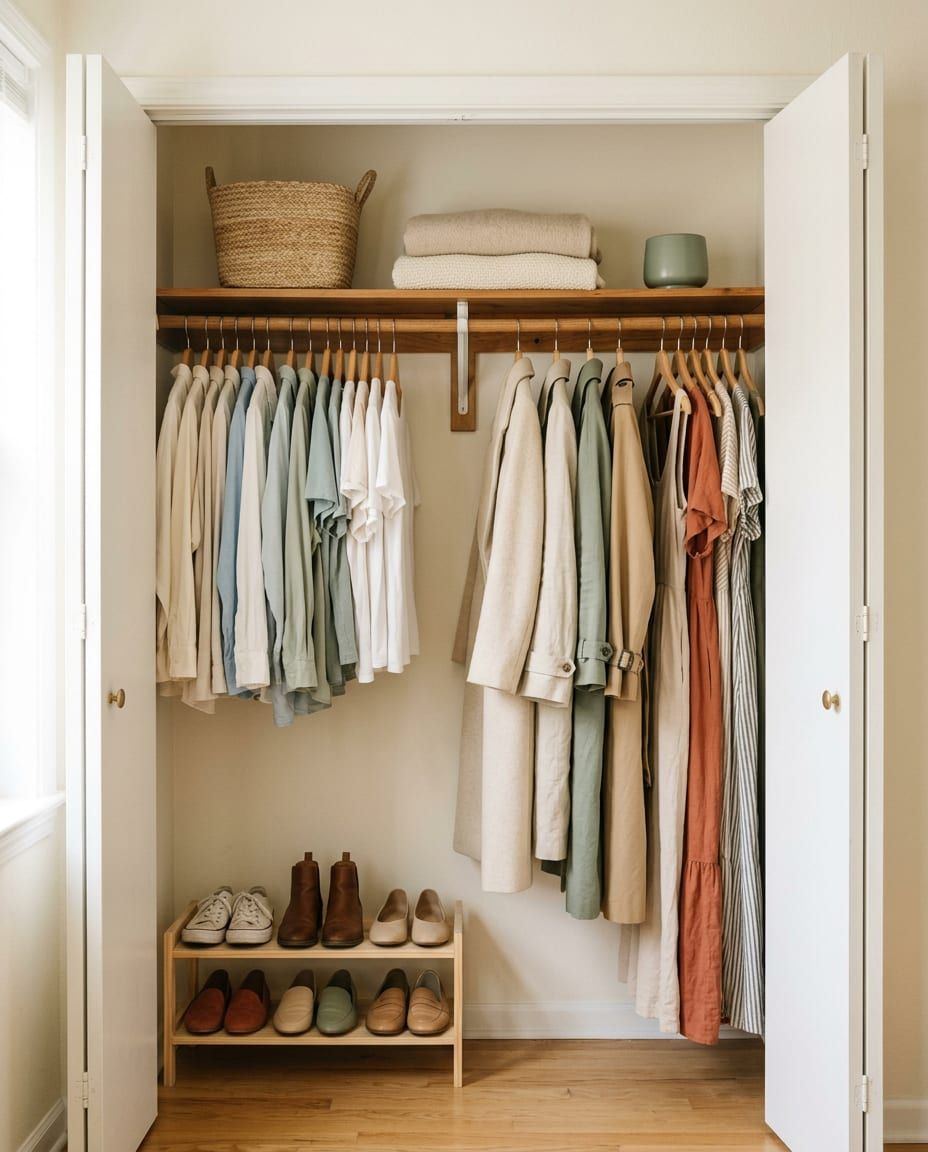
Put all long items — dresses, long coats — on one side of the closet, and short items on the other. That leaves open floor under the short side for a shoe rack or a bin. It also makes the double rod from idea 5 work, since nothing long hangs into it.
Why it works: Grouping long and short items frees a full-height space and a space under the short ones.
7. Add hanging fabric shelves
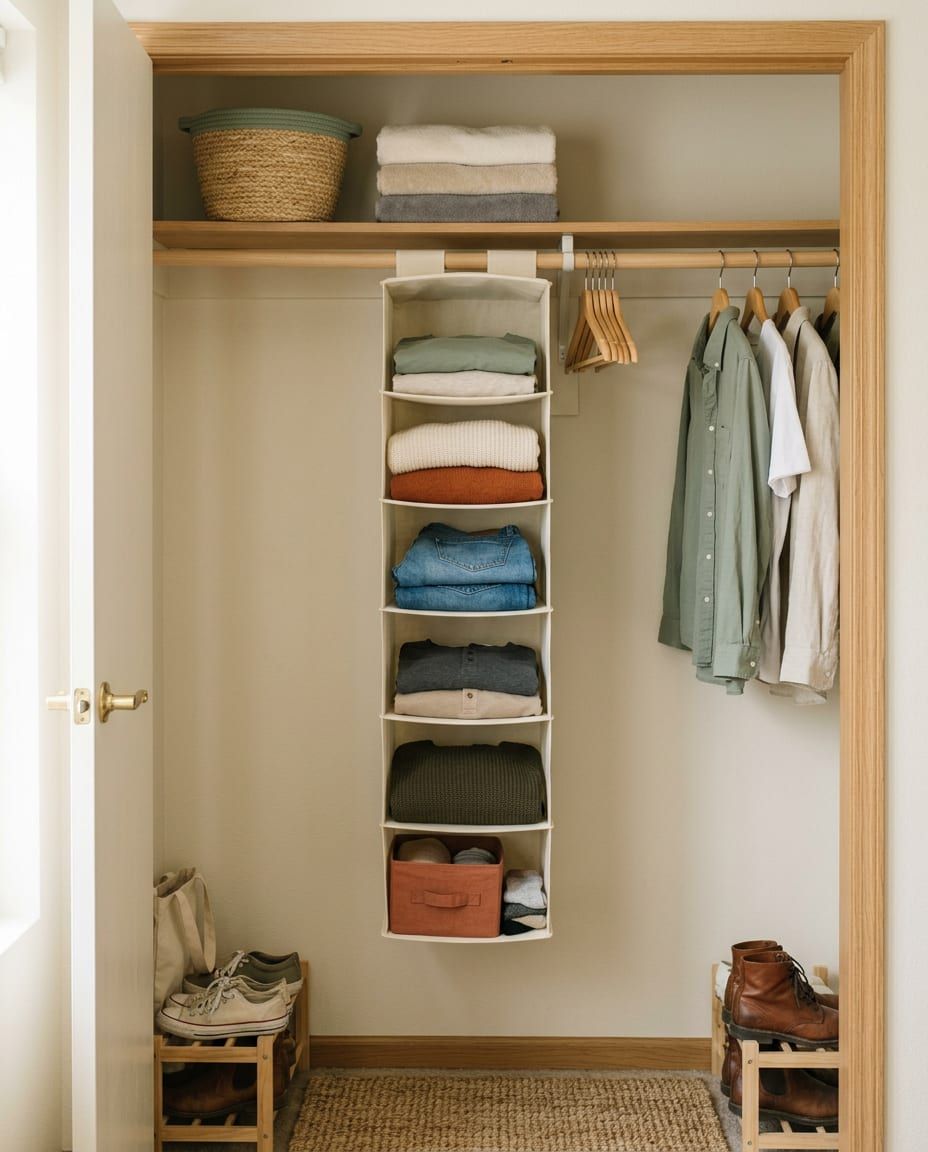
A fabric hanging organizer attaches to the rod with hook-and-loop straps or hooks and gives you five or six cubbies for sweaters, jeans and T-shirts. It’s a good fix for closets with only a rod and one high shelf. Fold heavy sweaters instead of hanging them, so they don’t stretch.
Why it works: Shelves that hang from the rod add folded storage to a closet with no shelves.
Hanging fabric closet shelves
Velcro or hooks over the rod; no tools.
Check on Amazon(opens in a new tab)Shelves that stay neat
Folded stacks fall over and high shelves turn into piles. These keep them in order.
8. Clip dividers onto the shelf
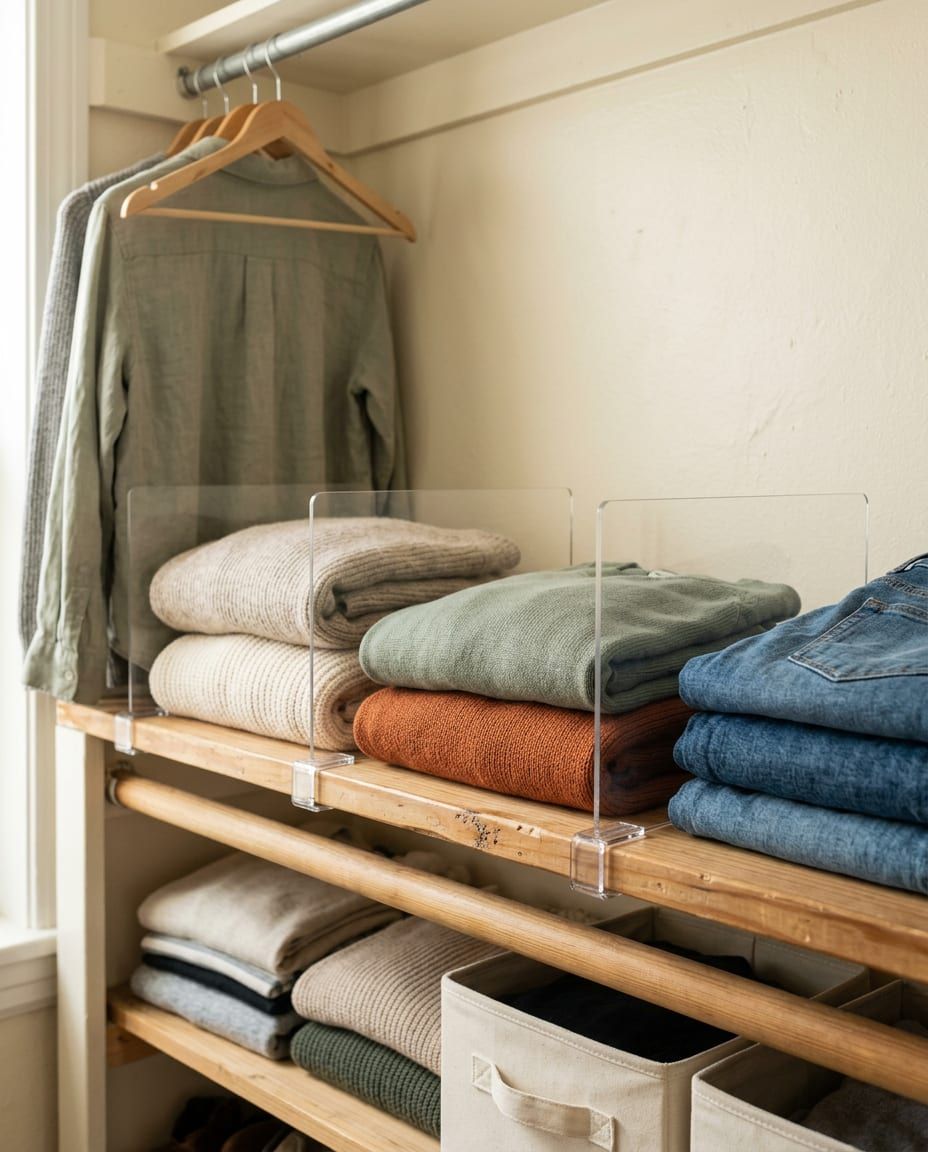
Clip-on shelf dividers slide onto a wood or wire shelf and keep each stack of sweaters or jeans standing on its own. Check the thickness of your shelf before you buy; many dividers fit shelves up to about an inch thick. Keep stacks to about 10 inches high so you can pull one out without the others falling.
Why it works: Dividers stop folded stacks from leaning into each other and toppling.

Clip-on shelf dividers
Slide onto the shelf; check shelf thickness.
Check on Amazon(opens in a new tab)9. Use lidded bins on the top shelf
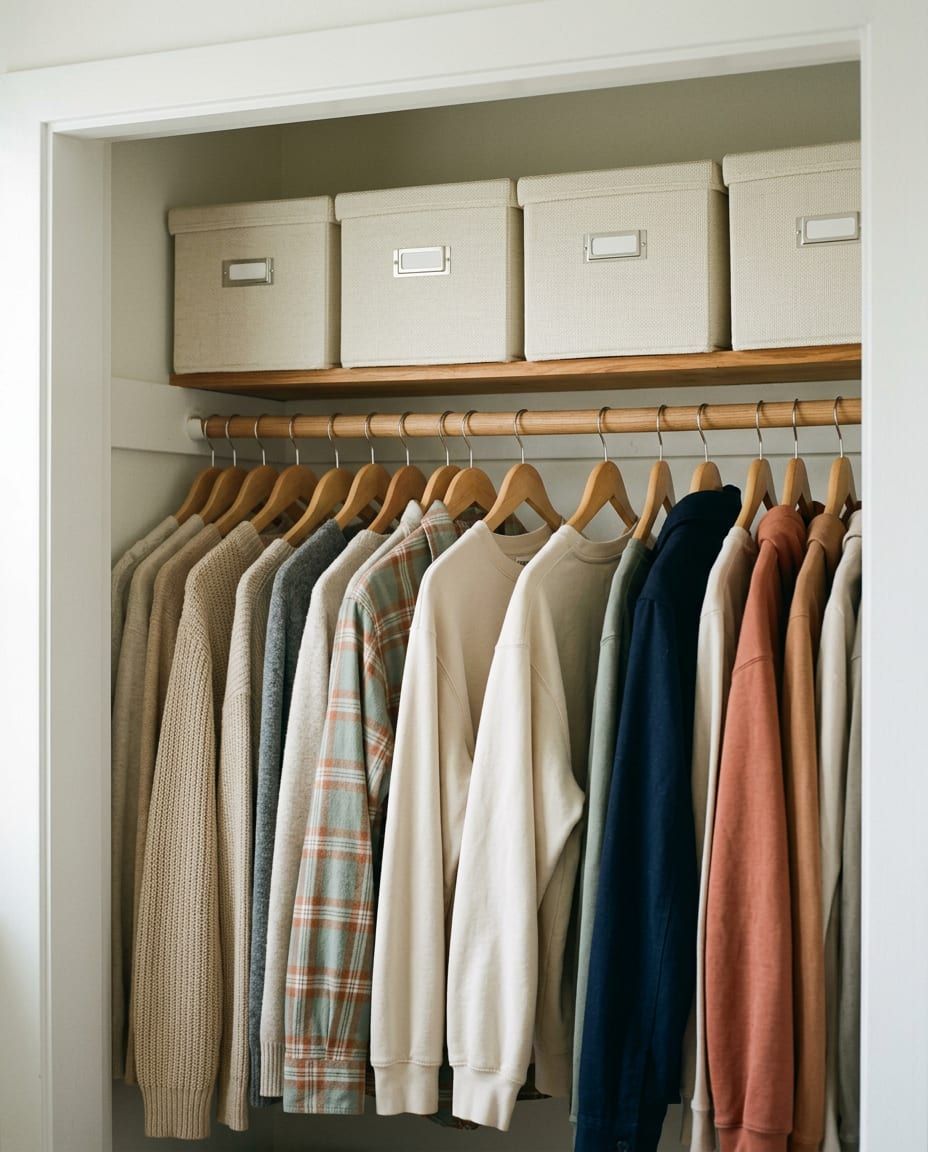
The top shelf is for things you use less often: bags, scarves, spare bedding, out-of-season clothes. Lidded fabric bins keep them dust-free and stackable. Measure the shelf height and depth first, and label the front of each bin so you know what’s inside without climbing up.
Why it works: Bins turn a high shelf of loose stuff into neat, labeled boxes.

10. Add a shelf riser
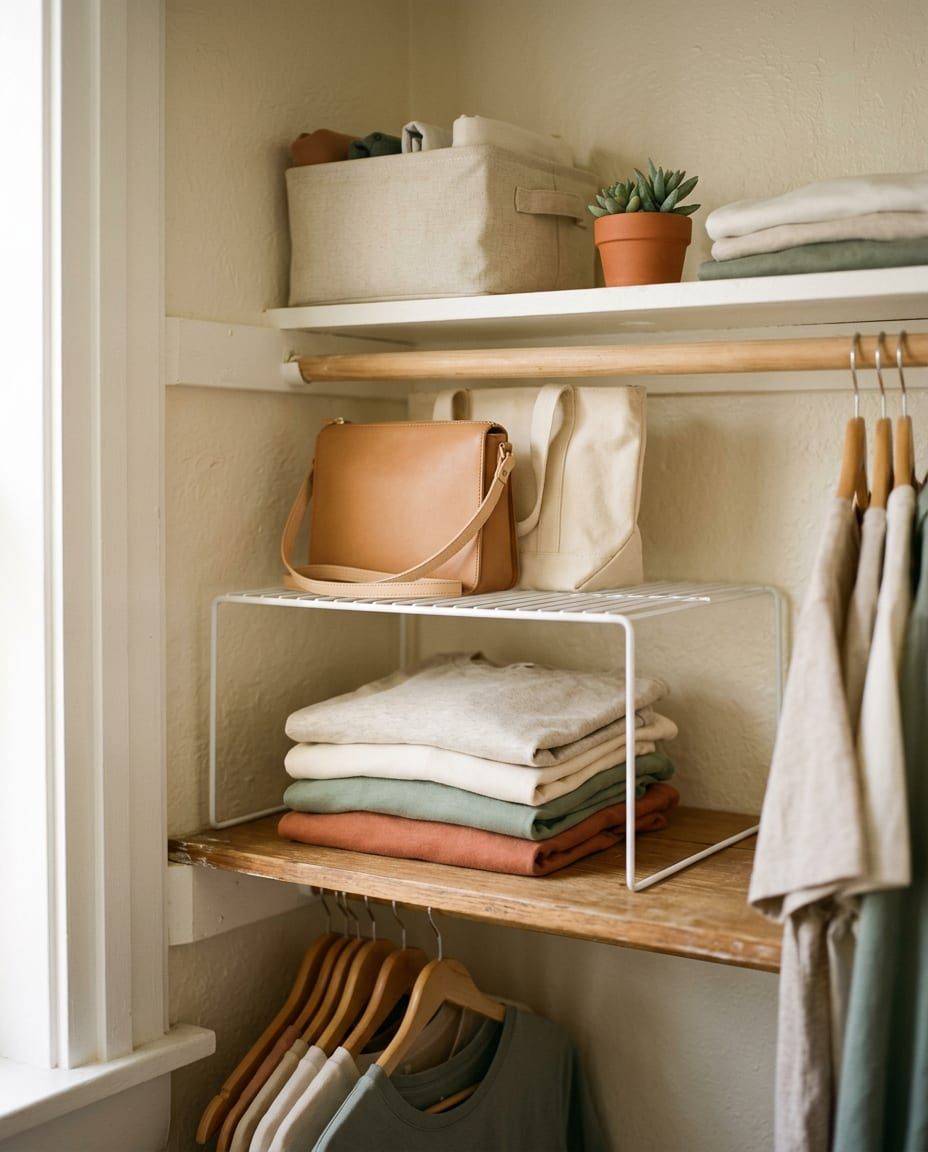
If the closet shelf has a lot of empty height, a simple shelf riser creates a second level. Put bags or folded T-shirts underneath and lighter bins on top. Choose one that’s narrower than the shelf depth so it doesn’t hang over the edge.
Why it works: A riser turns one tall, wasted shelf into two usable levels.
Floor and door
The floor and the back of the door are the easiest space to add.
11. Put shoes on a stackable rack
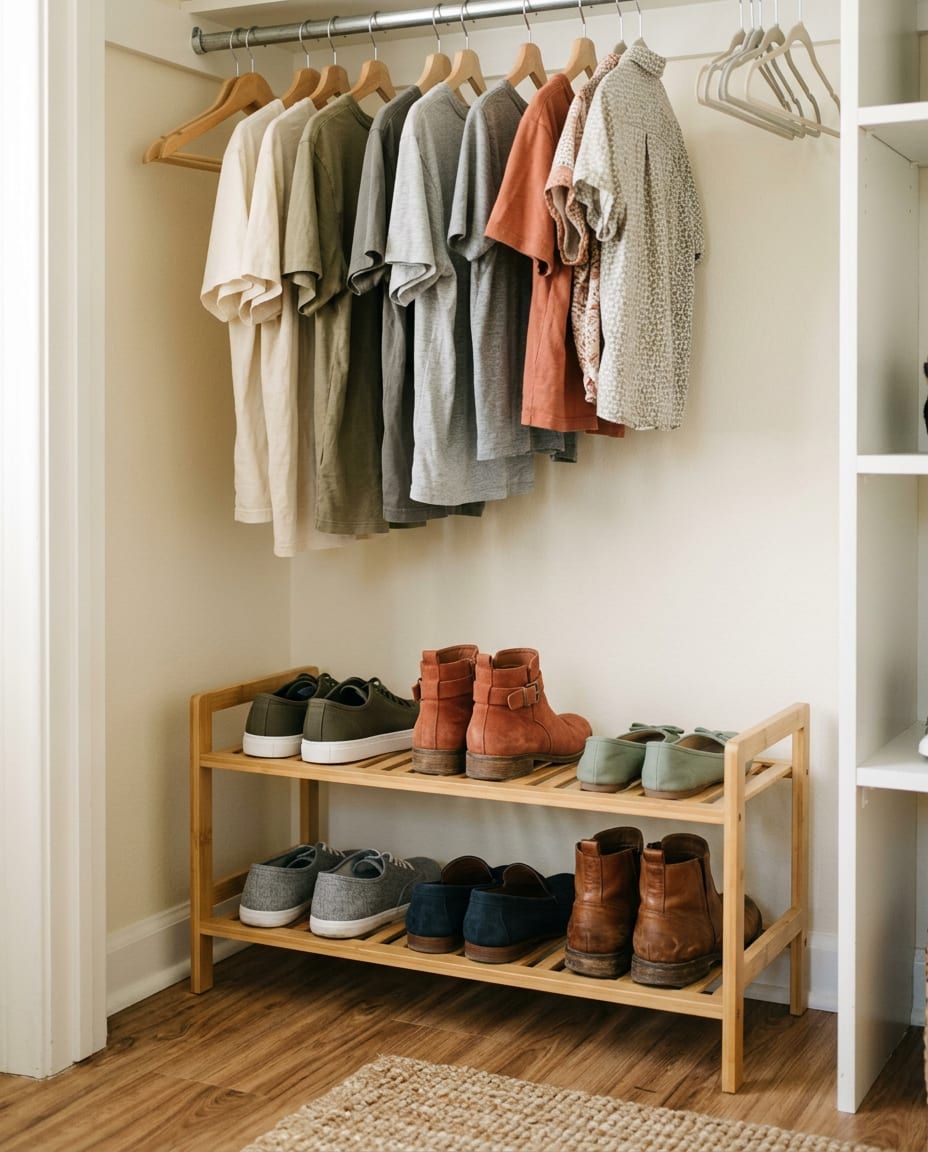
A stackable two-tier shoe rack fits under the short side of the closet and holds six to eight pairs. Keep everyday shoes by the front door and the rest here. If you have more shoes than space, stack a second rack or use clear shoe boxes for the ones you wear least.
Why it works: A two-tier rack fits under short hanging clothes and keeps shoes off the floor.
12. Hang an over-the-door organizer
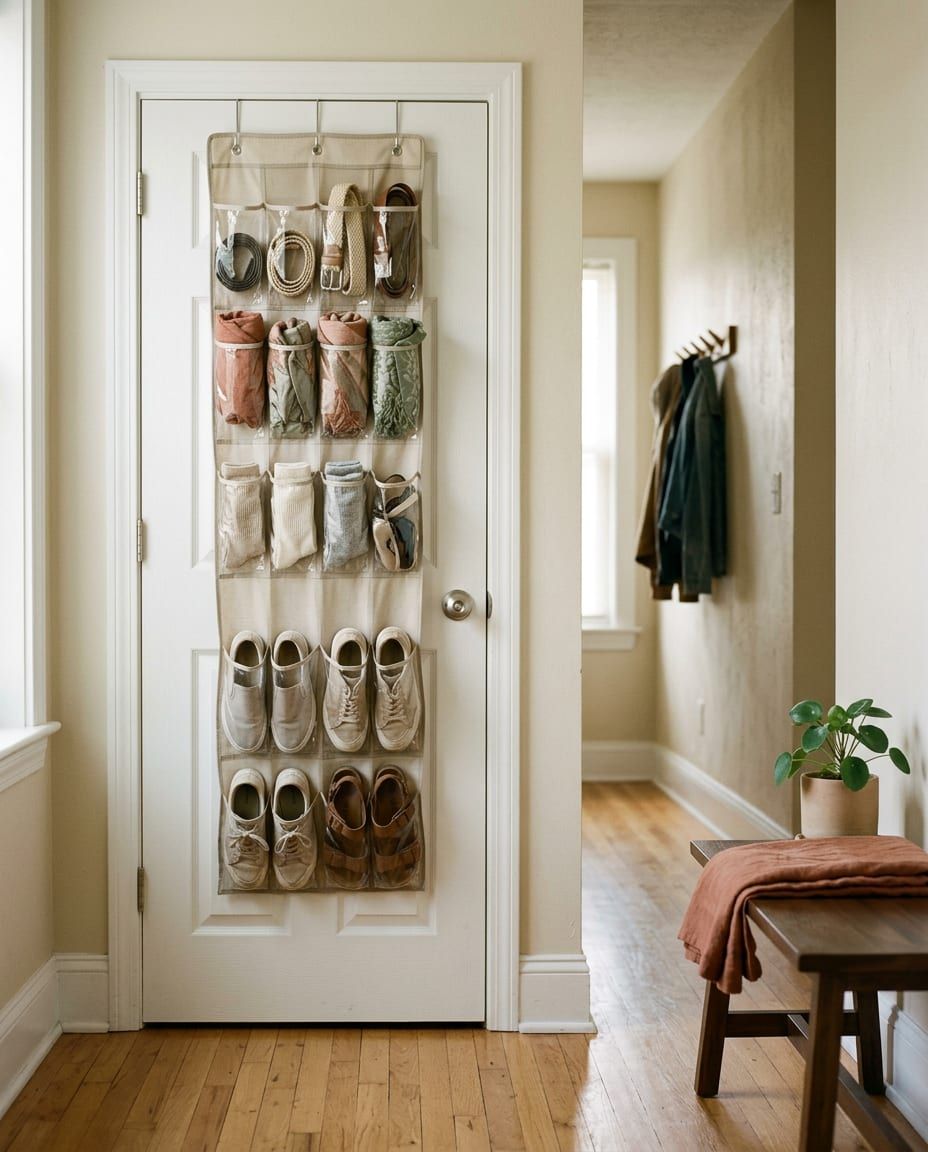
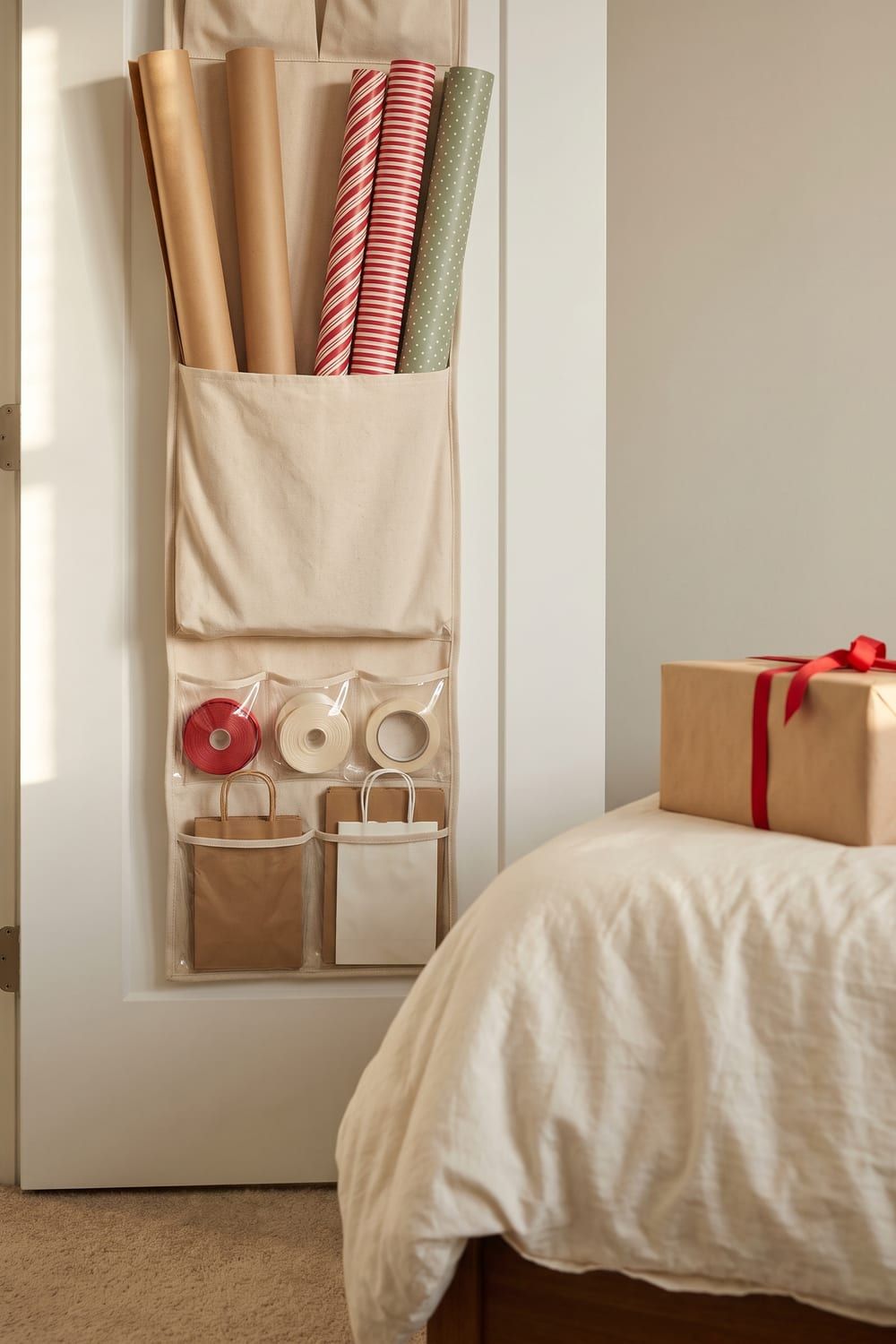
A clear-pocket over-the-door organizer holds belts, scarves, socks or flat shoes. Check that the hooks fit your door and that the door still closes with the organizer full. If the closet has sliding or bifold doors, hang it on the bedroom door instead.
Why it works: The back of the closet door is free storage you see every day.
13. Add a hook for tomorrow’s outfit
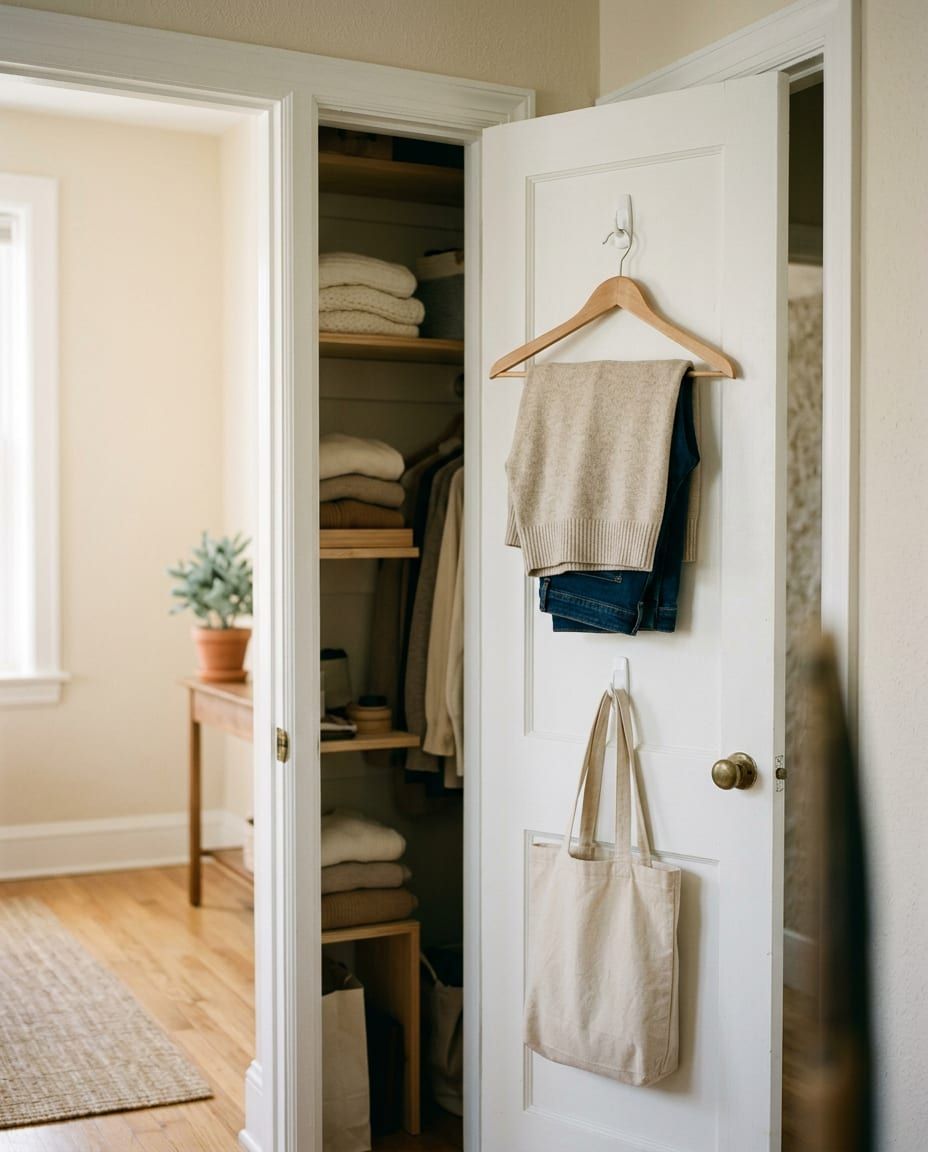
A removable adhesive hook or two on the inside of the closet door holds tomorrow’s outfit, a bag or a robe. It stops the “chair of clothes” before it starts. Check the weight limit and test the adhesive on a hidden spot of painted doors first.
Why it works: A spot for tomorrow’s clothes and today’s bag keeps them off the bed and the chair.
Keep it working
A system only lasts if it’s easy to keep up.
14. Light up the closet

Many small closets have no light. A battery or rechargeable motion-sensor light bar sticks inside the door frame and turns on when you open the door. Choose warm white so colors look natural, and recharge it when it starts to dim. Our small entryway ideas use the same trick by the front door.
Why it works: You can’t keep a closet tidy if you can’t see into the back of it.
15. Do a 10-minute weekly reset
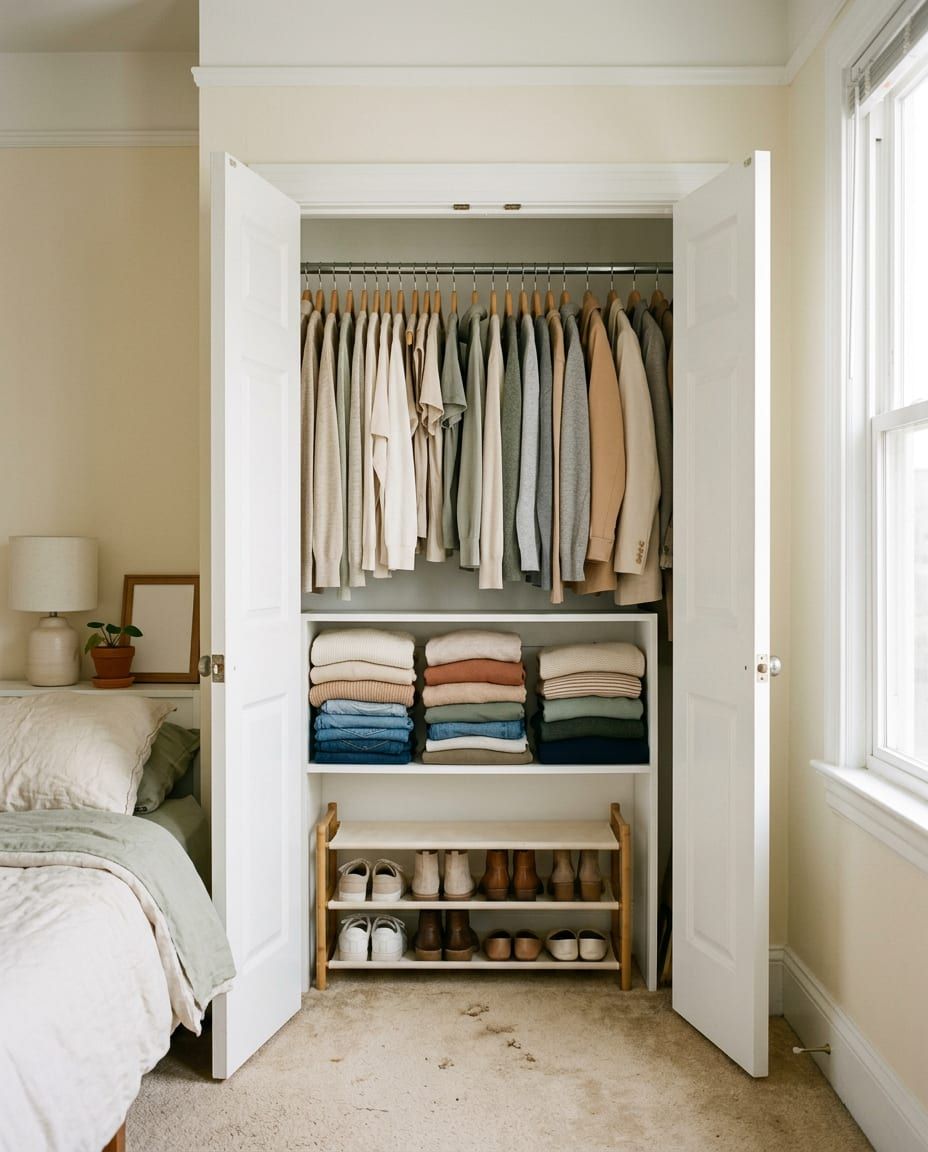
Once a week, spend 10 minutes putting things back where they belong: hangers back on the rod, stacks straightened, shoes on the rack. Add one rule: when something new comes in, something old goes out. That’s what keeps a small closet organized long after the first weekend.
Why it works: Small, regular resets beat a big clean-out every few months.
Our top picks
The short list, if you just want to get it done this weekend. We don’t list prices because they change daily — check the current price on the retailer’s site.
| Product | Best for | Link |
|---|---|---|
| Slim non-slip hangers (set)Matching and thin; more fits on the rod. | Shirts, tops and dresses | Check on Amazon(opens in a new tab) |
| Hanging closet rod extenderHooks over the existing rod to add a second level. | Doubling space for short items | Check on Amazon(opens in a new tab) |
| Hanging fabric closet shelvesVelcro or hooks over the rod; no tools. | Sweaters and folded items | Check on Amazon(opens in a new tab) |
| Clip-on shelf dividersSlide onto the shelf; check shelf thickness. | Keeping folded stacks upright | Check on Amazon(opens in a new tab) |
| Lidded fabric storage binsMeasure shelf height and depth first. | The top shelf | Check on Amazon(opens in a new tab) |
| Stackable shoe rackTwo tiers fit under short hanging clothes. | The closet floor | Check on Amazon(opens in a new tab) |
Shop the look
Frequently asked questions
How do you organize a small closet so it stays organized?
Edit first, then give every category one spot: shirts on one rod, long items on one side, folded things in dividers, shoes on a rack. Keep only this season in the closet and do a short weekly reset.
How can I double the hanging space in a small closet?
Hook a rod extender over the existing rod to add a second level for short items like shirts and skirts, and switch to slim, matching hangers. Long items stay on one side where they can hang full length.
How deep does a closet need to be for hanging clothes?
Most hangers are about 17 inches wide, so hanging clothes need roughly 20 to 24 inches of depth. Many reach-in closets are about 24 inches deep.
Are rod extenders and hanging shelves renter-friendly?
Yes. They hook or strap over the existing rod and need no tools. Check the weight limit of the rod and the extender, and don't overload a single old rod with heavy coats.
What should go on the top shelf of a small closet?
Things you use less often: out-of-season clothes, spare bedding, bags. Use lidded bins or baskets so the stacks don't topple, and label them so you know what's inside without pulling them down.
Edit, then organize
Start by taking things out, not by buying bins. For more ideas, see our vertical storage ideas for small spaces, our organization gifts, or all bedroom and closet ideas.
Free printable
Get the free Small Space Declutter Checklist
A printable, room-by-room checklist — plus one cozy small-space idea a week. No spam, unsubscribe anytime.
By subscribing you agree to our Privacy Policy.