15 Small Entryway Ideas for Winter (Boots, Coats, No Closet)
Images in this post are AI-generated illustrations. Why?
Heads up: this post contains affiliate links. If you buy through them, we may earn a small commission at no extra cost to you. How it works. As an Amazon Associate, we earn from qualifying purchases.
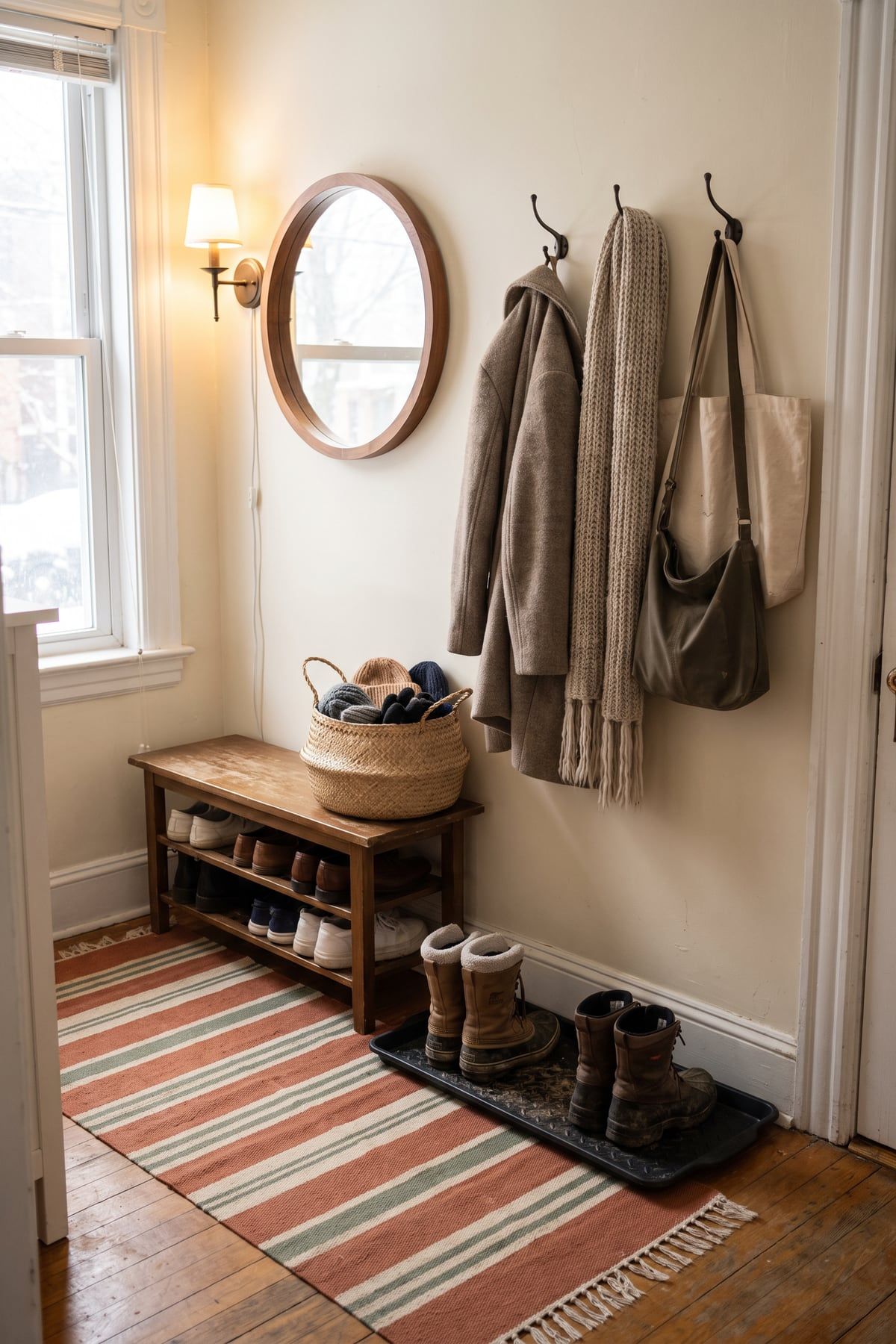
The best small entryway ideas for winter give boots, coats and keys one spot each within a few feet of the door — even when there is no closet. In a small apartment, the front door often opens straight into the living room, and in January that means puddles, salt and a coat on every chair. These 15 ideas build a working entry out of a bare wall, renter-friendly and mostly under $100.
In this post
- Measure first: the numbers that matter
- Boots and wet floorsideas 1–4
- Coats without a closetideas 5–8
- Sit, drop and goideas 9–12
- Light and a welcomeideas 13–15
- Our top picks
- FAQ
Measure first: the numbers that matter
A small entry works when the door can still swing open and you can walk past everything without turning sideways. Before you buy anything, measure the wall next to the door and check these:
| What | Rule of thumb |
|---|---|
| Clear walking path | About 36 inches wide if you can manage it |
| Door swing | Nothing taller than the mat inside the door’s arc |
| Bench | About 18 inches high, 12 to 14 inches deep |
| Coat hooks | About 60 to 66 inches high for adults, 36 to 42 inches for kids |
| Boot tray | Around 30 by 15 inches holds two or three pairs |
Boots and wet floors
Start with the floor: winter entries fail when snowmelt and salt spread past the door.
1. Put a boot tray right by the door
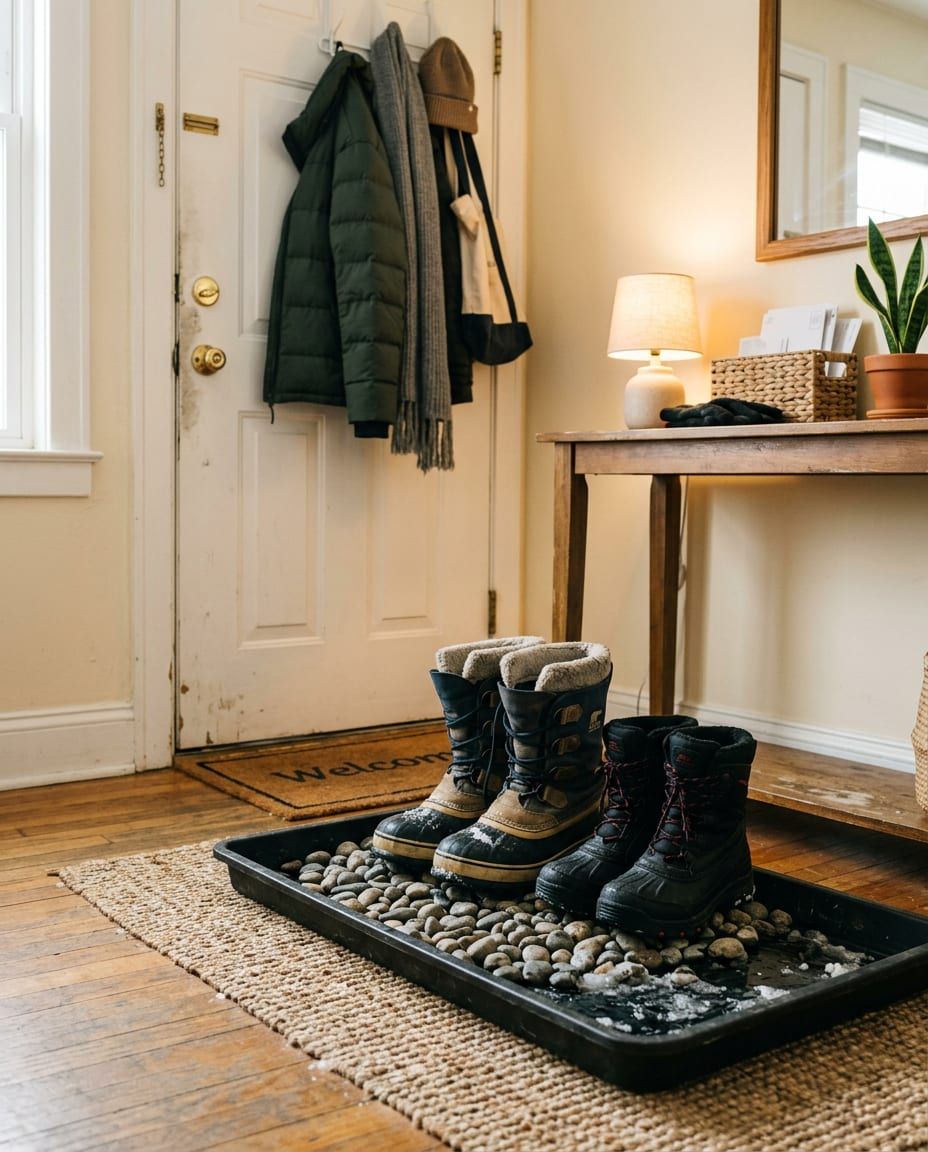
A rubber boot tray with a raised lip catches meltwater and salt the second you step in. A tray around 30 by 15 inches holds two or three pairs. For faster drying, add a layer of smooth river rocks so boots sit above the water. Empty and rinse it in the tub once a week in deep winter.
Why it works: Raised edges keep snowmelt and salt in one place instead of across your floor.
2. Use two mats, not one
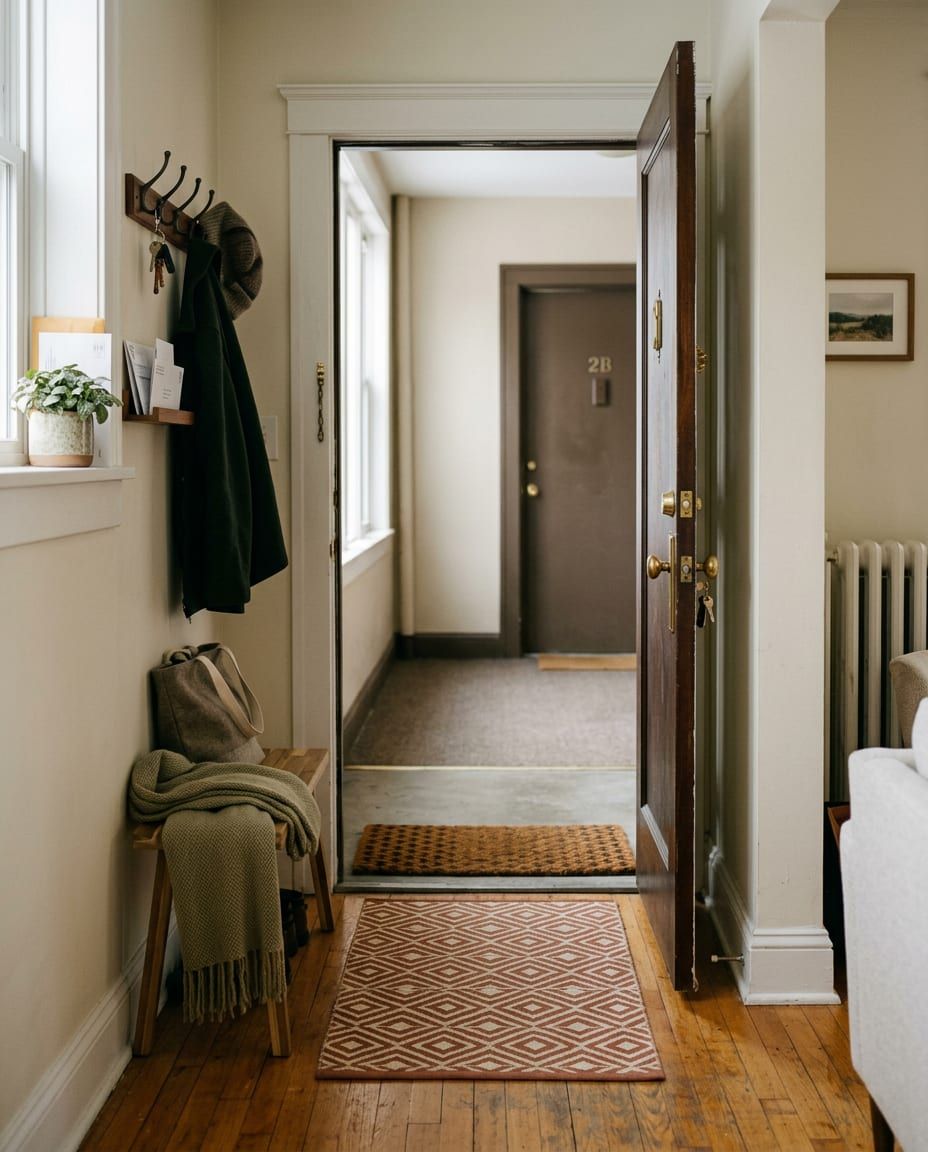
Put a rough, scraping mat outside the door if your building allows it, and a soft, absorbent one inside. Choose a low-profile inside mat so the door swings over it without catching, and pick a machine-washable one: salt stains come out in the wash. A darker color or a small pattern hides the gray salt marks between washes.
Why it works: One mat scrapes, the other dries — together they stop most of the salt at the door.

Washable low-profile door mat
Thin enough for the door to swing over it.
Check on Amazon(opens in a new tab)3. Choose a slim shoe cabinet
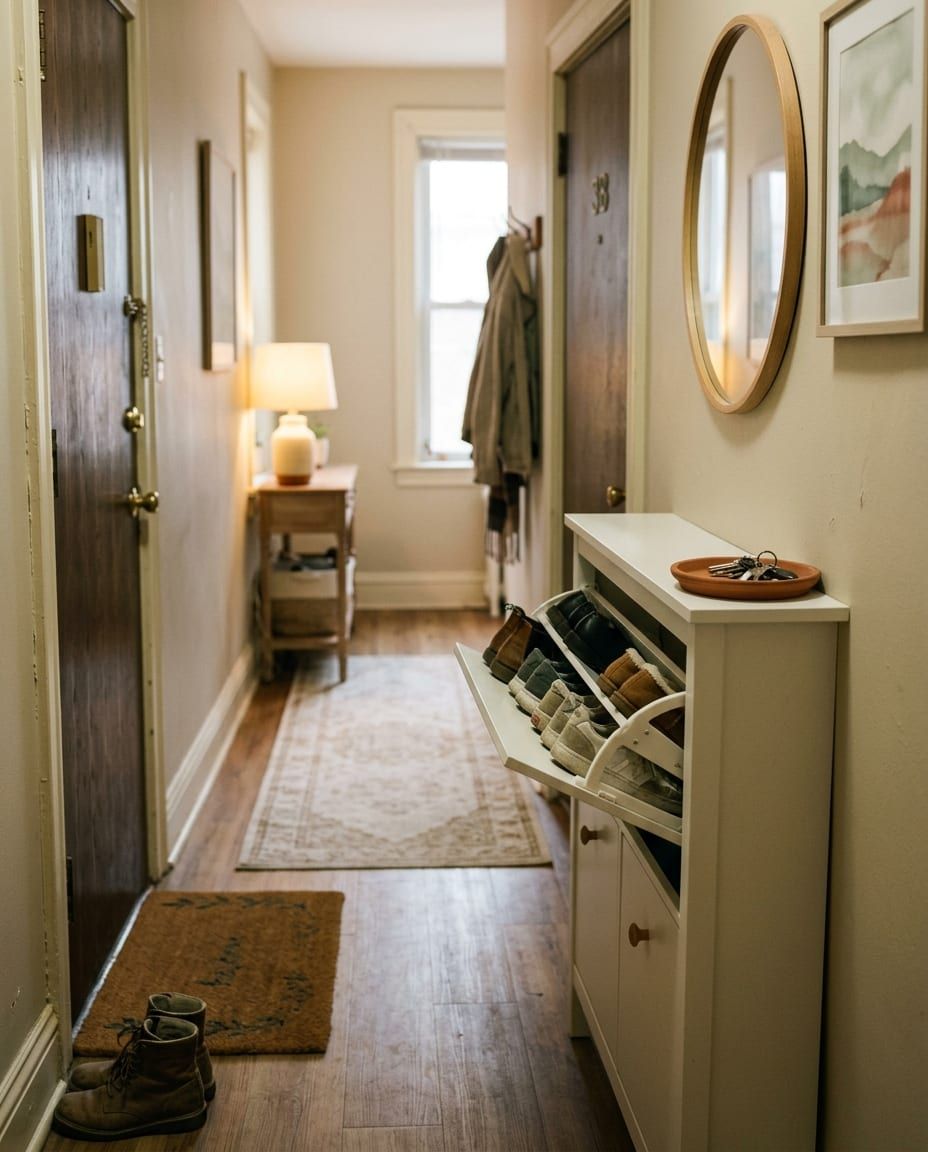
A tilt-out shoe cabinet stores shoes upright behind closed doors in a cabinet often only 7 to 10 inches deep, so it fits in a narrow hall. The top works as a landing strip for keys and mail. Most need to be anchored to the wall so they can’t tip over; that usually means one or two small screws, so check your lease or ask your landlord first.
Why it works: Tilt-out shoe cabinets are often only 7 to 10 inches deep and hide a dozen pairs.
4. Give umbrellas a bucket
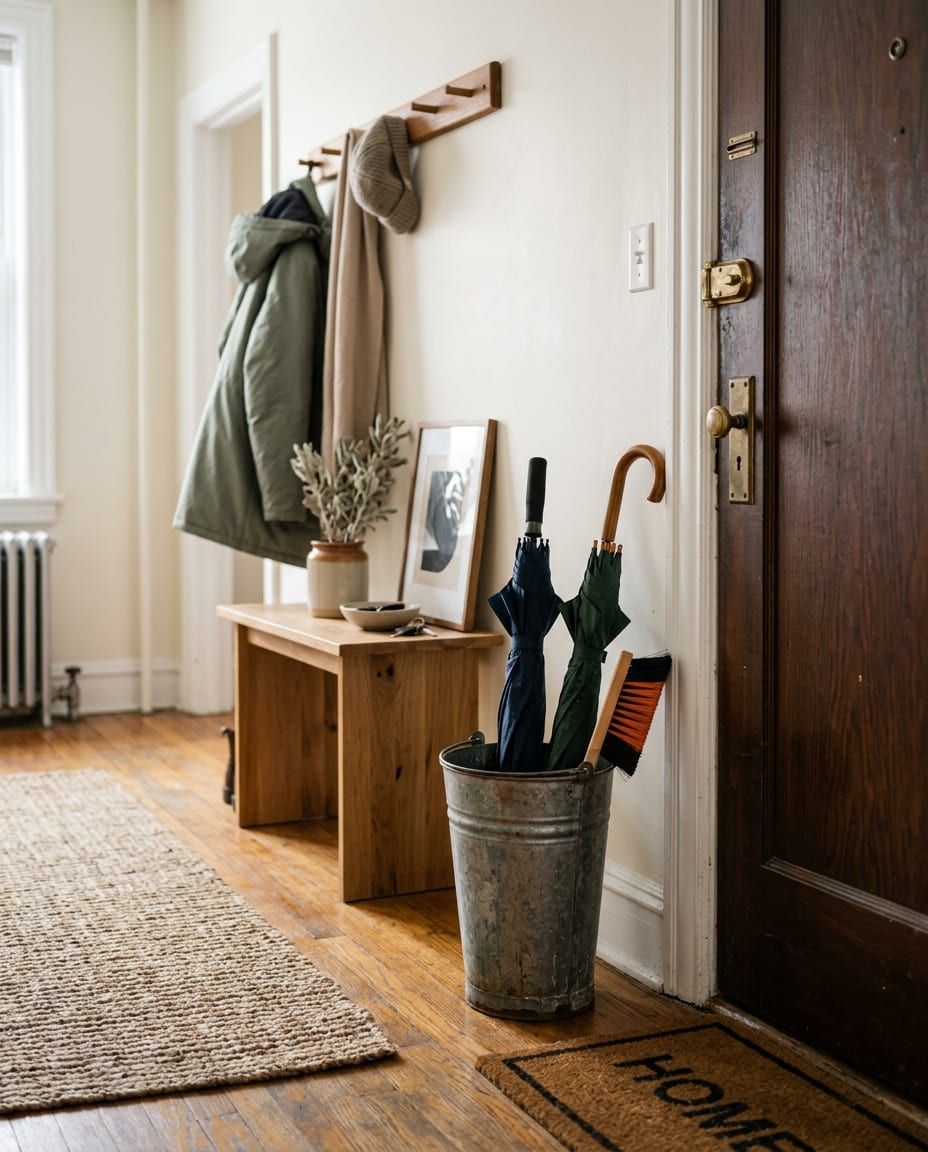
A slim umbrella stand or a metal bucket by the door holds wet umbrellas upright and catches the drips. A tall, narrow one takes about the floor space of a dinner plate. It’s also a good home for a small snow brush or an ice scraper on the way out.
Why it works: A wet umbrella leaning on the wall leaves a puddle and a mark; a stand keeps both off the floor.
Coats without a closet
Bulky winter coats need hooks at the right height, and only the ones you actually wear.
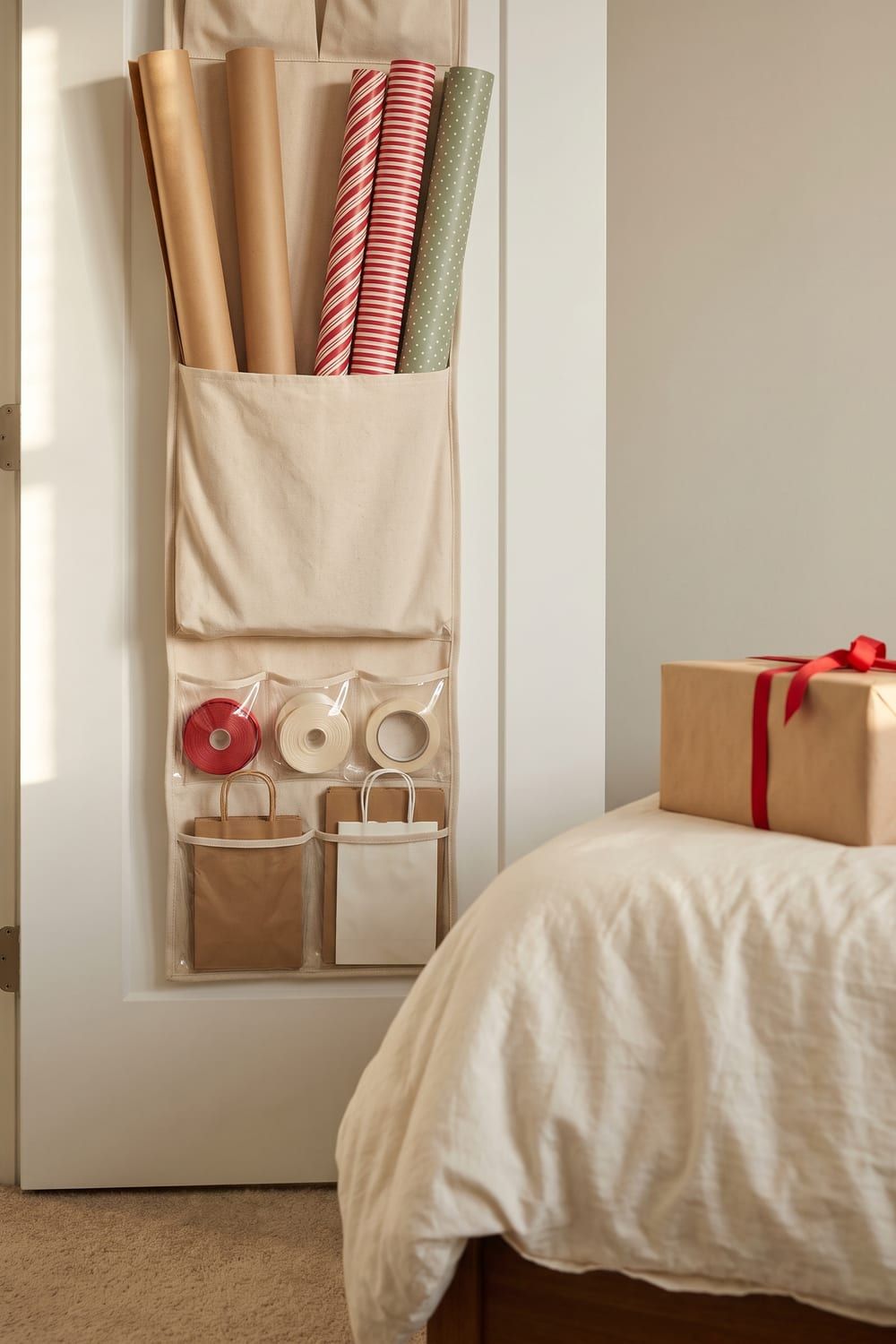
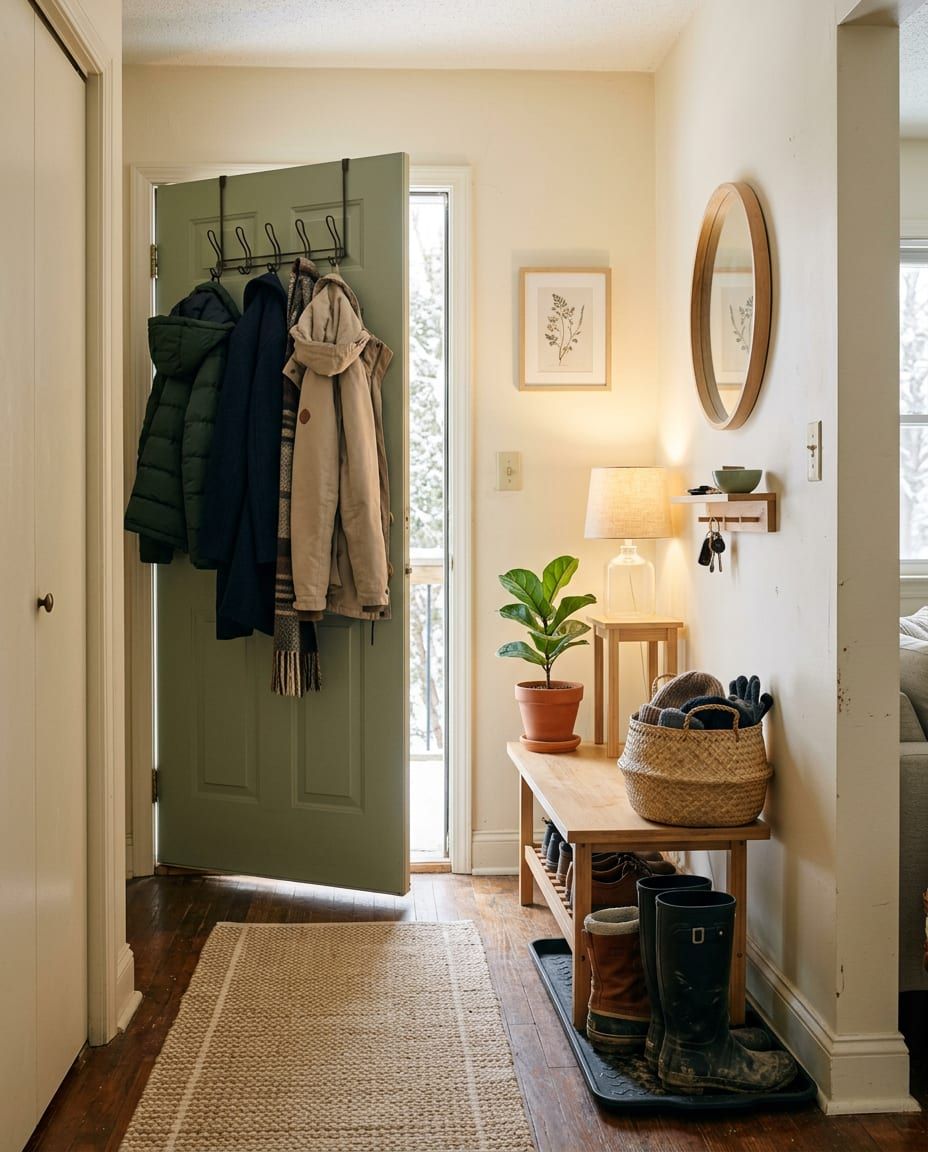
5. Hang an over-the-door hook rack
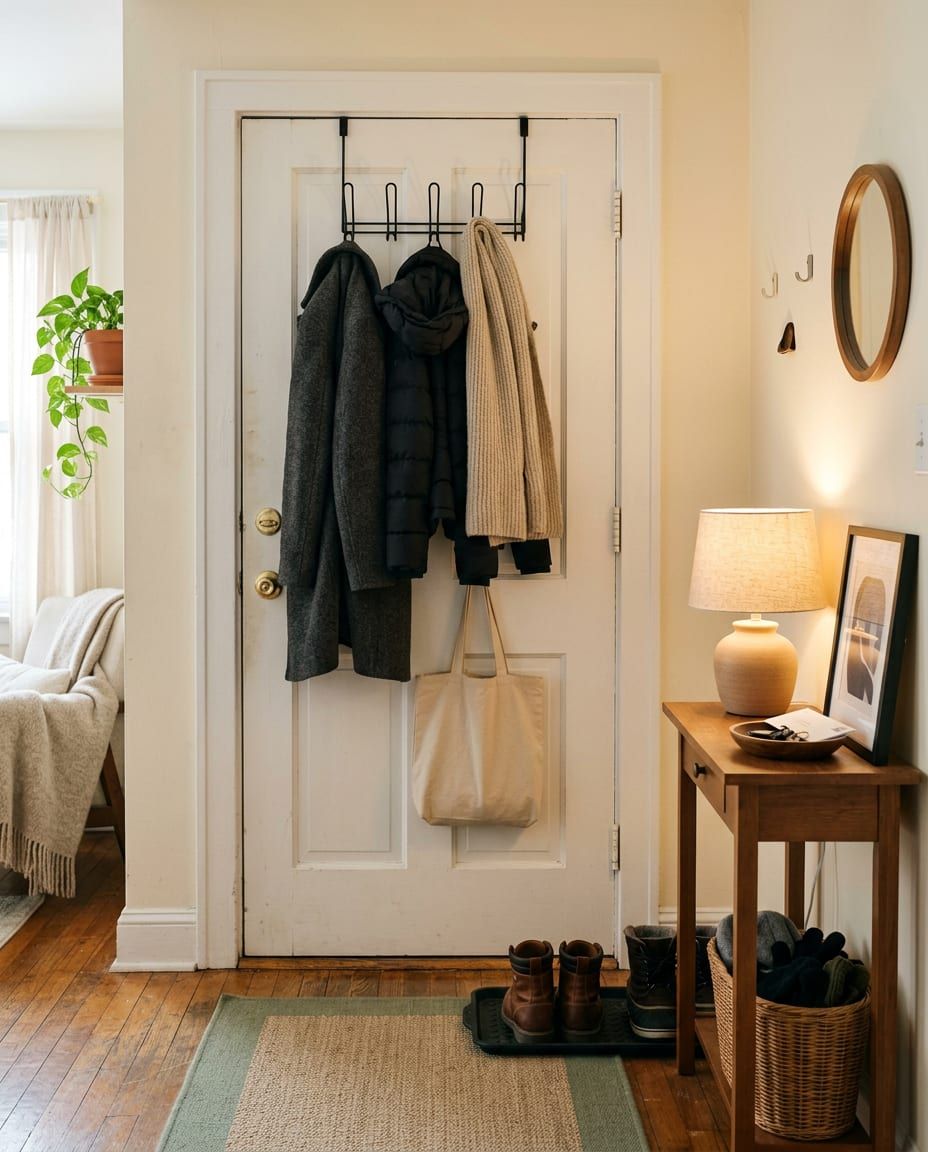
An over-the-door rack turns the back of the front door, or a nearby bedroom door, into coat storage. Check that the hooks fit over your door and that the door still closes with coats on it: thick down jackets can stop it latching. Felt pads on the back of the rack keep it from scratching the paint.
Why it works: It adds five or six coat hooks with no drilling and nothing on the floor.

6. Try a freestanding coat rack
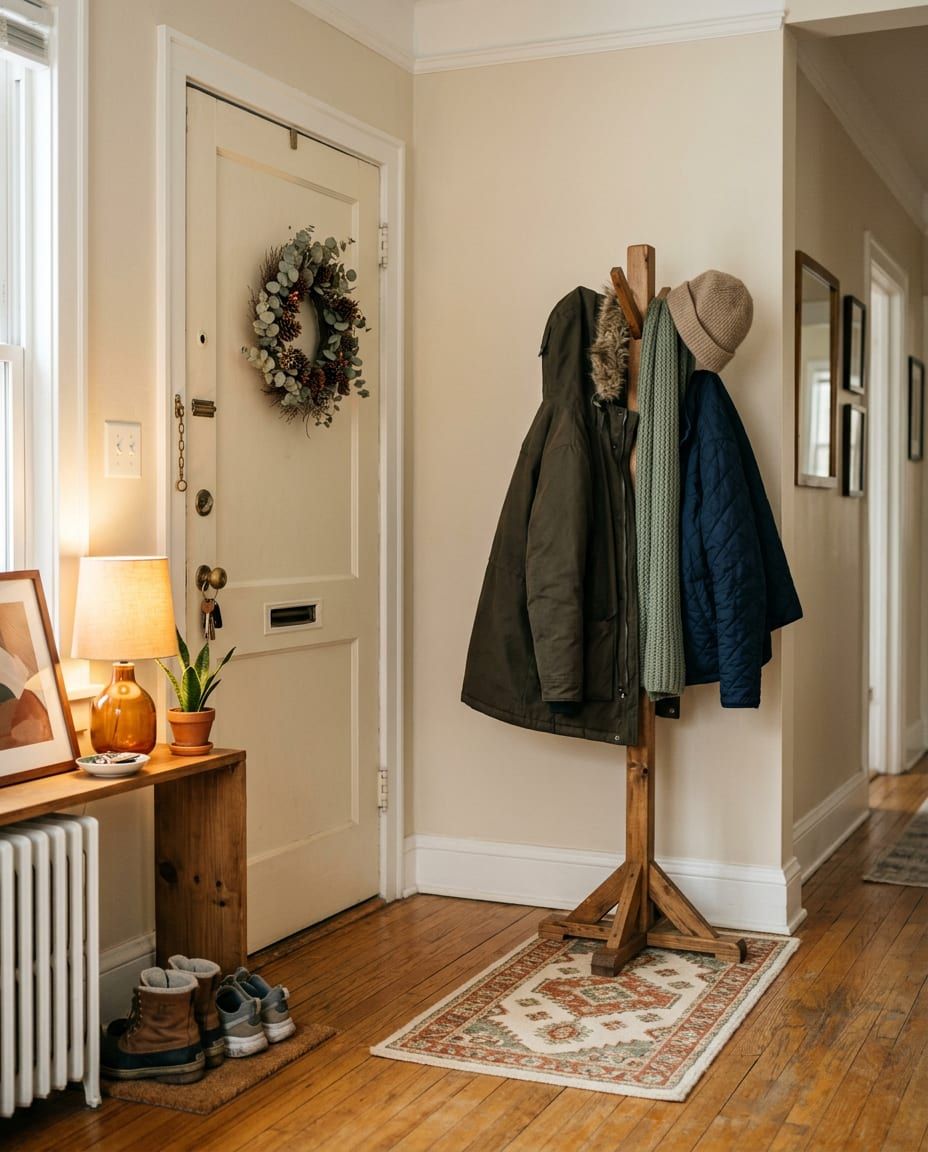
A coat tree or a narrow rack on a weighted base holds coats, bags and scarves without touching the walls. Its footprint is usually around 16 to 20 inches across. Hang the heaviest coats on opposite sides so it doesn’t lean, and keep it out of the door’s swing.
Why it works: It holds a whole family’s coats on a footprint of about 18 inches, and moves with you.
7. Add hooks at two heights
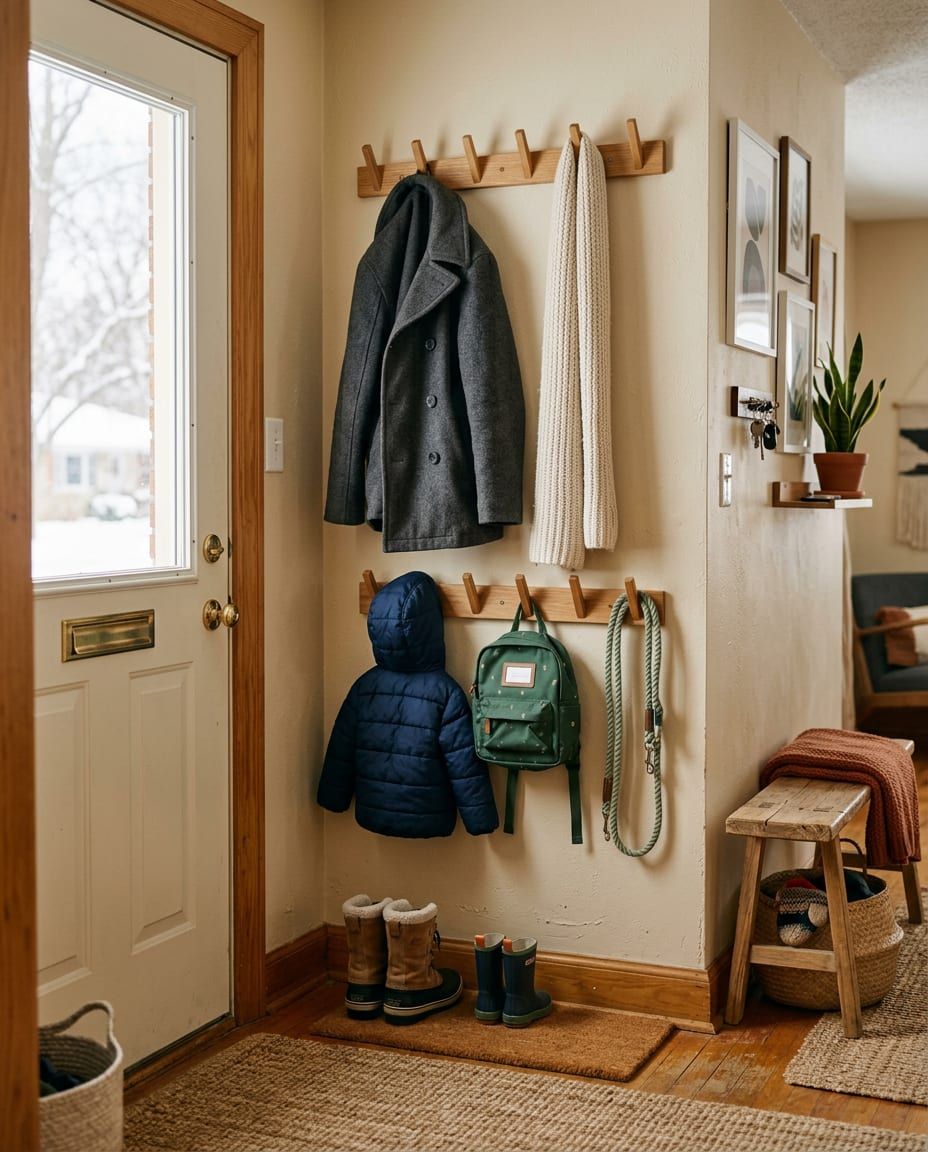
Put adult hooks around 60 to 66 inches high and a second row around 36 to 42 inches for kids, bags or a dog leash. Removable adhesive hooks work for scarves, hats and light bags; a heavy winter coat can exceed what they hold, so check the weight rating on the package before you trust them with a parka.
Why it works: Low hooks get kids and bags off the floor; high hooks keep long coats from dragging.
8. Keep only this season’s coats at the door
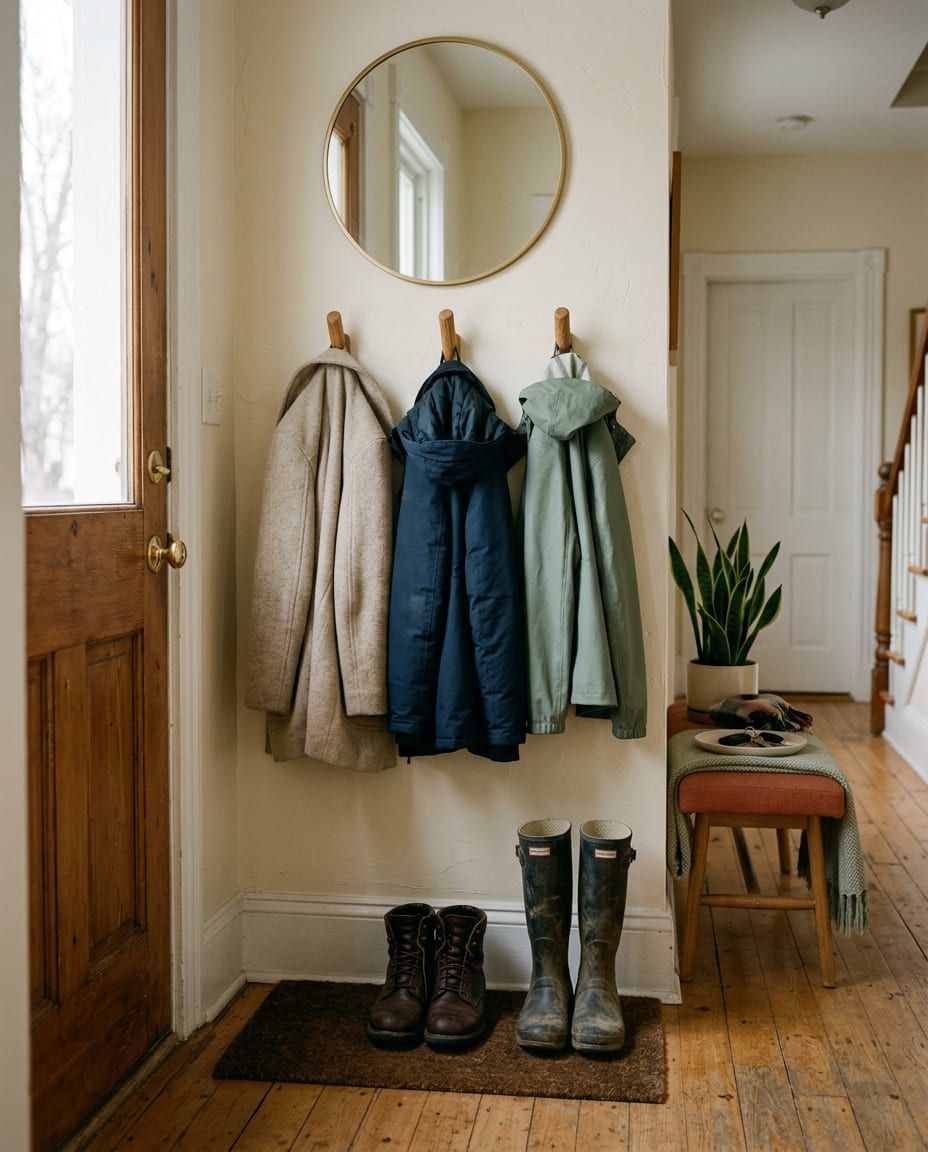
Limit the entry to one coat per person plus one rain jacket. Store the rest flat in a vacuum bag or on a closet shelf, and swap them when the weather changes. The same goes for shoes: only the pairs you wear this week stay by the door. See our small closet organization ideas for where the rest can go.
Why it works: Three coats on hooks look neat; eight look like a pile.
Sit, drop and go
A seat and a landing spot for small things make the entry work on busy mornings.
9. Add a slim bench with a shoe shelf
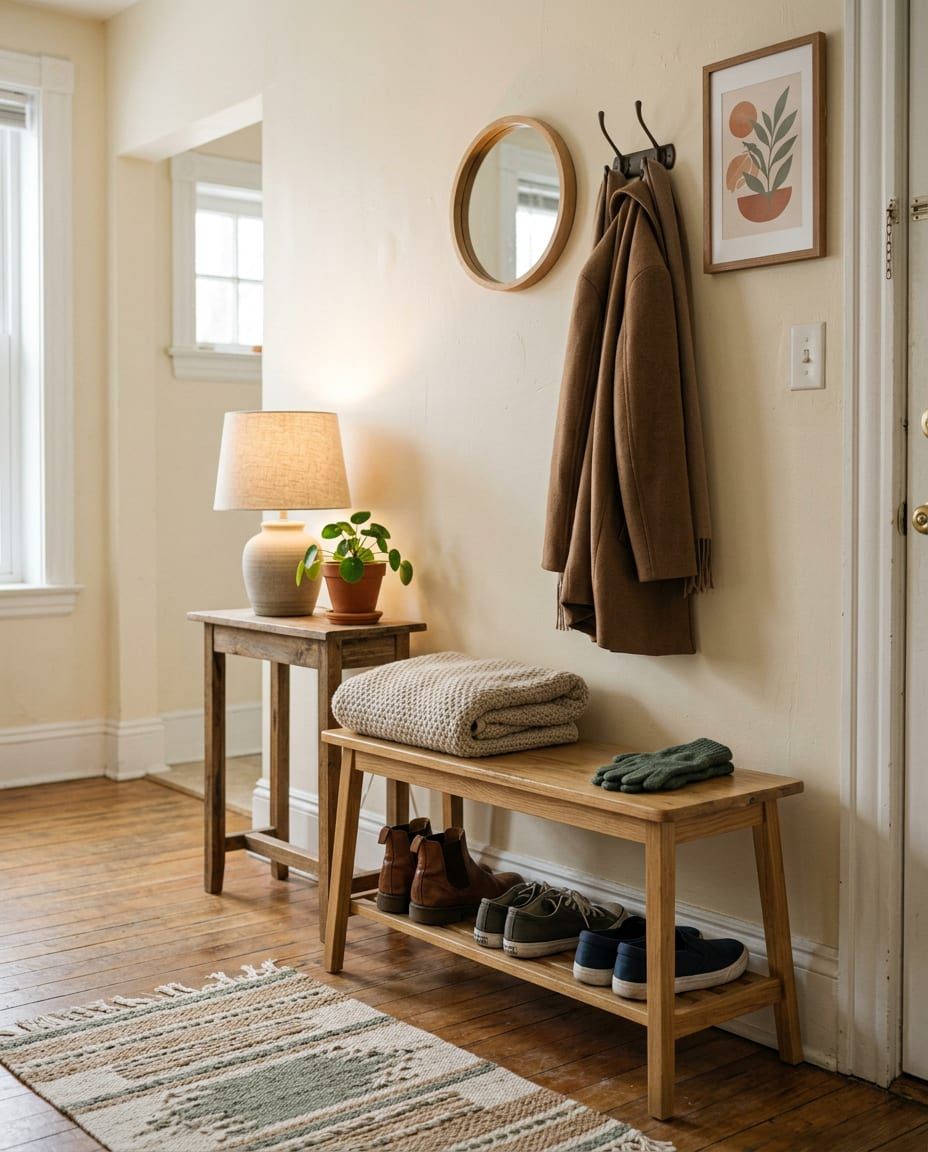
A bench about 18 inches high and 12 to 14 inches deep fits most narrow entries and leaves room to walk past. A shelf underneath holds two or three pairs of everyday shoes, and the top can hold a basket. If your entry is very tight, a single stool that tucks under a console does the same job.
Why it works: Sitting down to pull on boots is faster and drier than hopping on one foot on a wet mat.
Slim entryway bench with shoe shelf
Look for 12 to 14 inches deep.
Check on Amazon(opens in a new tab)10. Use a narrow console as a landing strip
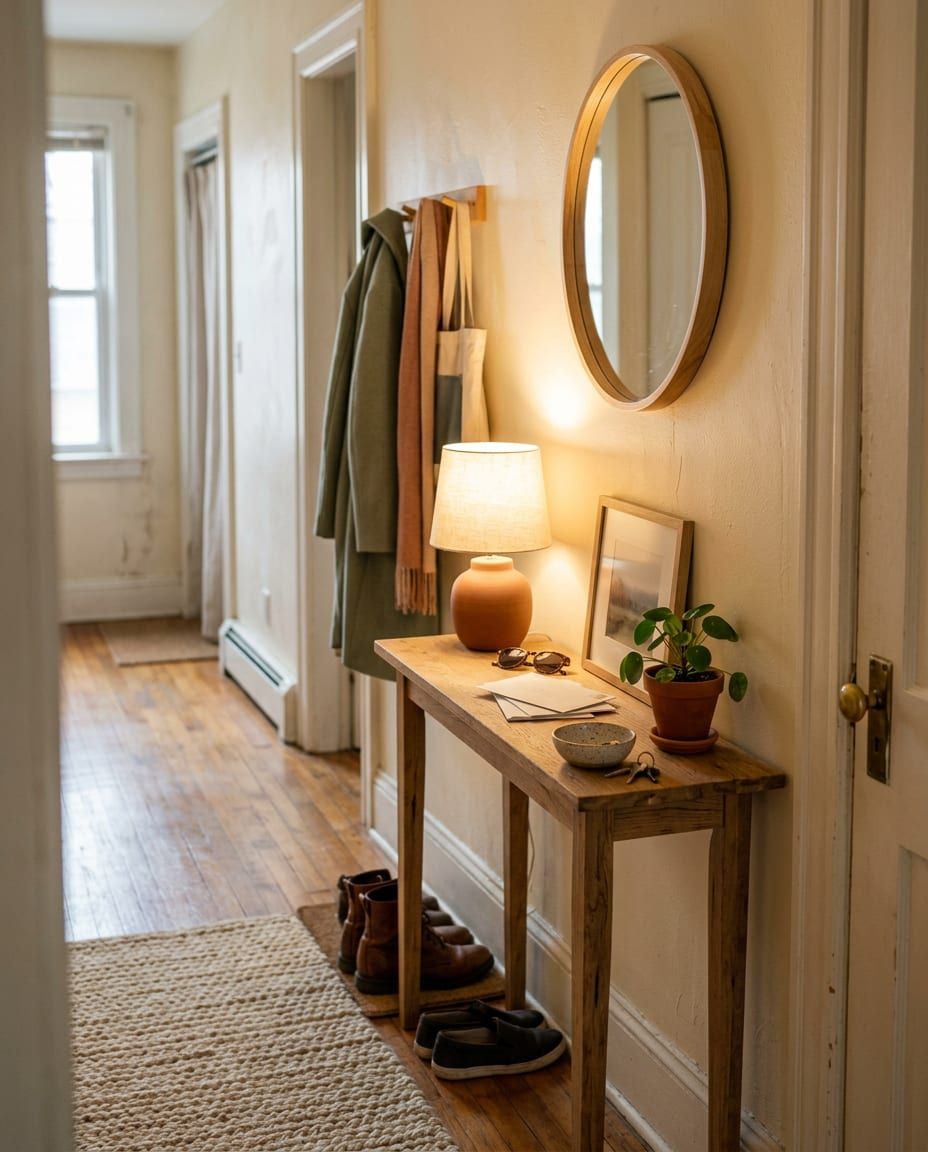
A console table 10 to 12 inches deep gives keys, mail and gloves a home without blocking the path. Put a small tray or bowl on top for keys so they never wander. If there is no room for a table at all, a floating ledge or a wall-mounted key rack does the same job; just check your lease before drilling.
Why it works: Keys, mail and sunglasses get one spot instead of every surface in the apartment.
11. Give everyone a basket
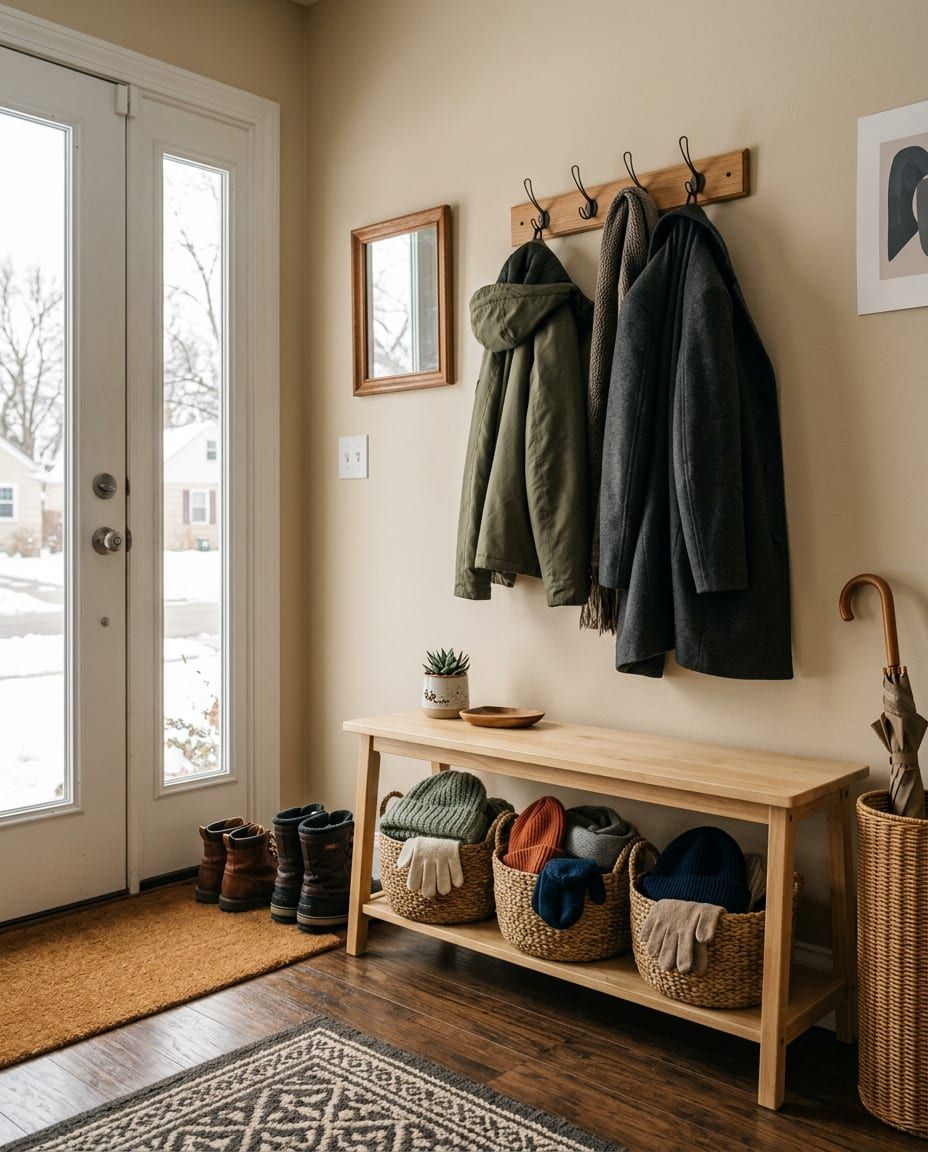
Small woven baskets on the bench shelf or on top of the console hold hats, gloves and scarves, one per person. Pick baskets that fit your shelf with an inch to spare so they slide in and out easily. Wash or air out the contents every few weeks; wet gloves left in a basket get musty.
Why it works: One basket per person ends the morning search for the other glove.

Small woven storage baskets (set)
One per person for hats and gloves.
Check on Amazon(opens in a new tab)12. Hang a mirror for the last check
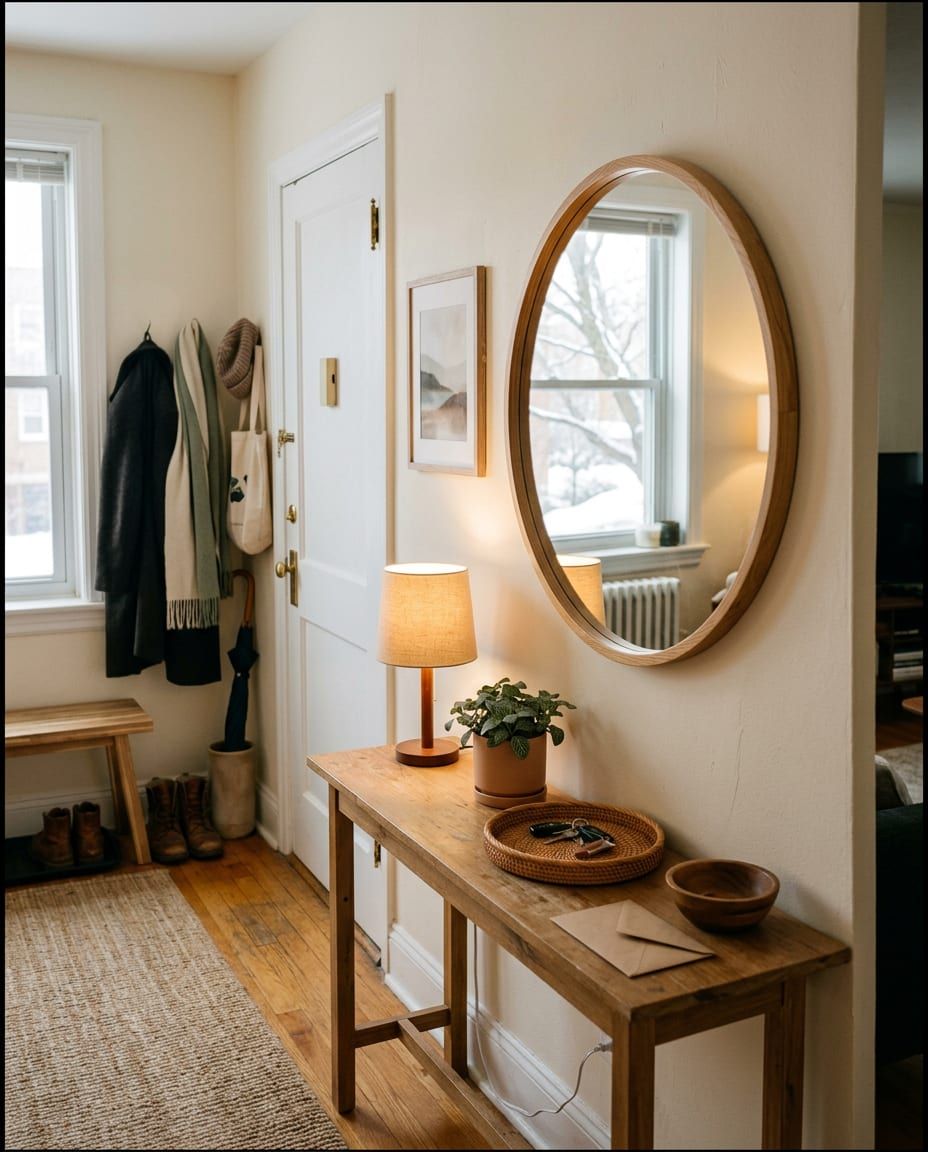
A round mirror above the console or bench lets you check your hat and scarf on the way out, and it bounces light around a dark entry. Lightweight mirrors can hang from removable picture-hanging strips; for heavier ones, use a nail or a lean-against-the-wall floor mirror instead.
Why it works: A mirror makes a tight entry feel bigger and saves a trip back to the bathroom.
Light and a welcome
Winter means coming home in the dark, so the entry needs light you don’t have to search for.
13. Add a motion-sensor light
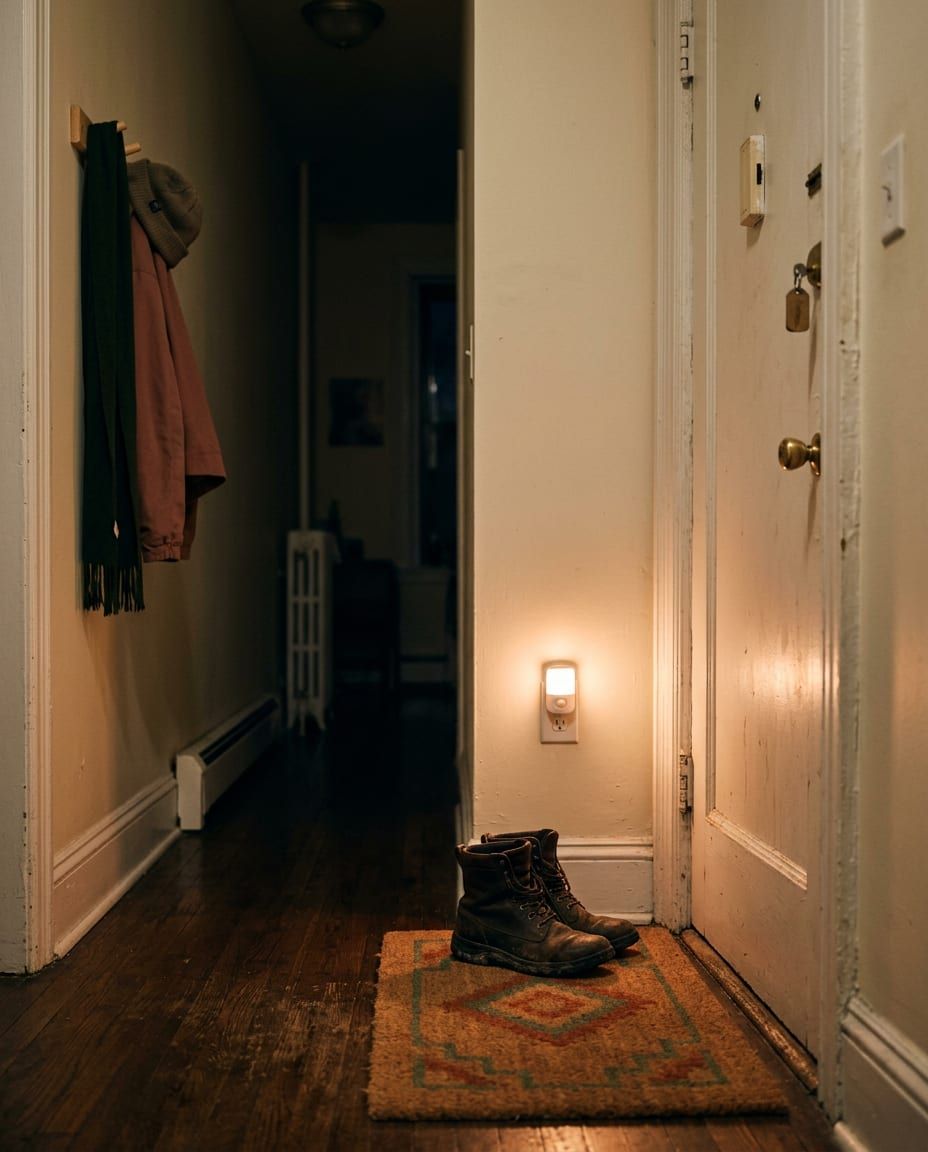
Many small apartments have the light switch on the wrong side of the door or no ceiling light at all in the entry. A battery or rechargeable motion-sensor light mounts with an adhesive pad or a magnet and turns on when you walk in. Choose a warm white one, around 2700K to 3000K, so it doesn’t feel like a garage.
Why it works: It switches on as you open the door, so you’re not feeling for a switch with full hands.

14. Lay a washable runner
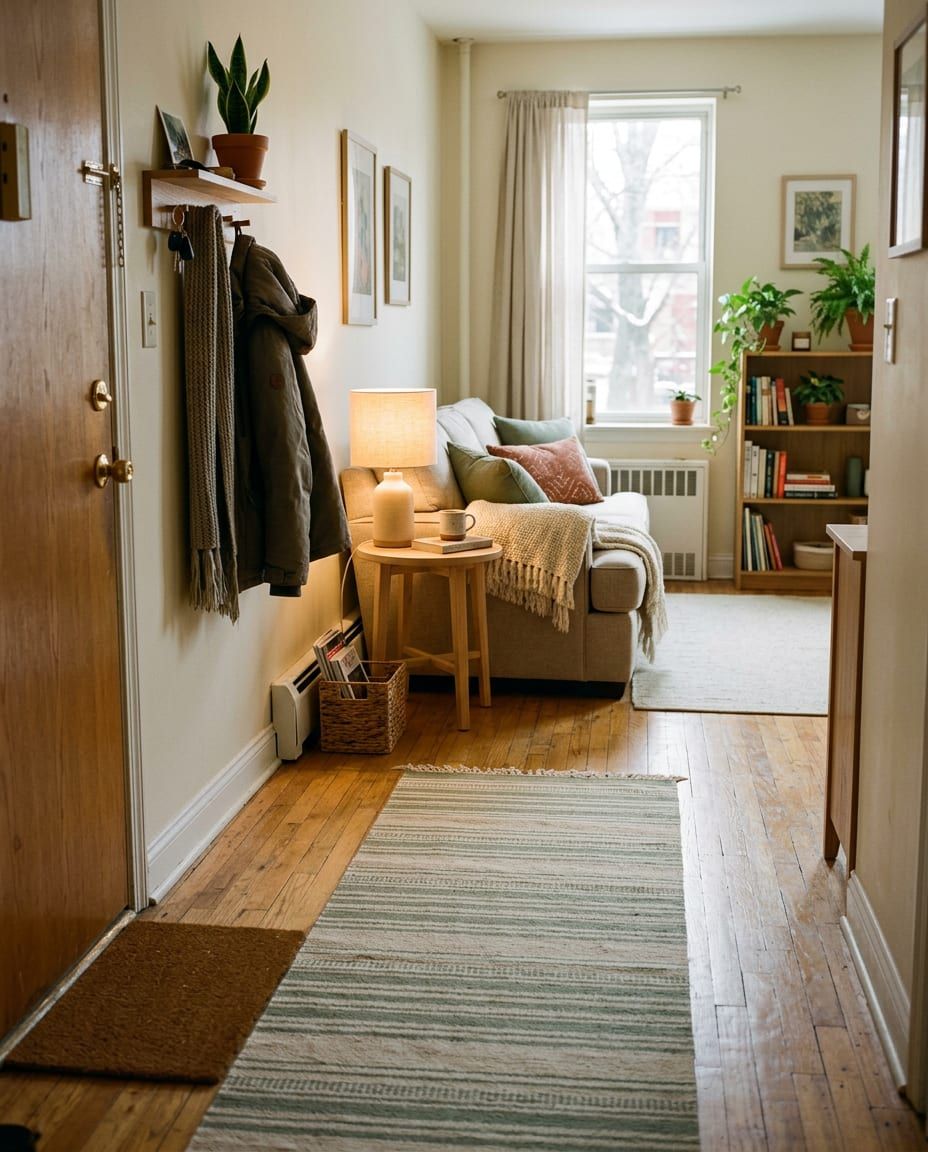
In a studio or an open living room, a narrow runner marks where the entry ends and the room begins. A washable runner with a non-slip backing, or a rug pad underneath, keeps it from sliding on a wet floor. A runner around 2 by 6 feet fits many small entries; measure from the door to where the living space starts.
Why it works: A runner defines the entry in an open room and protects the floor from salt.
15. Make it feel like home
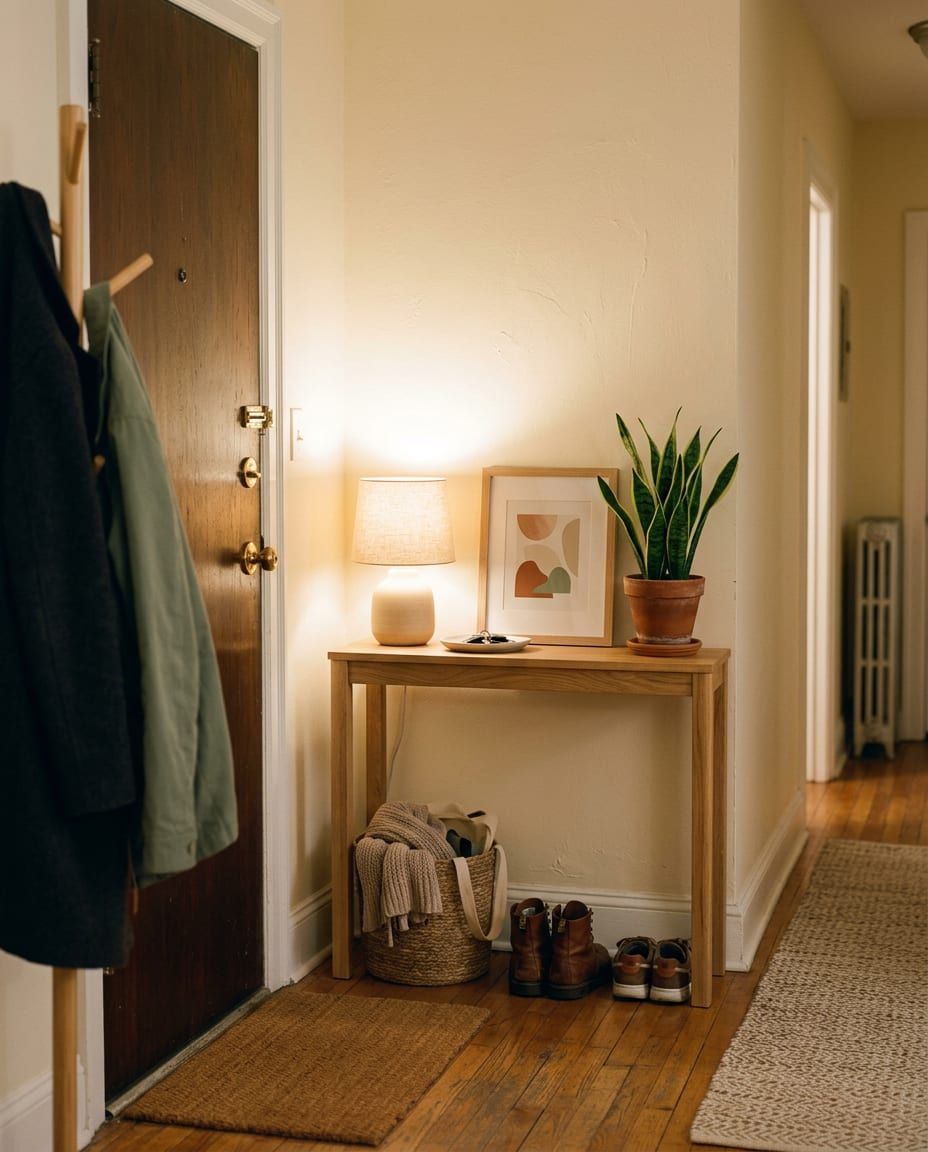
Once the practical parts are in place, add one thing just because you like it: a small print, a plant that tolerates low light, or a warm lamp on the console. Keep it to one or two pieces so the entry still has room for the daily stuff. Our cozy winter living room ideas carry the same feeling into the rest of the apartment.
Why it works: The entry is the first thing you see after a cold day; one nice thing there changes the mood.
Our top picks
The short list, if you just want to get it done this weekend. We don’t list prices because they change daily — check the current price on the retailer’s site.
| Product | Best for | Link |
|---|---|---|
| Rubber boot trayRaised edges keep snowmelt off the floor. | Wet boots by the door | Check on Amazon(opens in a new tab) |
| Washable low-profile door matThin enough for the door to swing over it. | Inside the front door | Check on Amazon(opens in a new tab) |
| Over-the-door hook rackFive or six hooks, no drilling. | Coats when there is no closet | Check on Amazon(opens in a new tab) |
| Slim entryway bench with shoe shelfLook for 12 to 14 inches deep. | Putting on boots | Check on Amazon(opens in a new tab) |
| Small woven storage baskets (set)One per person for hats and gloves. | Bench shelves | Check on Amazon(opens in a new tab) |
| Battery motion-sensor lightTurns on when you walk in; no wiring. | Dark entries and hallways | Check on Amazon(opens in a new tab) |
Shop the look
Frequently asked questions
How do I make an entryway when I don't have one?
Claim the first few feet of wall next to the door: a mat and a boot tray on the floor, two or three hooks at shoulder height, and a small shelf or tray for keys. A rug or a different wall color can mark the spot so it reads as an entry, even in a studio.
Where do you put winter boots in a small apartment?
On a boot tray right by the door, so snowmelt and salt stay off the floor. Keep only the boots you wear this week there; store the rest on a shoe shelf or in a bin under the bed.
Where do you hang coats if there is no closet?
Use an over-the-door hook rack, a freestanding coat rack or hooks on the wall. Keep only the coats you wear this season by the door and store the rest flat or in a vacuum bag.
Can I put hooks on the wall in a rental?
Often yes, with removable adhesive hooks or an over-the-door rack. Heavy winter coats can exceed what adhesive hooks hold, so check the weight rating; for screws, check your lease or ask your landlord first.
How do I protect floors from salt and snow?
Use two mats, one outside and one inside, plus a boot tray for wet shoes. Wipe salt off the floor with warm water and a little vinegar or a floor cleaner made for your floor type, and check the care label on rugs before washing.
Start with the floor
If you do only one thing this weekend, put a boot tray and an absorbent mat by the door; the rest can follow. For more storage ideas, see our vertical storage ideas for small spaces, our studio apartment layout ideas, or browse all entryway ideas.
Free printable
Get the free Small Space Declutter Checklist
A printable, room-by-room checklist — plus one cozy small-space idea a week. No spam, unsubscribe anytime.
By subscribing you agree to our Privacy Policy.