21 Small Kitchen Organization Ideas (Renter-Friendly)
Images in this post are AI-generated illustrations. Why?
Heads up: this post contains affiliate links. If you buy through them, we may earn a small commission at no extra cost to you. How it works. As an Amazon Associate, we earn from qualifying purchases.
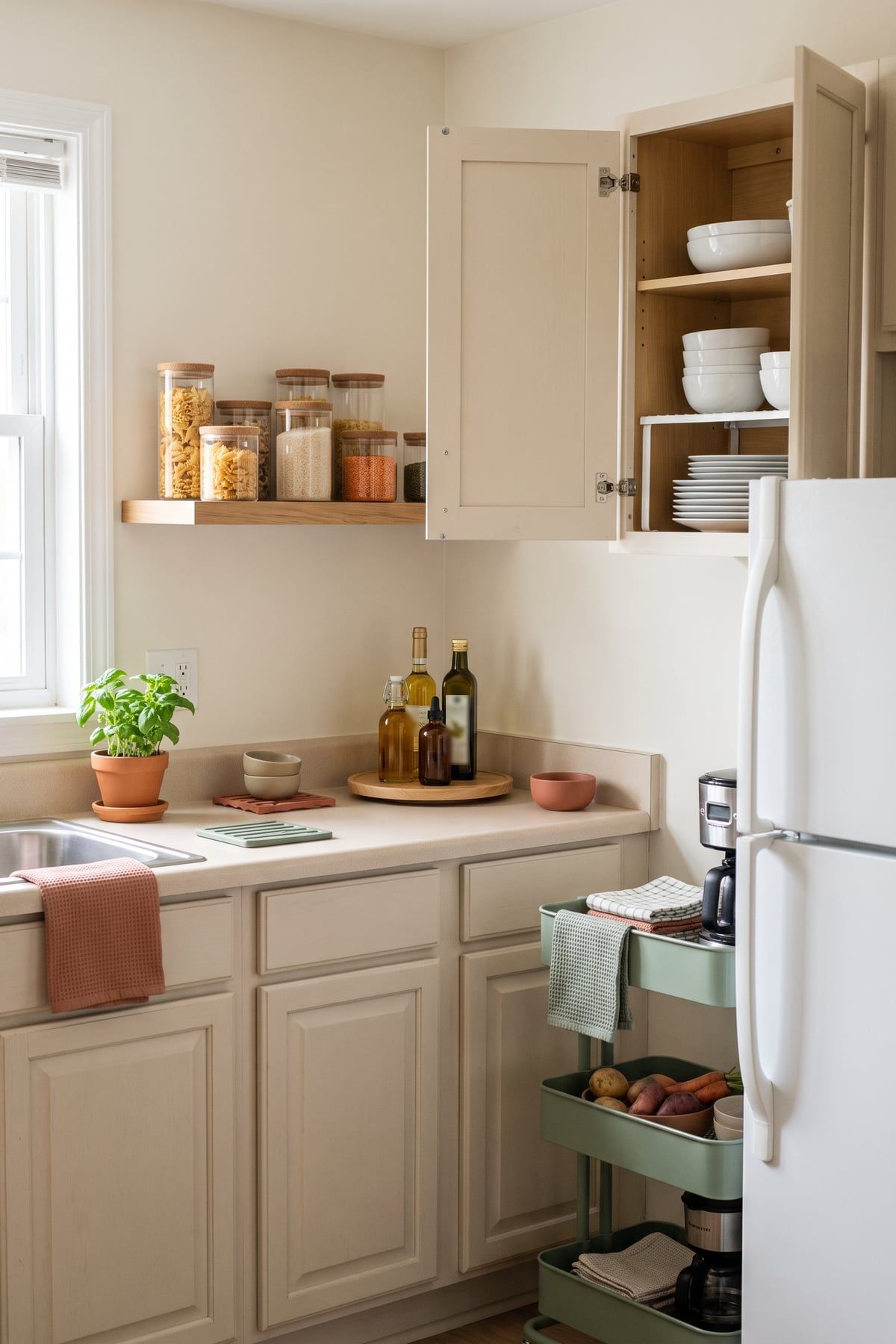
The best small kitchen organization ideas use the height you’re wasting: shelf risers in cabinets, a rack on the back of a door and a slim cart in the gap next to the fridge. Everything below works in a rental — no drilling, no new cabinets — and most of it costs under $25.
In this post
- If you only have 10 minutes
- Cabinets & shelvesideas 1–5
- Countertopsideas 6–9
- Under the sinkideas 10–12
- Walls, doors & gapsideas 13–16
- Fridge & pantryideas 17–21
- Measure before you buy
- Our top picks
- FAQ
If you only have 10 minutes
Start with the three changes that free up the most space for the least money:
- Add a shelf riser to your busiest cabinet — it doubles the usable height.
- Corral the counter onto one tray so everything else can go away.
- Hang an over-the-door rack — instant pantry, zero tools.
Cabinets & shelves
Most upper cabinets are about 12 inches deep and 30 inches tall, but plates only need 2–3 inches of height. That gap is the cheapest storage you’ll ever find.
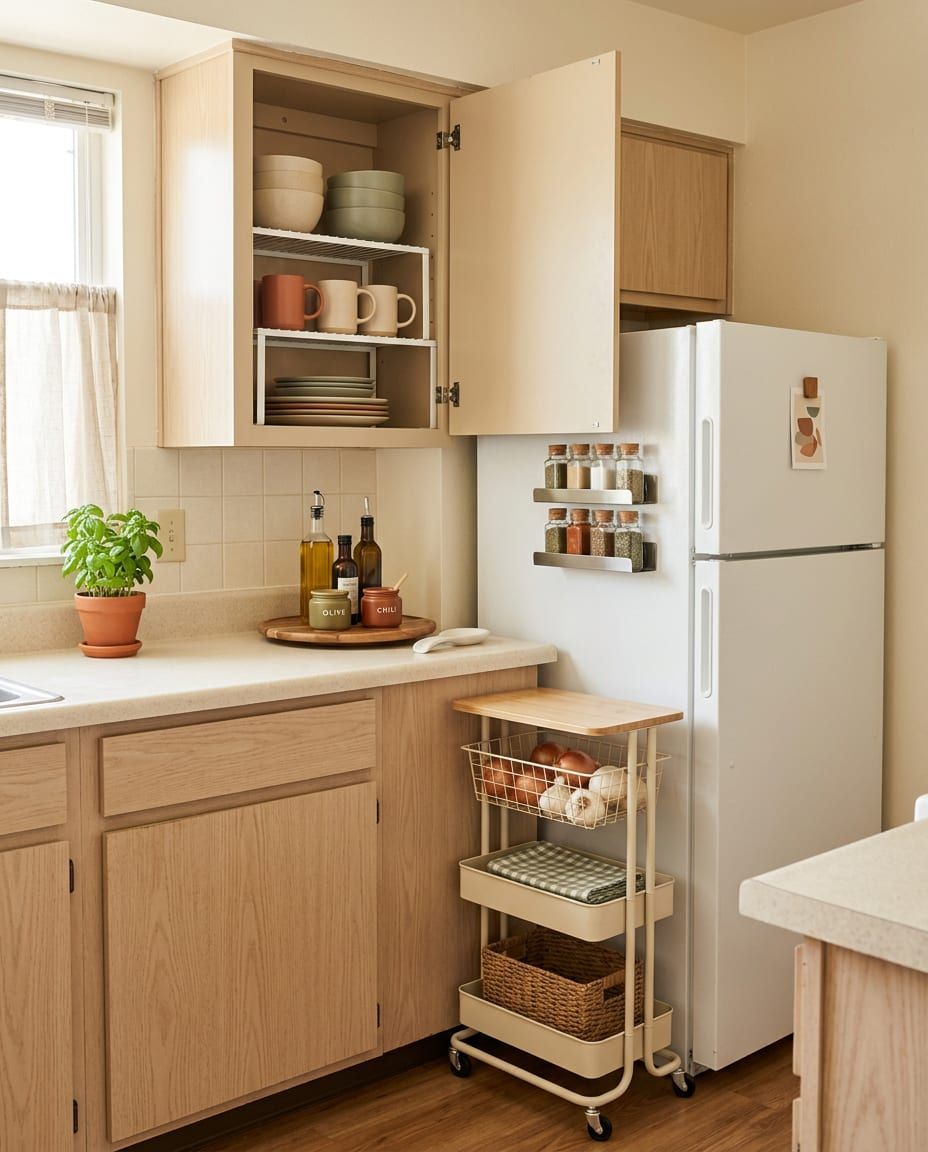
1. Double your cabinet with a shelf riser
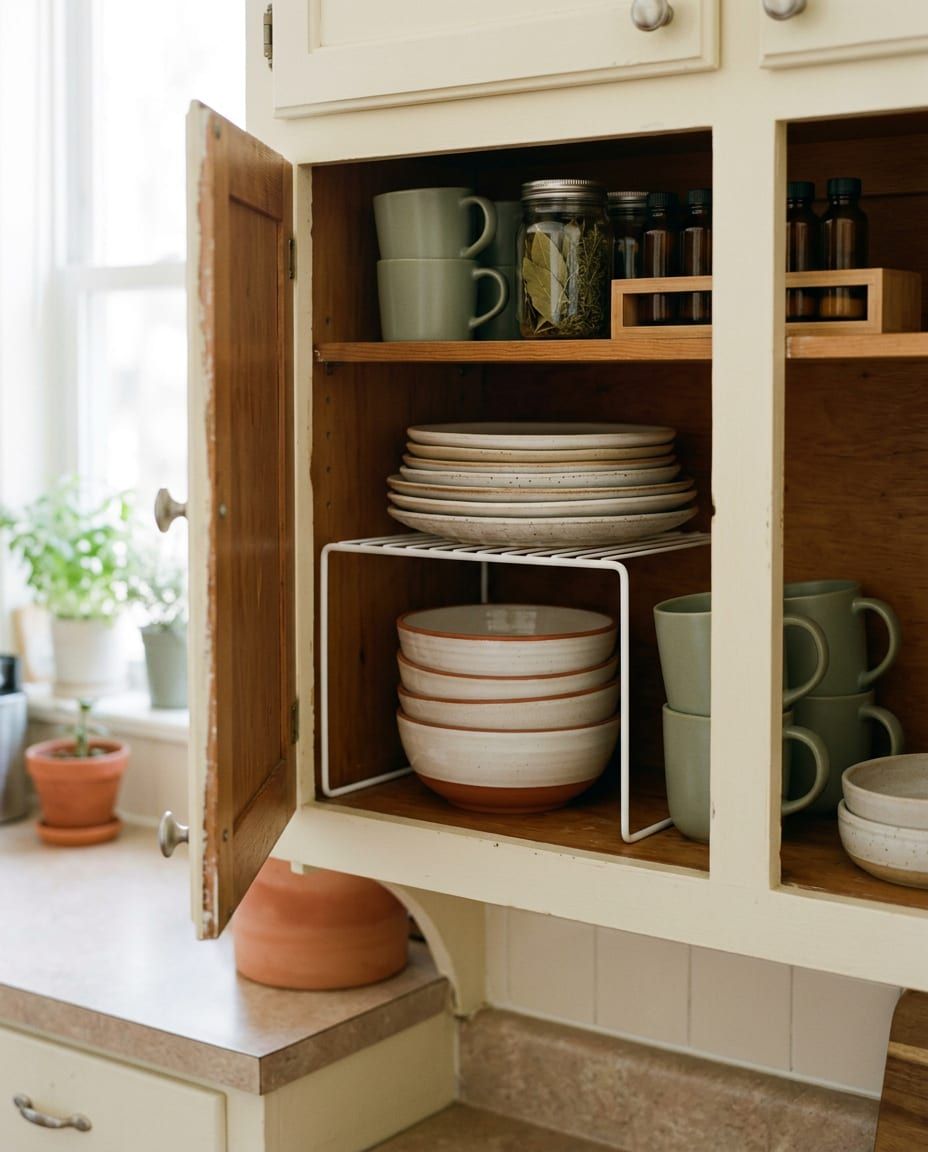
A riser is a small bridge-shaped shelf that sits inside your cabinet. Plates go underneath, bowls or mugs on top. Measure the cabinet’s inside width and height before you order, and choose an expandable one if your cabinets are an odd size. Nothing is screwed in, so it comes with you when you move.
Why it works: You stop stacking bowls on plates, so you can grab anything with one hand.

Expandable cabinet shelf riser
Doubles the usable height of a deep cabinet.
Check on Amazon(opens in a new tab)2. Put a turntable in the corner cabinet
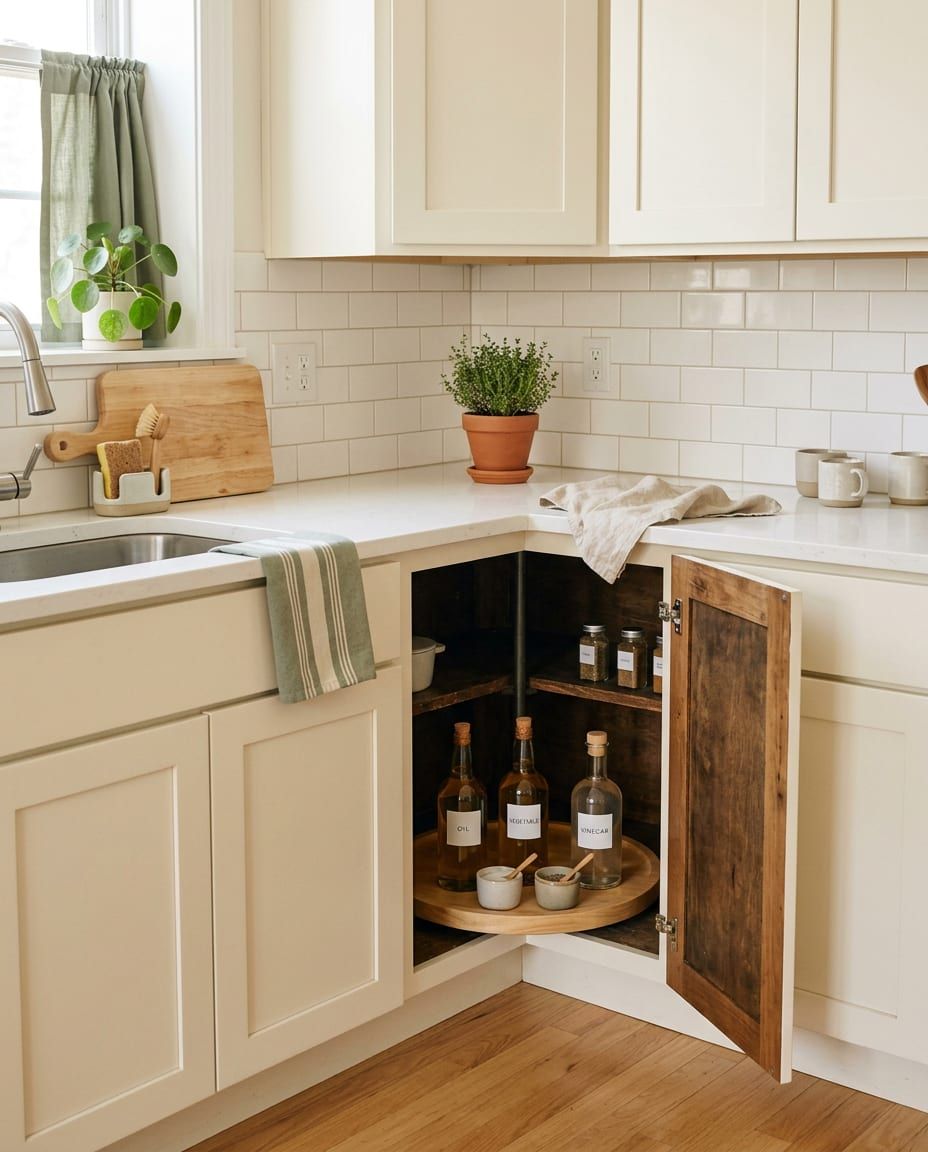
Corner and deep cabinets are where bottles go to be forgotten. A 10–11 inch turntable fits most standard cabinets and works for oils, vinegars, spices or cleaning sprays. Pick one with a raised edge so nothing slides off when you spin it.
Why it works: One spin brings the back row to the front — nothing gets lost and expires.
Non-slip turntable (lazy Susan), 10–11 in
Ends the “reach behind everything” problem.
Check on Amazon(opens in a new tab)3. Store lids on the inside of the cabinet door
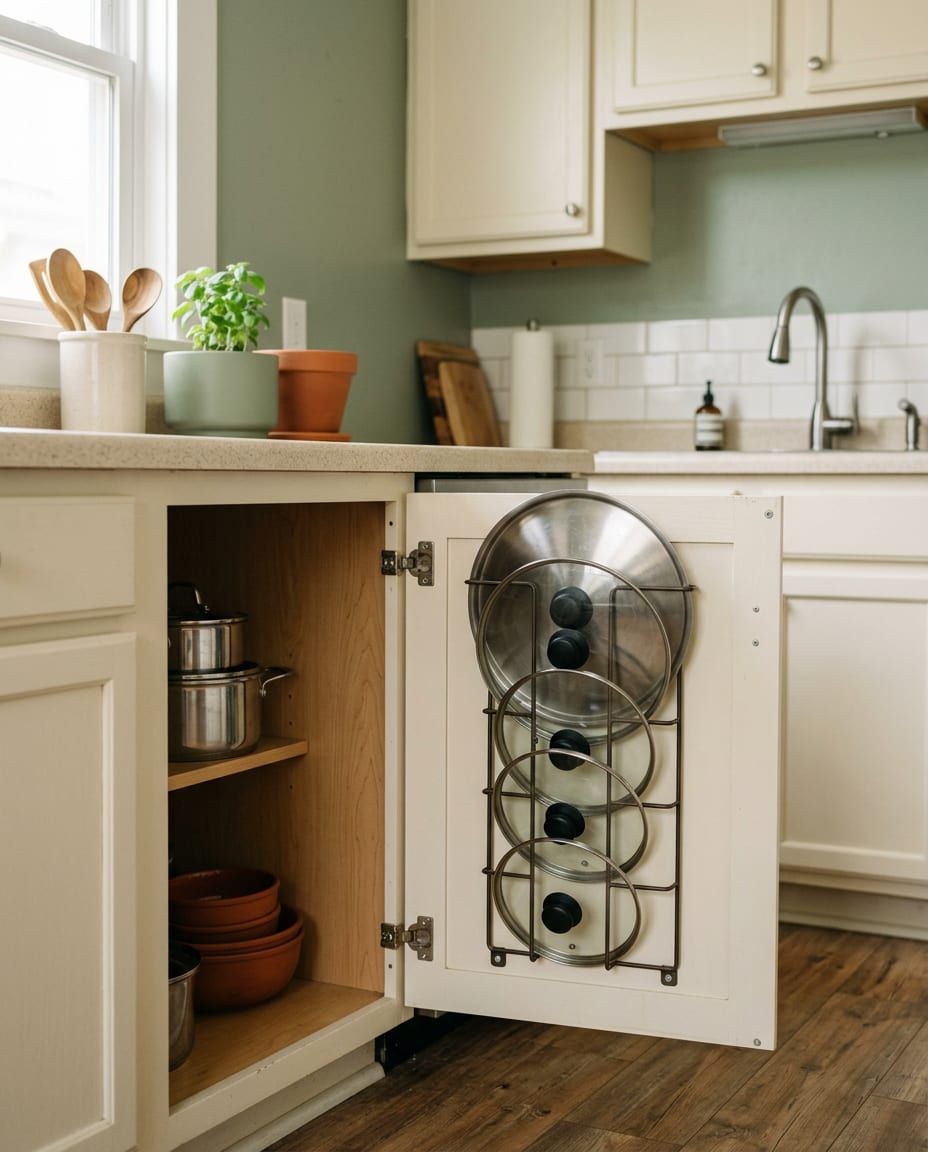
Adhesive lid racks stick to the inside of a cabinet door. Check that the door closes with the rack and the lids in place — leave about 1 inch of clearance from the shelves behind it. If your cabinet surfaces are textured, use an over-the-door version that hooks on instead.
Why it works: Lids stop sliding around, and pots can finally nest inside each other.
4. File baking sheets upright
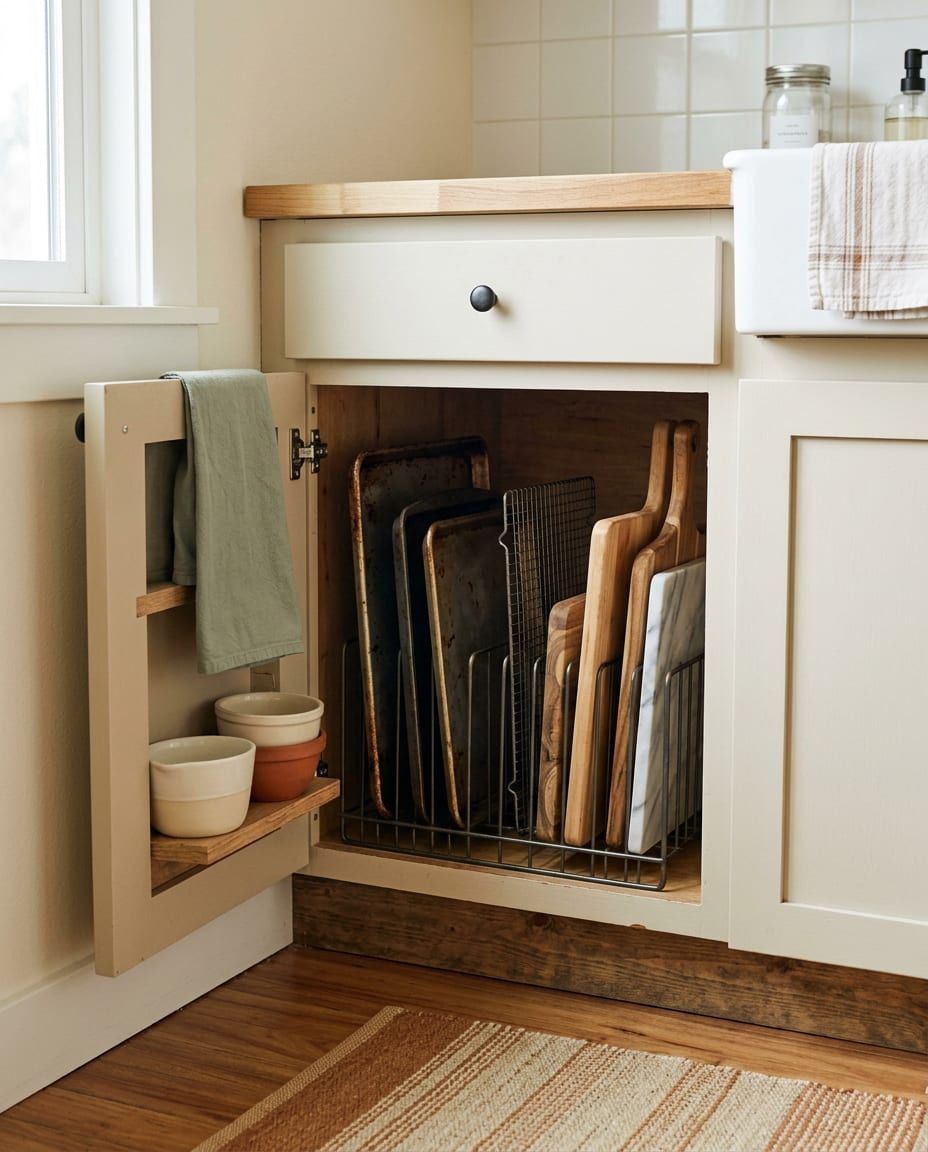
A metal desk file organizer (yes, the office kind) holds sheet pans, cutting boards and muffin tins upright. It costs a few dollars and fits most base cabinets. A tension rod placed vertically does the same job for free if you already own one.
Why it works: You can pull out the bottom sheet without unstacking the whole pile.
5. Add pull-out bins to deep base cabinets
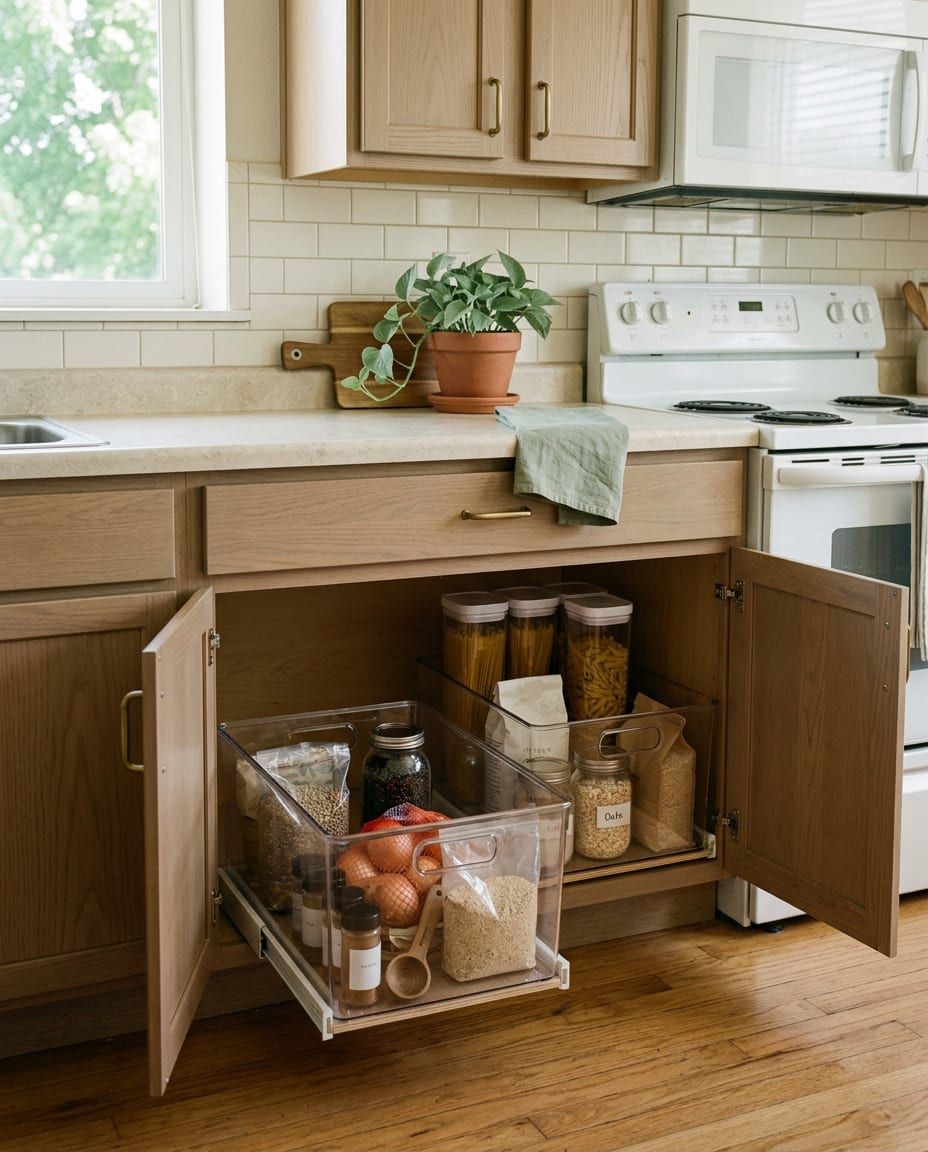
Base cabinets are about 24 inches deep, and everything at the back disappears. Clear bins with handles let you pull the whole back row forward. Group by job: one for baking, one for food storage containers, one for backup paper towels.
Why it works: Bins act like drawers you didn’t have to install.
Countertops
In a small kitchen the counter is your only workspace, so the rule is simple: if you don’t use it every day, it doesn’t live there.
6. Corral daily items on one tray
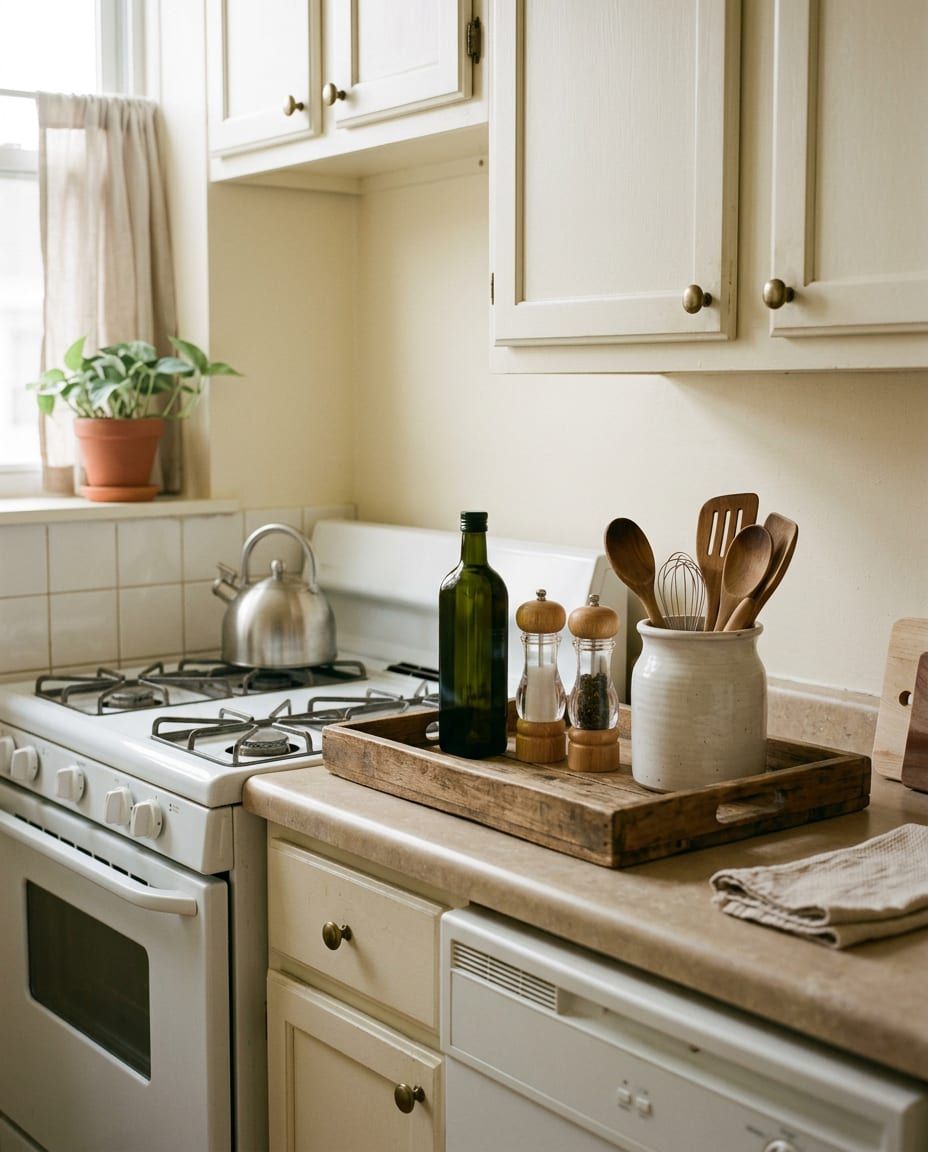
Oil, salt, pepper, a utensil crock: put them on a single tray next to the stove. Anything that doesn’t fit on the tray goes in a cabinet. A 12 × 16 inch tray works for most counters.
Why it works: One tray reads as one object, so the counter looks calm — and you can lift it to wipe underneath.
7. Go up with a two-tier corner shelf
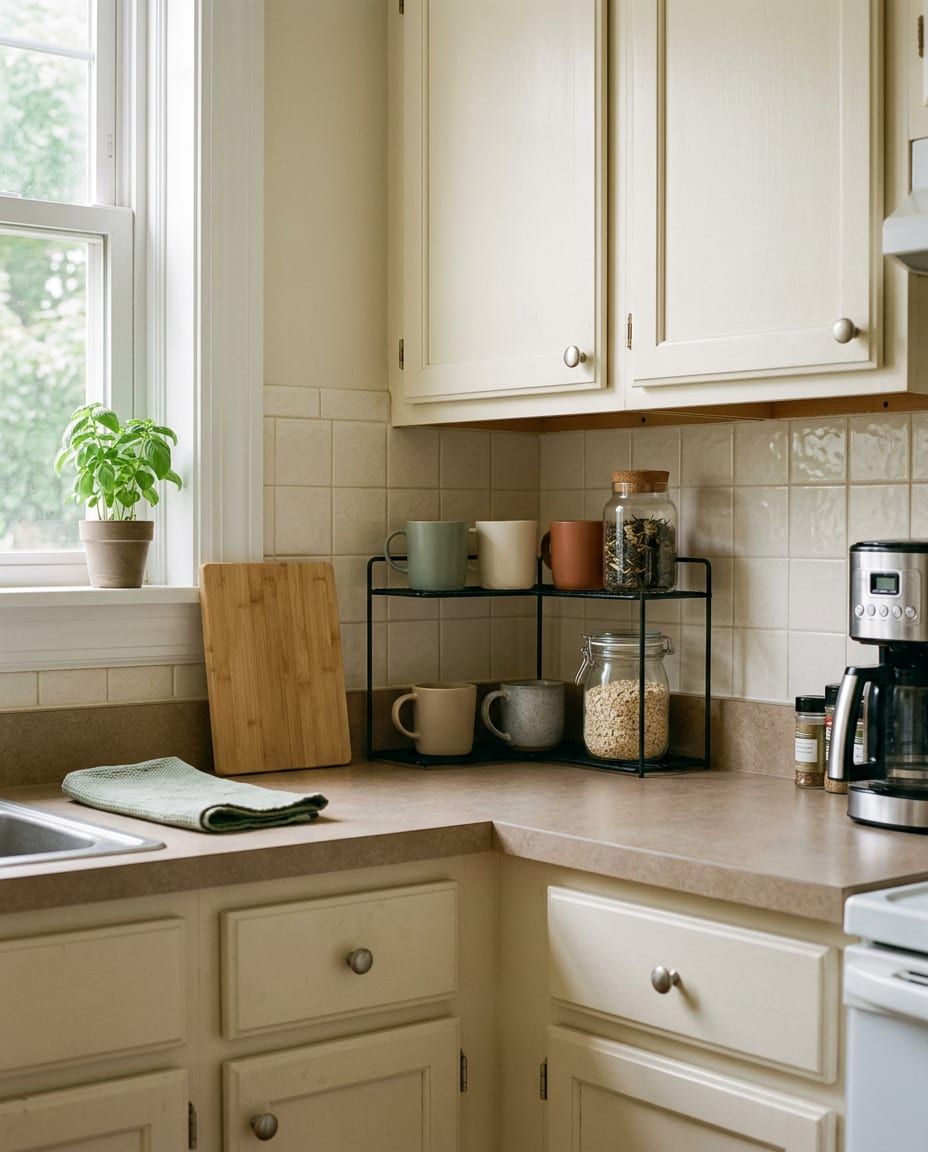
Counter corners are hard to reach for prep anyway. A two-tier shelf holds spices, a coffee setup or fruit, and leaves the front edge clear for chopping.
Why it works: It turns a dead corner into two shelves without taking extra counter depth.
8. Dry dishes over the sink
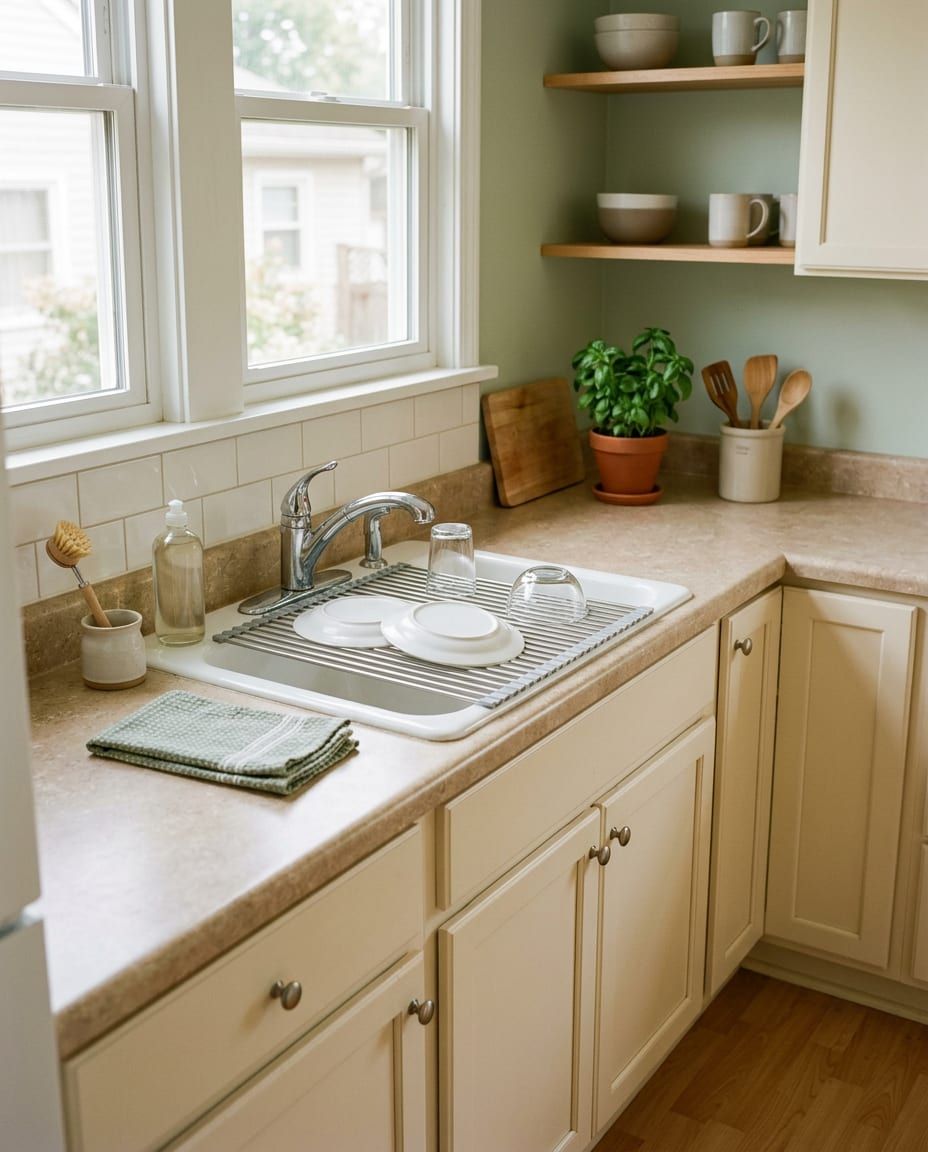
An over-the-sink rack stands on the counter on either side of the sink and drips straight into it. Measure your sink width and the height of your faucet before you buy — most racks adjust between about 26 and 34 inches wide.
Why it works: Your dish rack stops eating 2 feet of counter space.
9. Make extra prep space with a sink cover
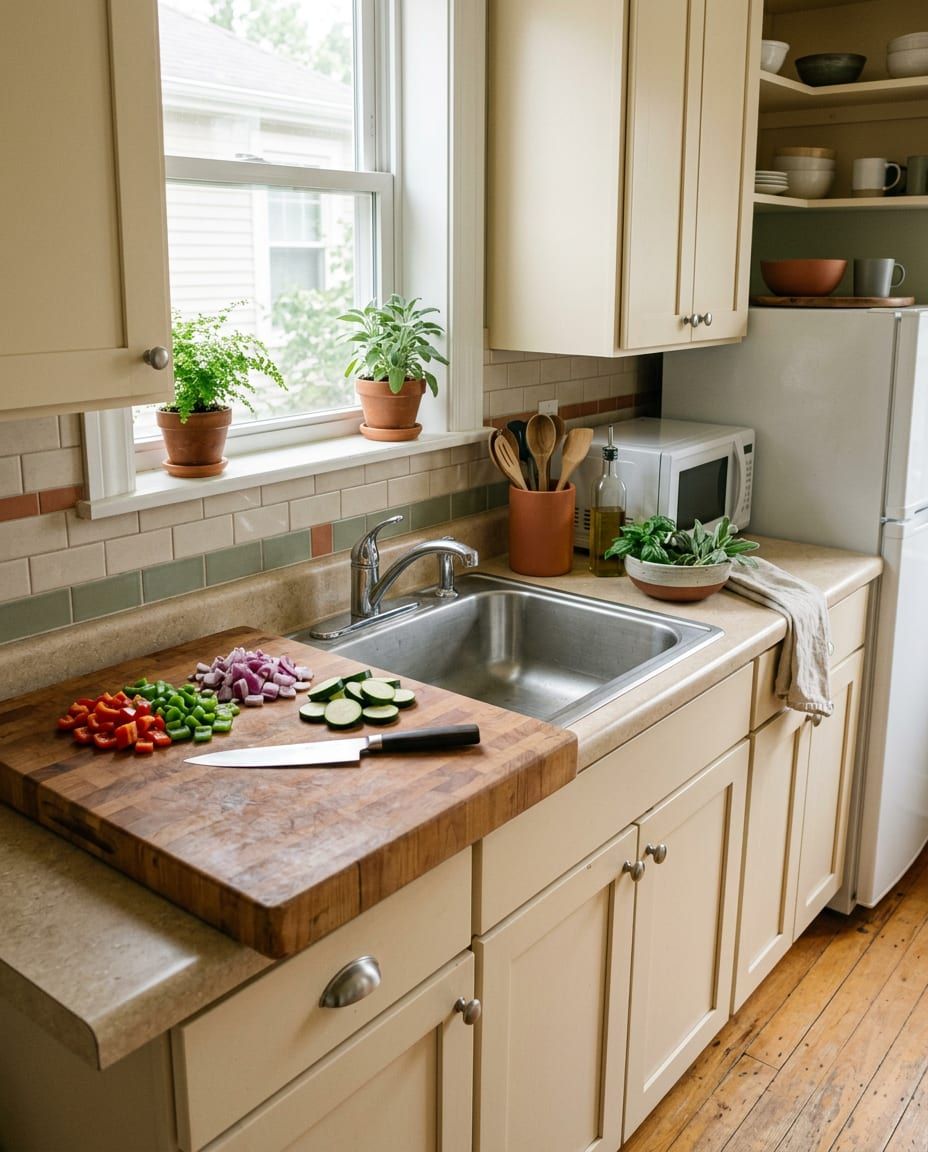
An over-the-sink cutting board or a stove-top cover gives you an extra 2 square feet of prep space on demand. Store it upright between the fridge and the counter when you’re done.
Why it works: It adds a workspace exactly where you need it, then hangs out of the way.
Under the sink
Under-sink cabinets are awkward because of the pipes, so pick storage that works around them instead of fighting them.
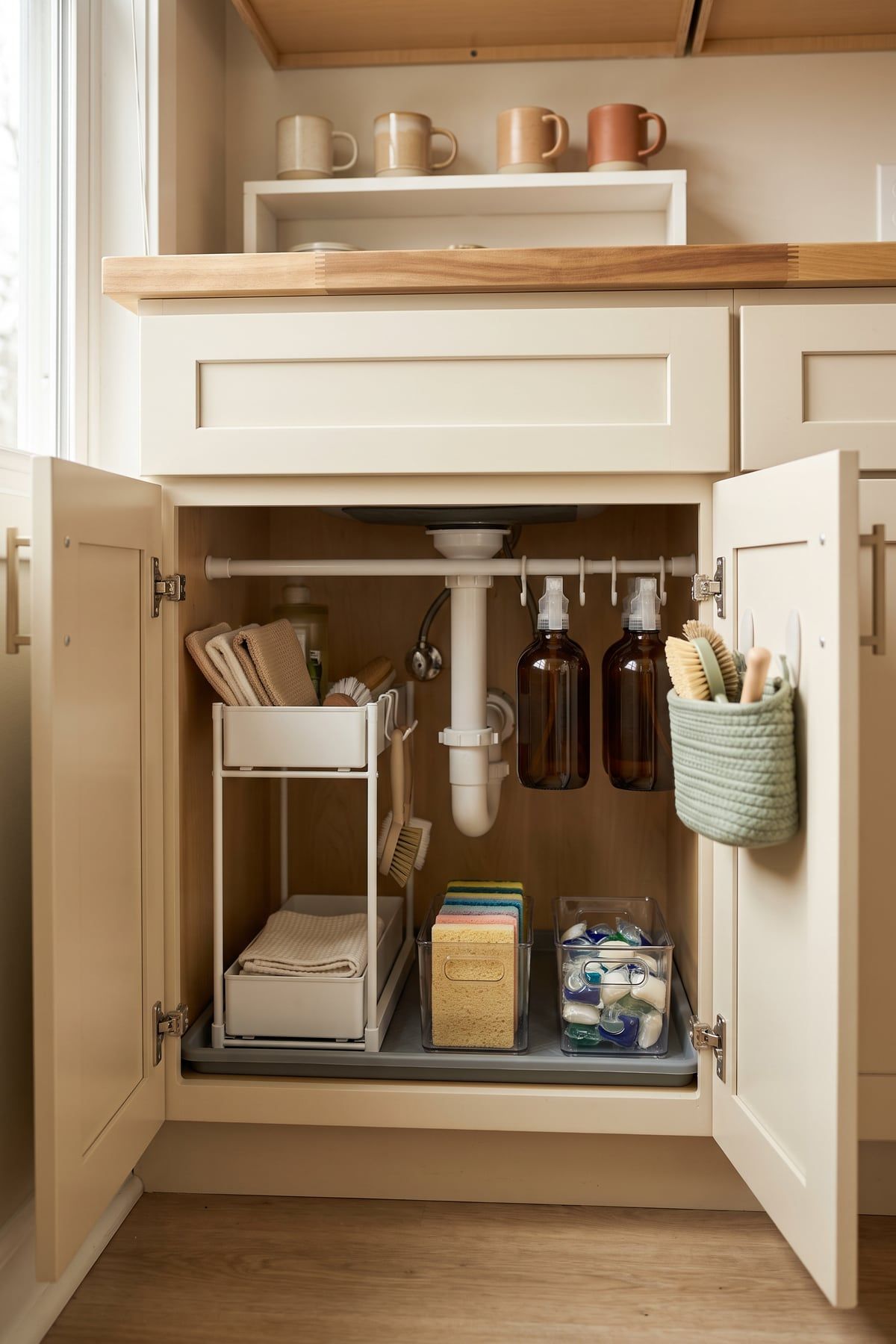
10. Use a two-tier sliding organizer
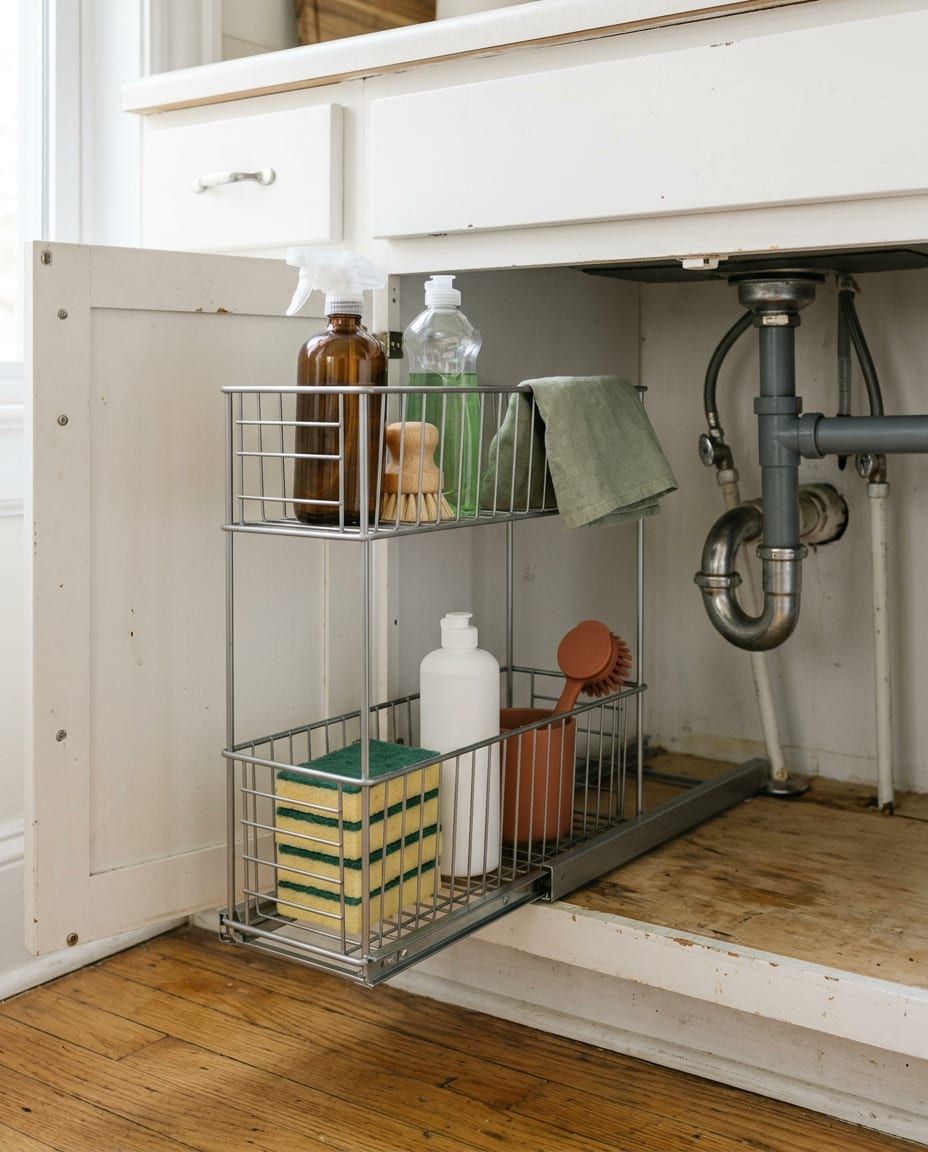
Measure the space on each side of the drain pipe, not just the whole cabinet. Many models are about 11 inches wide, so two can sit on either side of the pipes.
Why it works: Sliding baskets bring everything to you instead of you reaching into the dark.
Two-tier sliding under-sink organizer
Pick one with adjustable height to clear the pipes.
Check on Amazon(opens in a new tab)11. Hang spray bottles on a tension rod
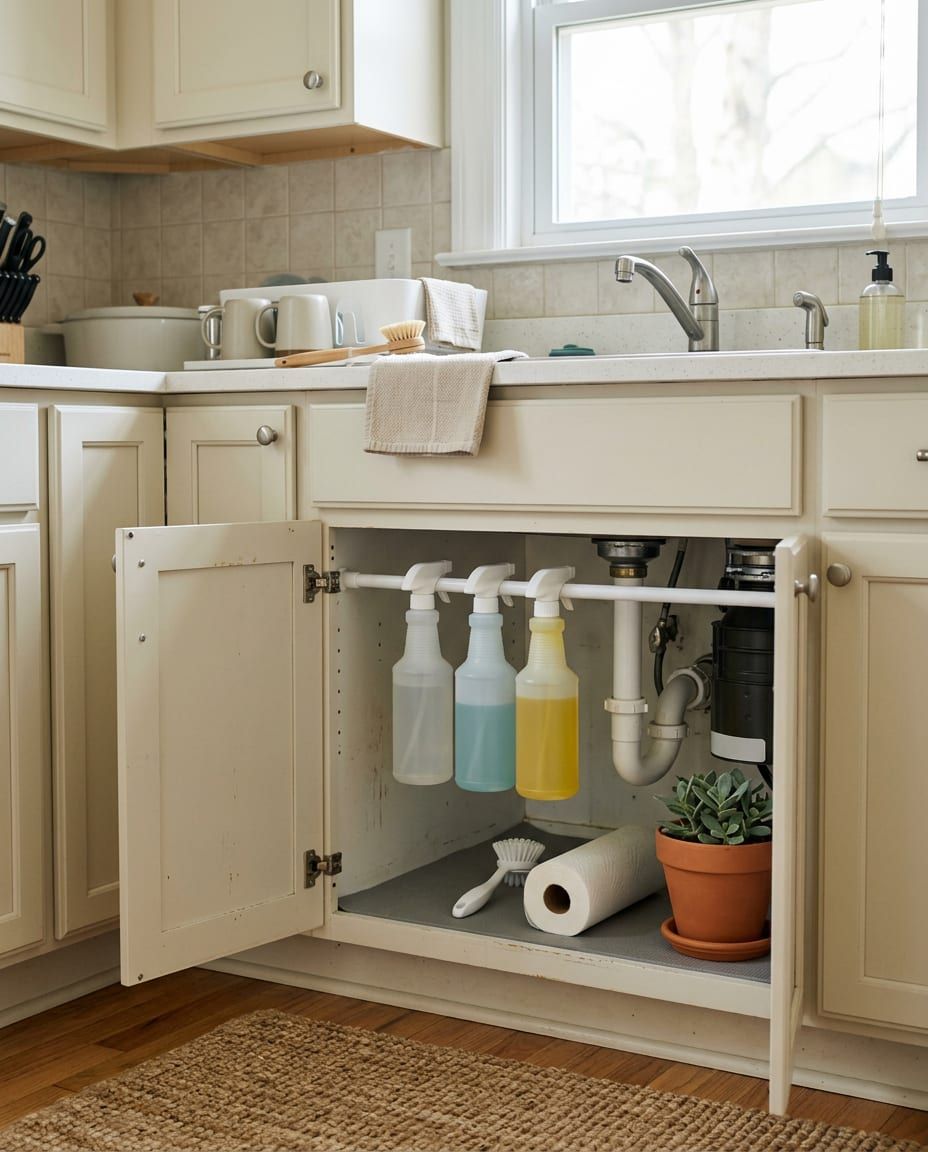
A small tension rod across the top of the cabinet holds spray bottles by their triggers. No tools, no holes, and it costs a few dollars.
Why it works: It uses the empty height at the top of the cabinet and frees the floor.
12. Give sponges a home on the door
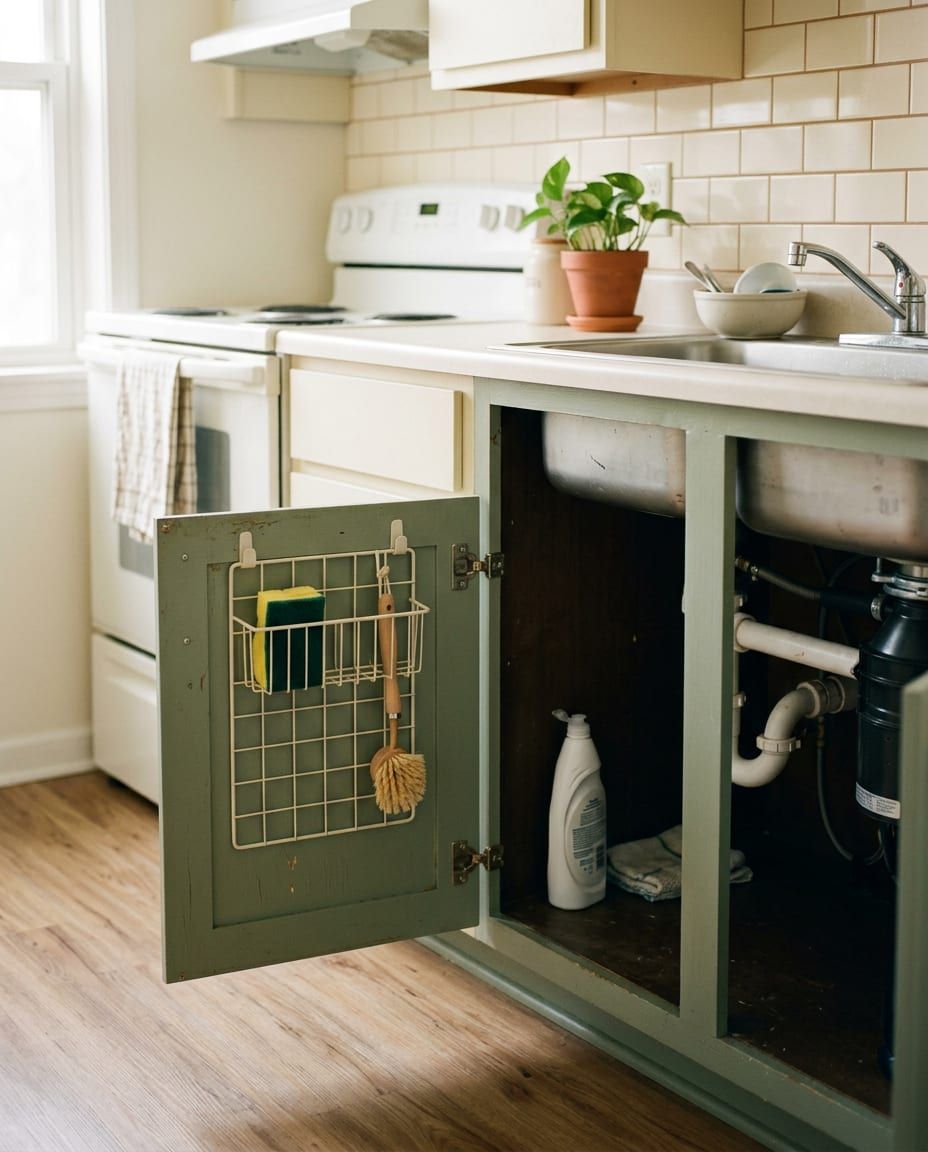
A small adhesive or over-the-door caddy on the inside of the sink cabinet holds sponges, a brush and gloves.
Why it works: Wet sponges dry faster and stop cluttering the sink edge.
Walls, doors & gaps
When you can’t drill, look for surfaces you can hook onto, stick to or slide into.
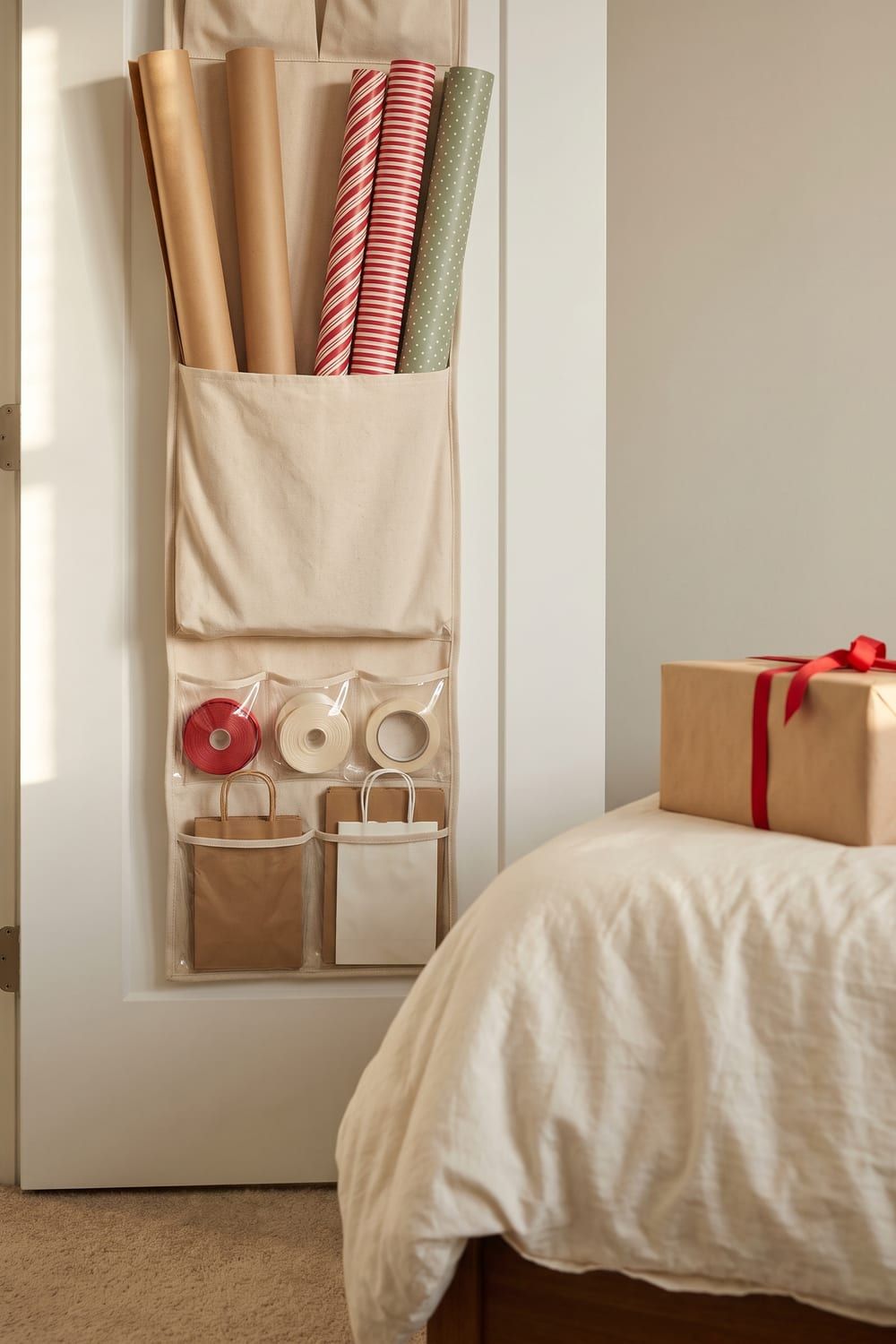
13. Turn a door into a pantry
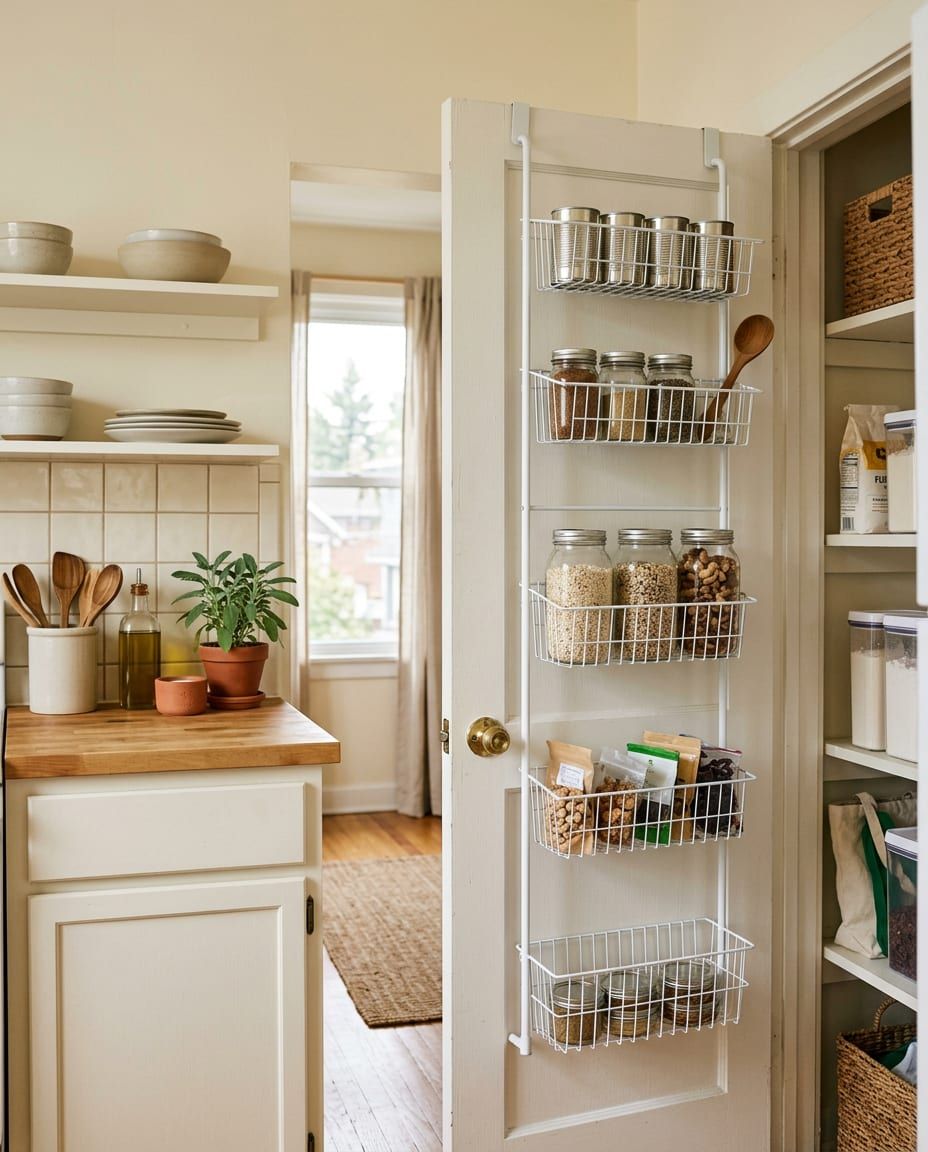
Over-the-door racks hook onto the top of the door. Check that your door closes with the hooks on — gaps above doors vary — and keep heavy jars low. Many rental doors are hollow-core, so stay within the rack’s weight limit.
Why it works: A standard door gives you about 6 feet of shelving that was doing nothing.

Over-the-door pantry rack
No tools — hooks over the top of the door.
Check on Amazon(opens in a new tab)14. Slide a slim cart into the gap
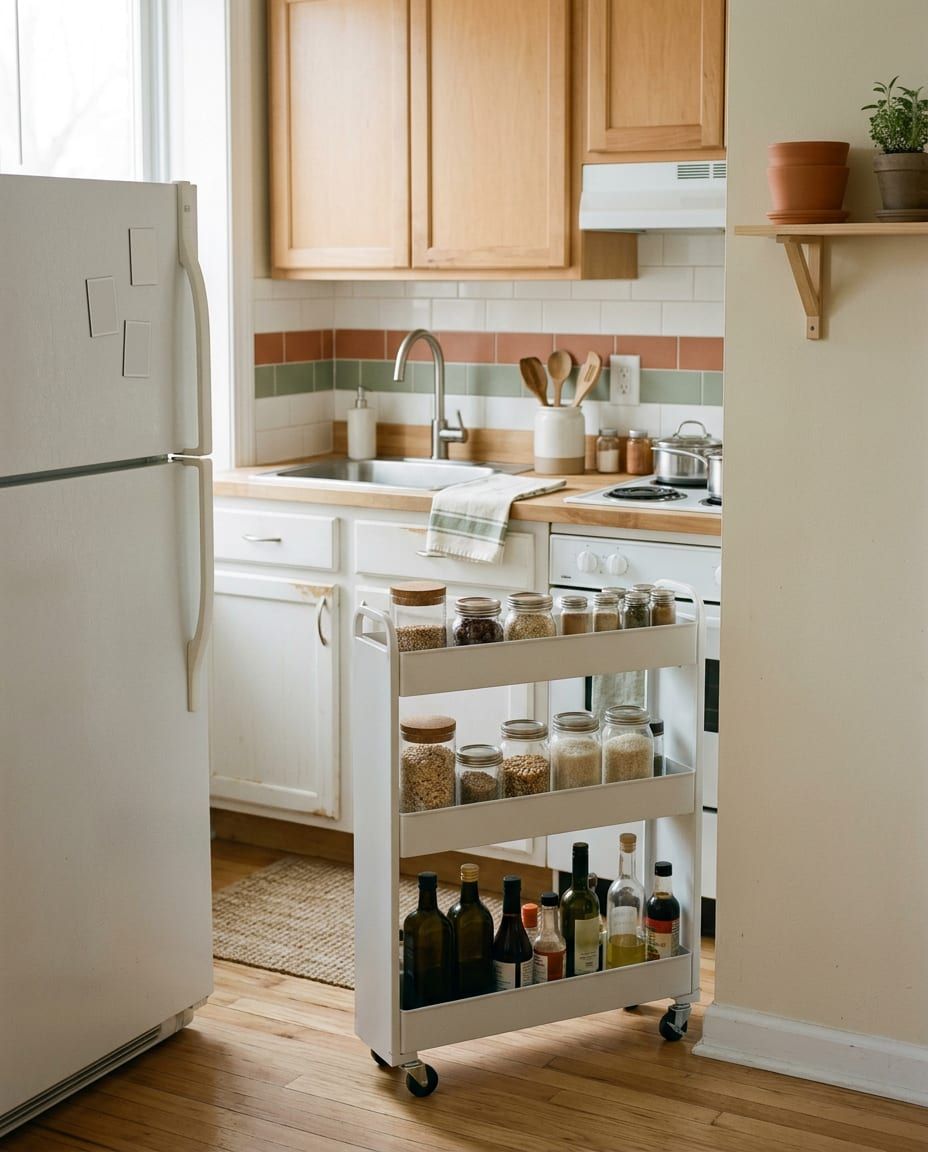
Measure the gap at floor level and at the top — walls are rarely perfectly straight. Slim carts are great for spices, cans and oils.
Why it works: The 5–7 inch gap next to the fridge becomes three shelves of storage.
Slim rolling storage cart, 5–7 in wide
Slides into the gap next to the fridge.
Check on Amazon(opens in a new tab)15. Hang mugs under the shelf
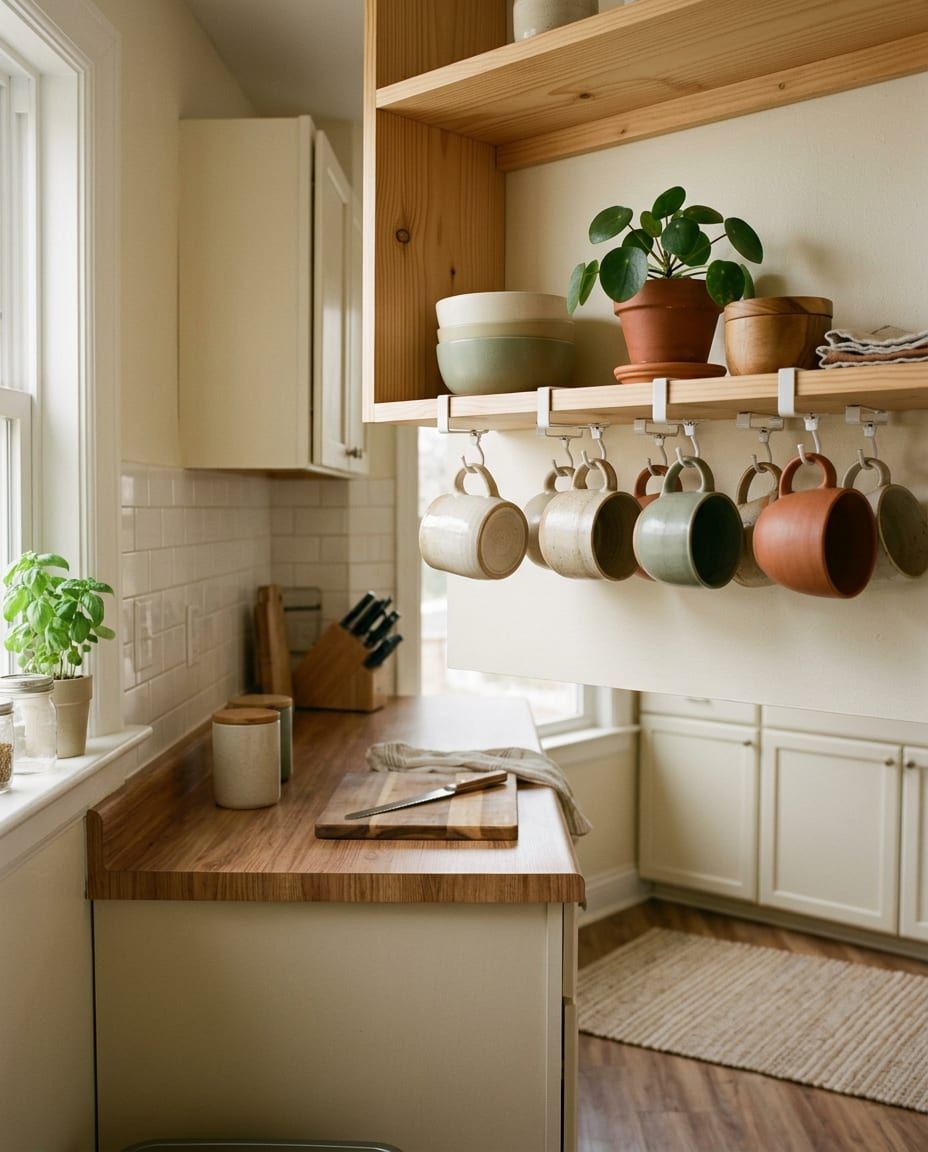
Clip-on under-shelf hooks slide onto a cabinet shelf, no screws needed. Check the shelf thickness — most fit shelves up to about 3/4 inch.
Why it works: Mugs are bulky on a shelf but take almost no space hanging.
16. Stick spices to the side of the fridge
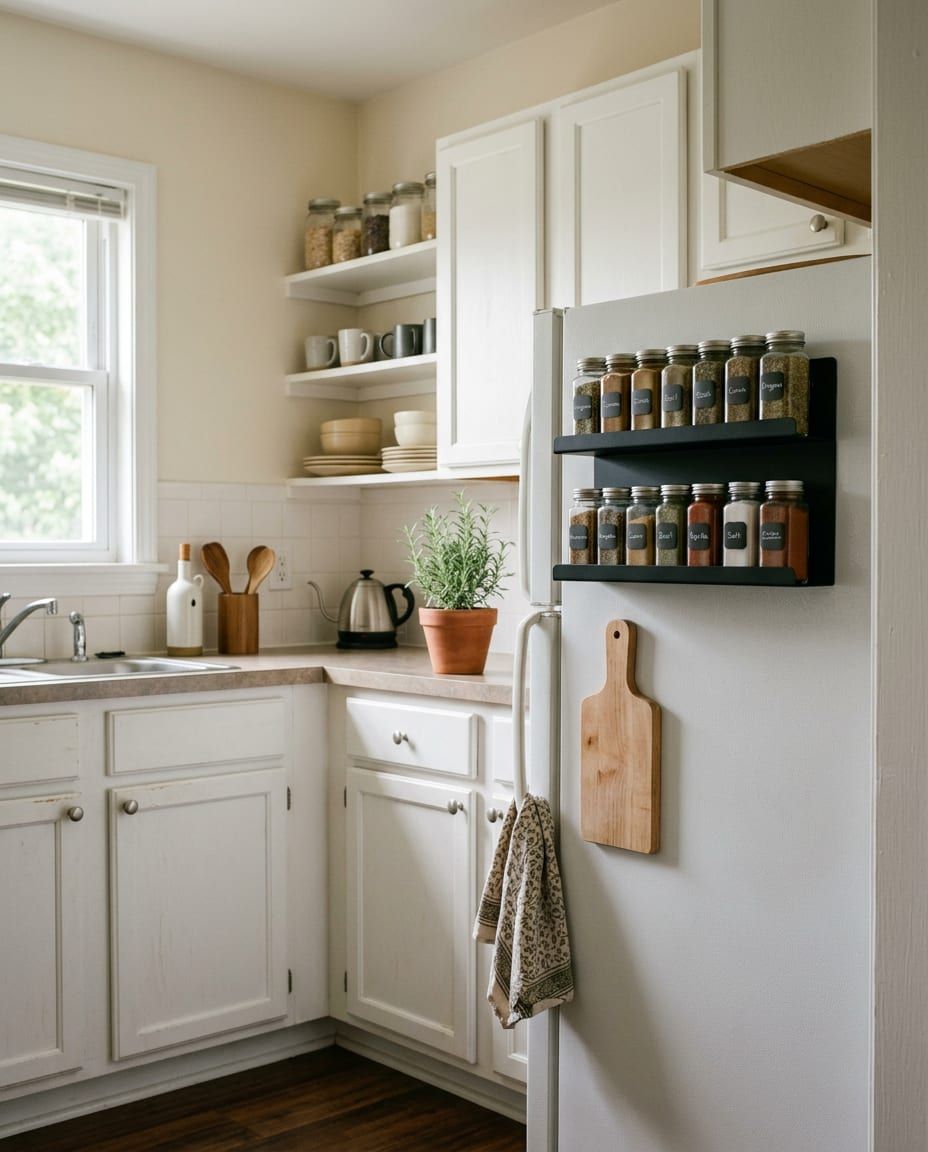
Magnetic racks need a steel fridge side; test with a fridge magnet first. Keep them away from the stove’s heat.
Why it works: It frees an entire cabinet shelf and keeps spices at arm’s length from the stove.
Fridge & pantry
The goal here is visibility: if you can see it, you’ll use it before it expires.
17. Group the fridge with clear bins
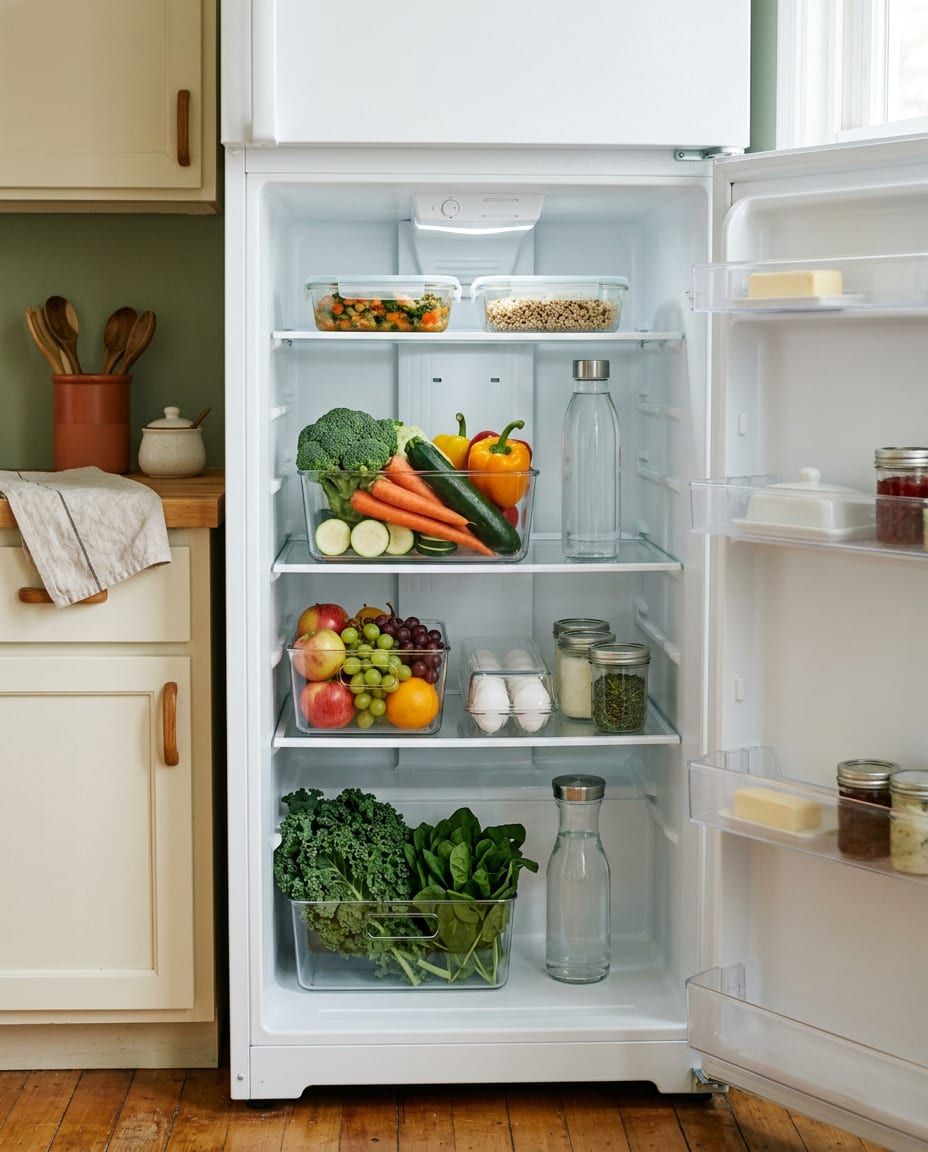
Sort by category: snacks, dairy, sauces, produce. Measure your fridge shelf depth before buying; many fridges are 14–16 inches deep inside.
Why it works: Bins work like drawers — pull one out instead of moving five jars.
Clear stackable fridge bins (set)
Group by category, pull out like a drawer.
Check on Amazon(opens in a new tab)18. Decant dry goods into square containers
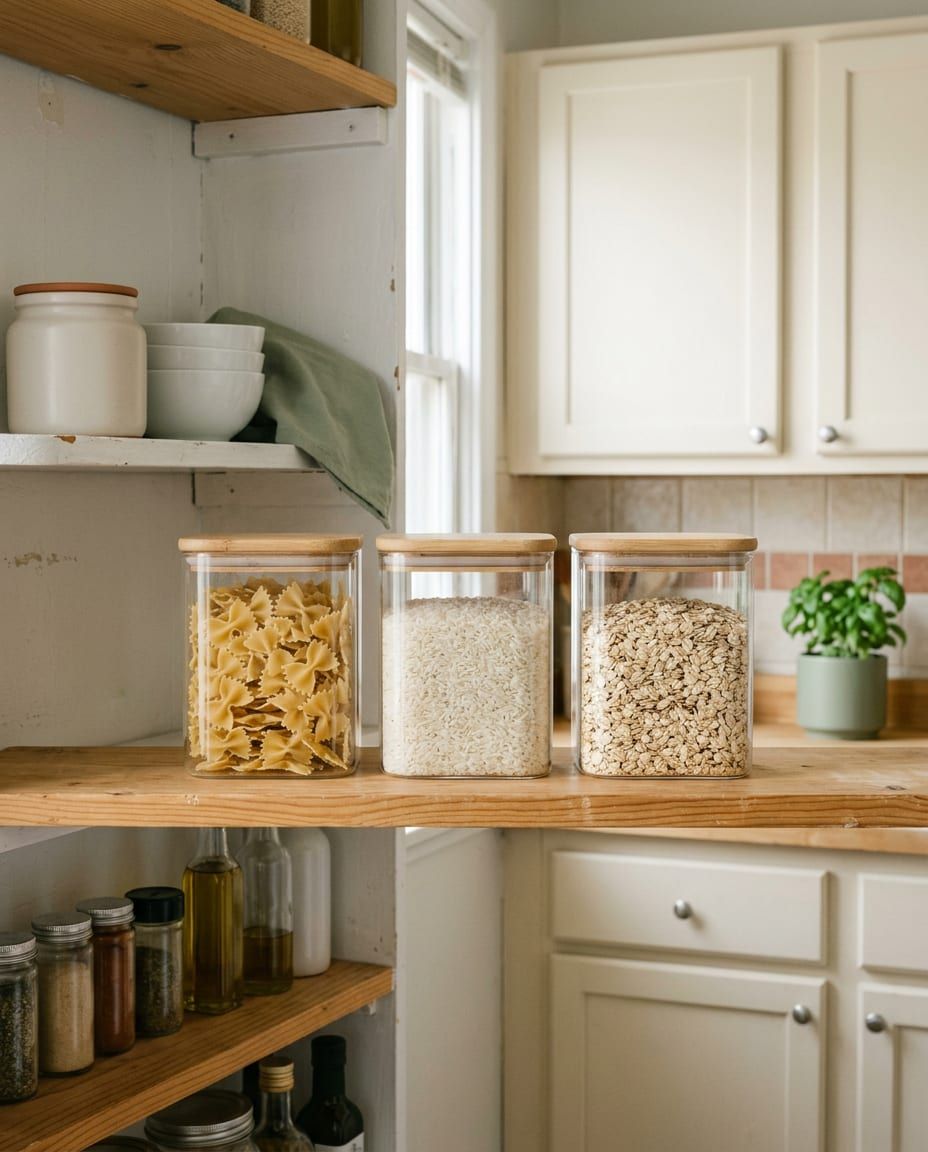
Start with what you buy most — pasta, rice, oats — instead of a full matching set.
Why it works: Square containers waste less space than round ones and stack neatly.
19. Label with removable labels
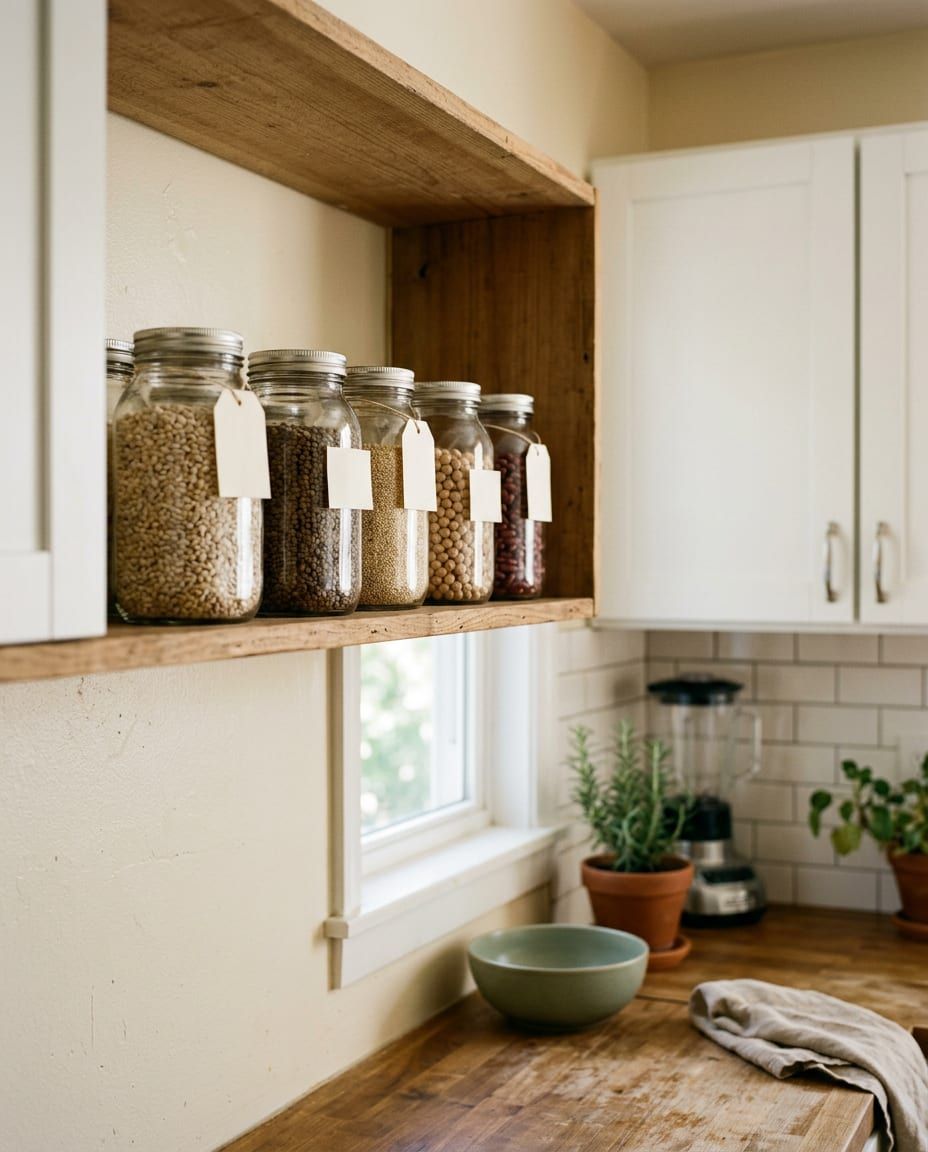
Use removable labels or a wet-erase marker so you can change categories later.
Why it works: Labels keep the system going when someone else unpacks the groceries.
20. Use the top of the fridge
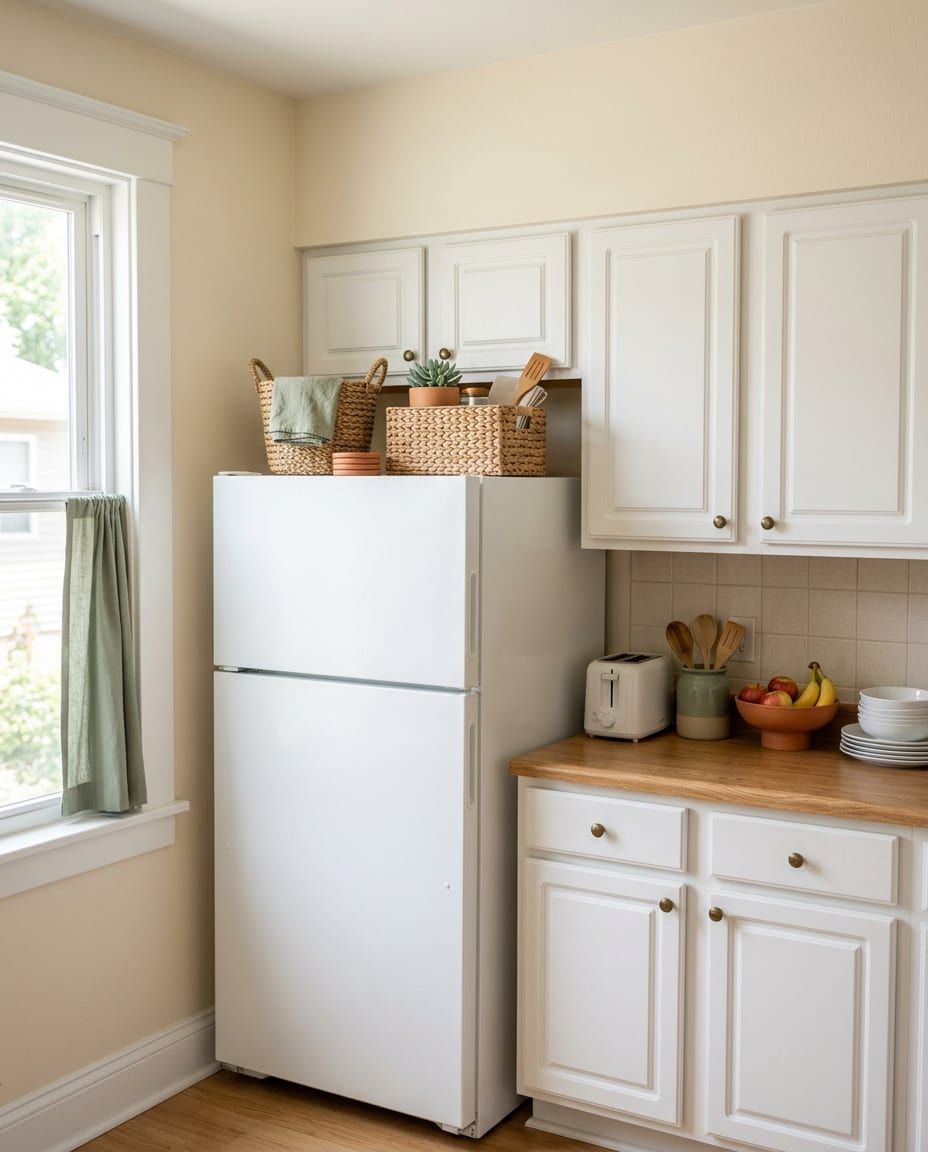
Two baskets on top of the fridge hold backup supplies or rarely used tools. Leave space at the back for ventilation.
Why it works: It’s hidden storage for things you use a few times a year.
21. Follow a one-in, one-out rule
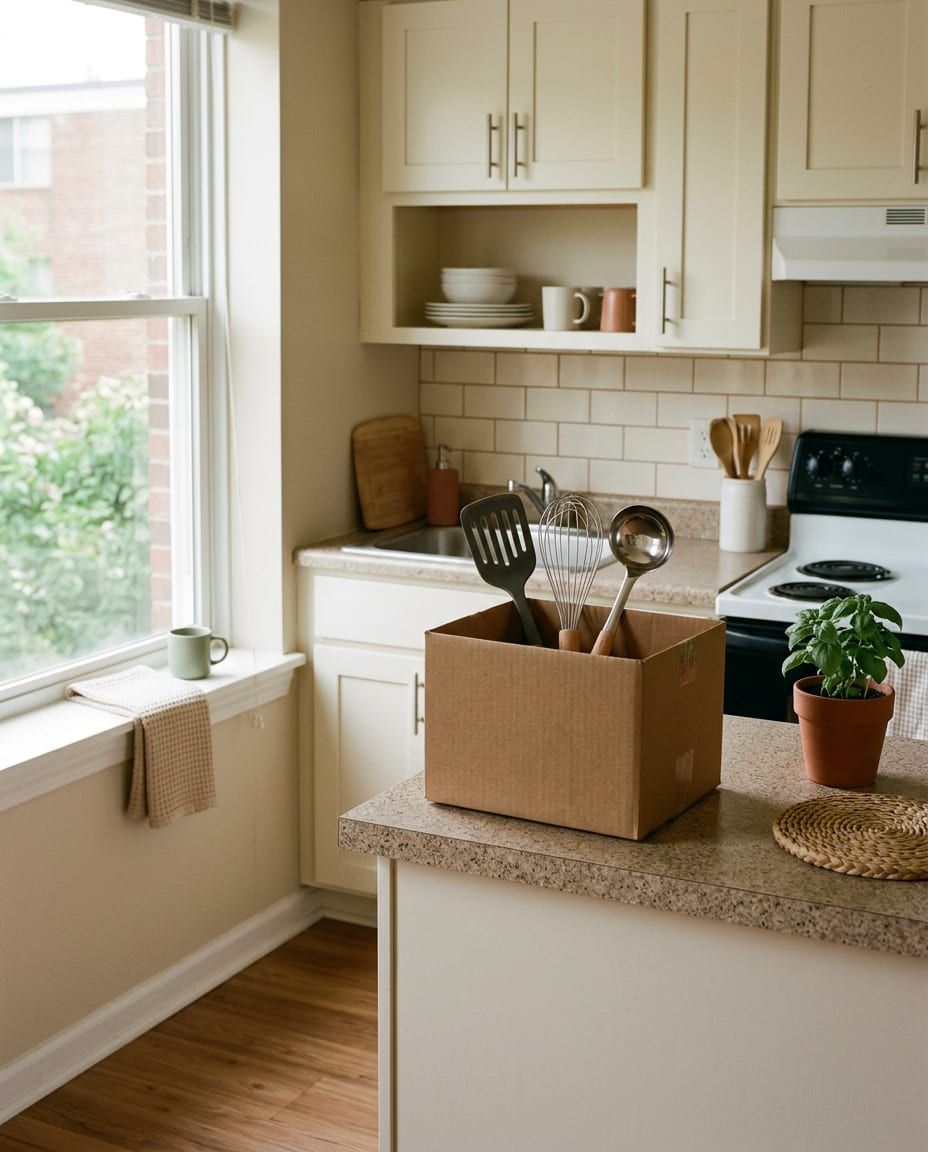
New mug in, old mug out. Keep a donation bag in the hall closet to make it easy.
Why it works: Small kitchens stay organized only if the amount of stuff stays the same.
Measure before you buy
Measure the inside of each cabinet, not the door: width, depth and height, minus anything that sticks out — hinges, face frames and pipes.
- Upper cabinets: usually about 12 in deep. Look for risers 9–10 in deep.
- Base cabinets: usually about 24 in deep. Pull-out bins should be at least 16 in long to be worth it.
- Gap next to the fridge: measure at the floor and at the top; slim carts start at about 5 in.
Mistakes to avoid
- Buying a matching container set before you know what you actually store.
- Using adhesive hooks on textured or freshly painted surfaces — they won’t hold.
- Loading an over-the-door rack beyond its limit on a hollow-core door.
Our top picks
The short list, if you just want to get it done this weekend. We don’t list prices because they change daily — check the current price on the retailer’s site.
| Product | Best for | Link |
|---|---|---|
| Expandable cabinet shelf riserDoubles the usable height of a deep cabinet. | Plates and bowls | Check on Amazon(opens in a new tab) |
| Non-slip turntable (lazy Susan), 10–11 inEnds the “reach behind everything” problem. | Corner cabinets, oils | Check on Amazon(opens in a new tab) |
| Two-tier sliding under-sink organizerPick one with adjustable height to clear the pipes. | Under the sink | Check on Amazon(opens in a new tab) |
| Over-the-door pantry rackNo tools — hooks over the top of the door. | Pantry doors | Check on Amazon(opens in a new tab) |
| Slim rolling storage cart, 5–7 in wideSlides into the gap next to the fridge. | Narrow gaps | Check on Amazon(opens in a new tab) |
| Clear stackable fridge bins (set)Group by category, pull out like a drawer. | Fridge and pantry | Check on Amazon(opens in a new tab) |
Shop the look
Frequently asked questions
How do I organize a small kitchen with no pantry?
Turn one tall cabinet or the back of a door into the pantry. An over-the-door rack holds cans and snacks, clear bins group dry goods, and a slim rolling cart in the gap next to the fridge adds a few more shelves without taking floor space you use.
Will adhesive hooks damage my rental cabinets?
Removable adhesive strips usually come off clean from smooth, sealed surfaces if you pull the tab straight down slowly. They are not reliable on textured, freshly painted or raw wood surfaces. Test one in a hidden spot first and stay within the weight rating on the package.
What should I store on the counter in a small kitchen?
Only what you use every day. For most people that is a knife block or magnetic strip, a utensil crock, and one appliance like a coffee maker. Corral the rest on a single tray so the counter wipes clean in seconds.
How deep are standard kitchen cabinets?
In the US, base cabinets are usually about 24 inches deep and upper cabinets about 12 inches deep. Always measure the inside of your own cabinets, though — hinges, face frames and pipes can take away an inch or more.
Are drawer organizers worth it in a small kitchen?
Yes, if you measure first. Expandable bamboo or plastic trays that adjust to your drawer width keep utensils from piling up, and they move with you to the next apartment.
Start with one cabinet
You don’t need to redo the whole kitchen this weekend. Pick the cabinet that annoys you most, add one riser or one bin, and live with it for a week. For the cabinet under the sink, see our under-sink organization ideas; for walls and doors, our vertical storage ideas; and for a full reset, the January declutter checklist. More in kitchen organization.
Free printable
Get the free Small Space Declutter Checklist
A printable, room-by-room checklist — plus one cozy small-space idea a week. No spam, unsubscribe anytime.
By subscribing you agree to our Privacy Policy.