January Declutter Checklist for Small Spaces
Images in this post are AI-generated illustrations. Why?
Heads up: this post contains affiliate links. If you buy through them, we may earn a small commission at no extra cost to you. How it works. As an Amazon Associate, we earn from qualifying purchases.
This January declutter checklist breaks a small apartment into twelve 15-minute sessions, three a week for four weeks, so you clear out the holiday leftovers without giving up a whole weekend. Each session covers one small zone and ends with three bags: trash, donate and “belongs somewhere else.” Print it, set a timer and start with the fridge.
In this post
- How this checklist works
- Week 1: Kitchensessions 1–3
- Week 2: Bedroom and closetsessions 4–6
- Week 3: Bathroom and entrysessions 7–9
- Week 4: Holiday wrap-upsessions 10–12
- Where it all goes
- Our top picks
- FAQ
How this checklist works
Short sessions work better than one big cleanout because you stop before you’re tired of making decisions. The rules are simple:
- 15 minutes, one zone. Set a timer. When it rings, stop, even if you’re mid-drawer.
- Three bags every time: trash and recycling, donate, and things that live in another room. Put the third bag away at the end of each session, not “later.”
- Don’t buy organizers yet. Declutter first, then measure what’s left. Most people need fewer bins than they think.
- Three sessions a week. Two weeknights and one weekend morning is a good rhythm. Miss one? Just do the next one.
Week 1: Kitchen
Start where holiday leftovers pile up first; a clear fridge and counter feel like a win by Wednesday.
1. Session 1: Fridge and freezer
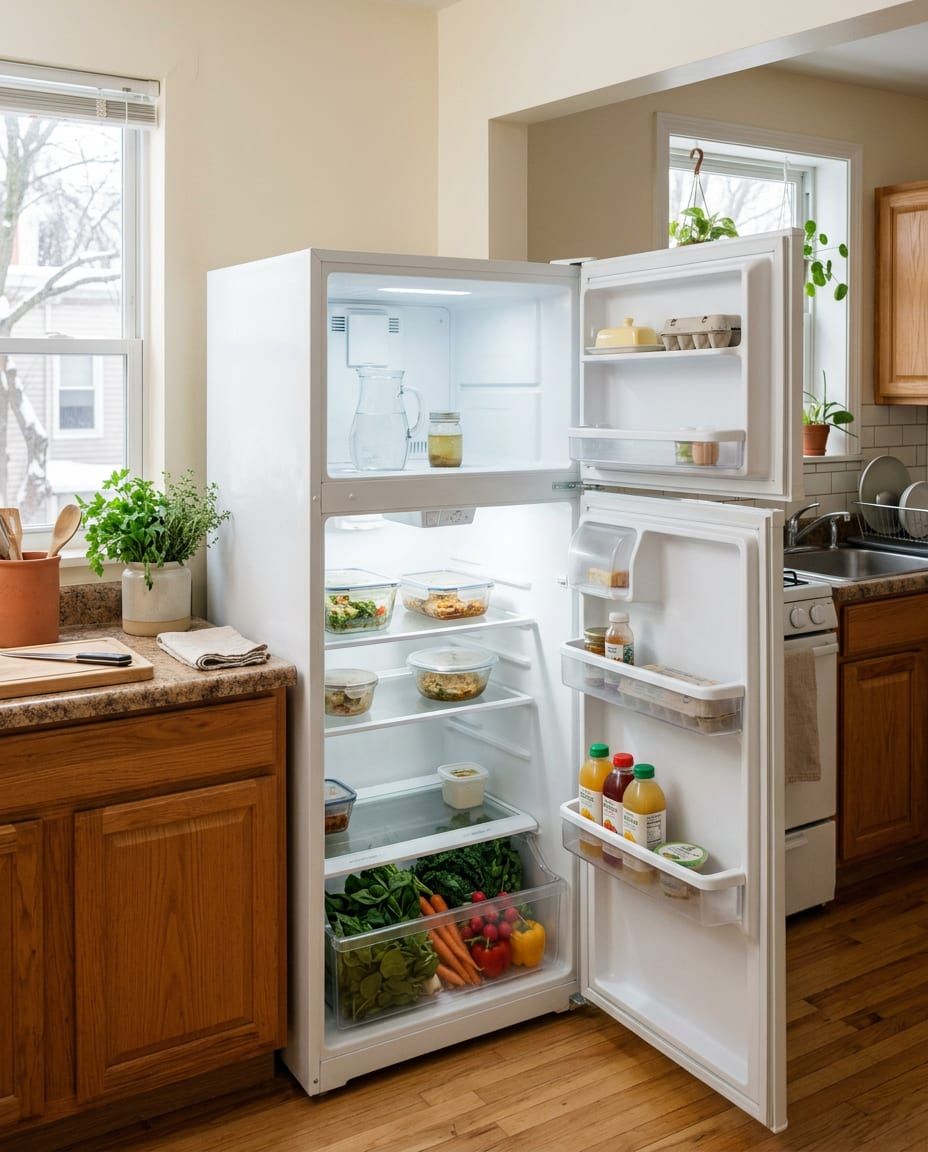
- Toss holiday leftovers older than three to four days (the general food-safety guideline for cooked leftovers).
- Check sauces and condiments for “refrigerate after opening” and use-by dates.
- Pull out freezer items you can’t identify; if you don’t know what or when, let it go.
- Wipe one shelf at a time while it’s empty.
Why it works: It’s the fastest visible result, and it frees room for real groceries.
2. Session 2: Pantry and spice shelf
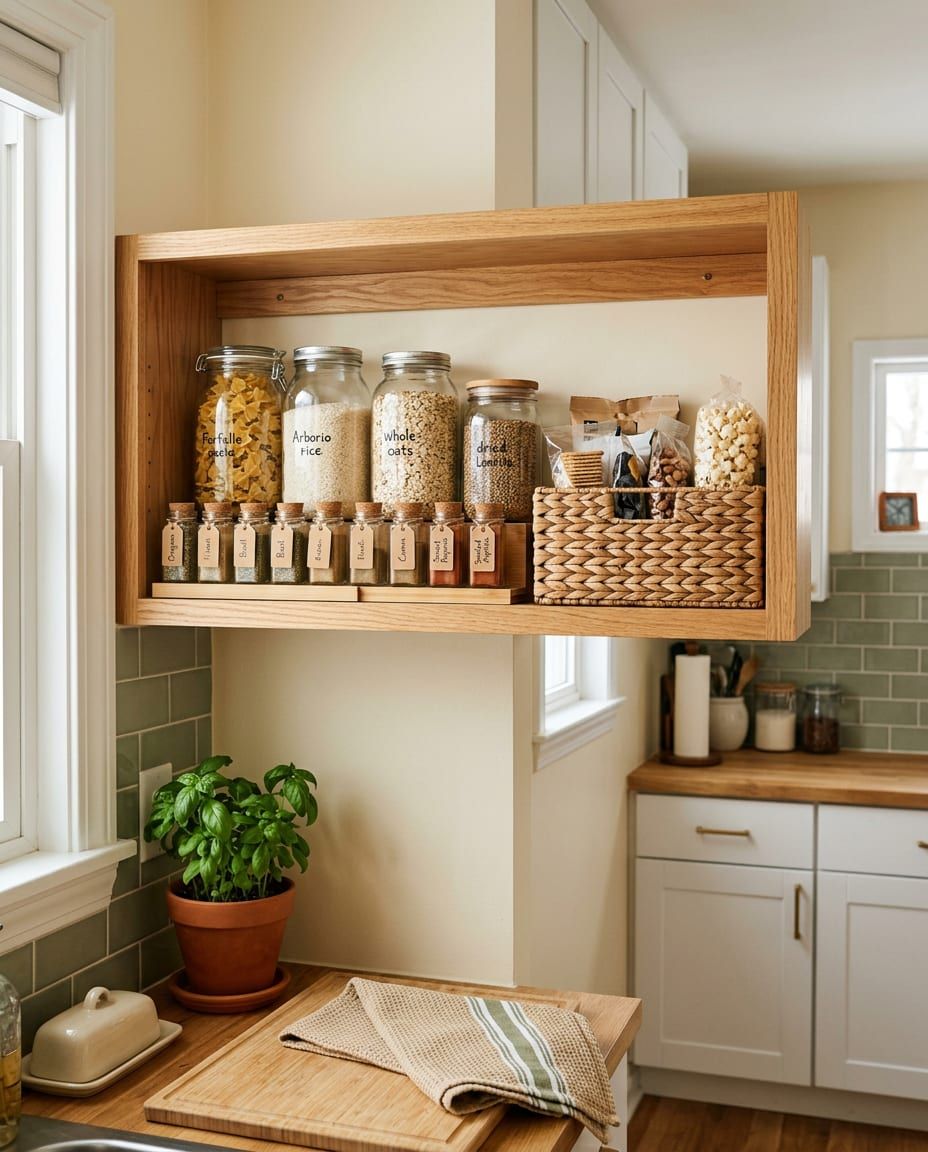
- Pull out everything past its date and any half-used baking mixes from the holidays.
- Combine duplicate open packages of the same thing.
- Ground spices fade after a couple of years; smell them, and if there’s no scent, replace them.
- Put the things you use most at eye level.
Why it works: You’ll see what you actually have and stop buying doubles.
3. Session 3: Counters, mugs and containers
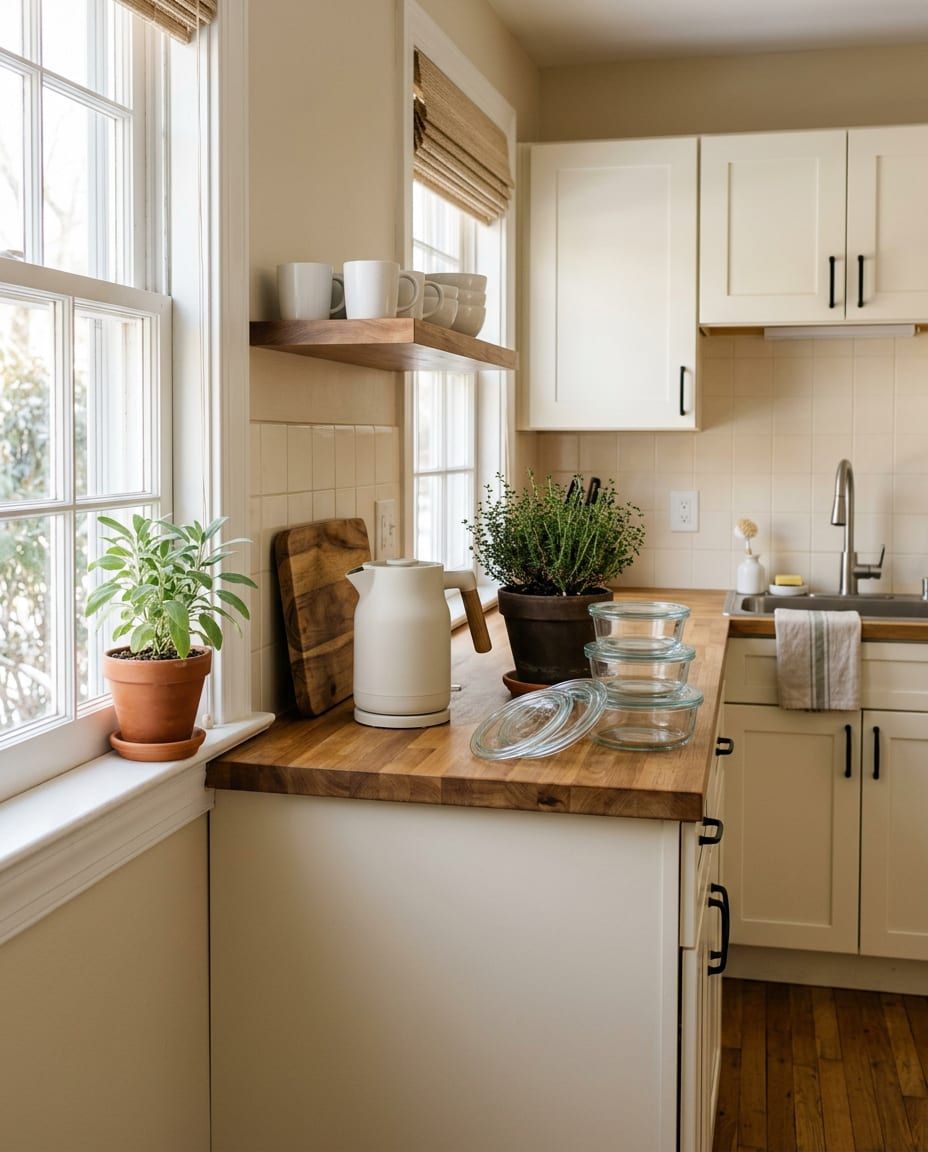
- Keep only daily-use appliances on the counter; the rest go in a cabinet or the donate bag.
- Count the mugs and keep your favorites; holiday gift mugs are easy to donate.
- Match every food container to a lid and recycle the orphans.
- If the under-sink cabinet is a mess, our under-sink organization ideas help.
Why it works: Clear counters make a small kitchen feel twice as big.
Week 2: Bedroom and closet
The bedroom is where you start and end the day, so it’s worth a calm reset.
4. Session 4: The winter closet edit
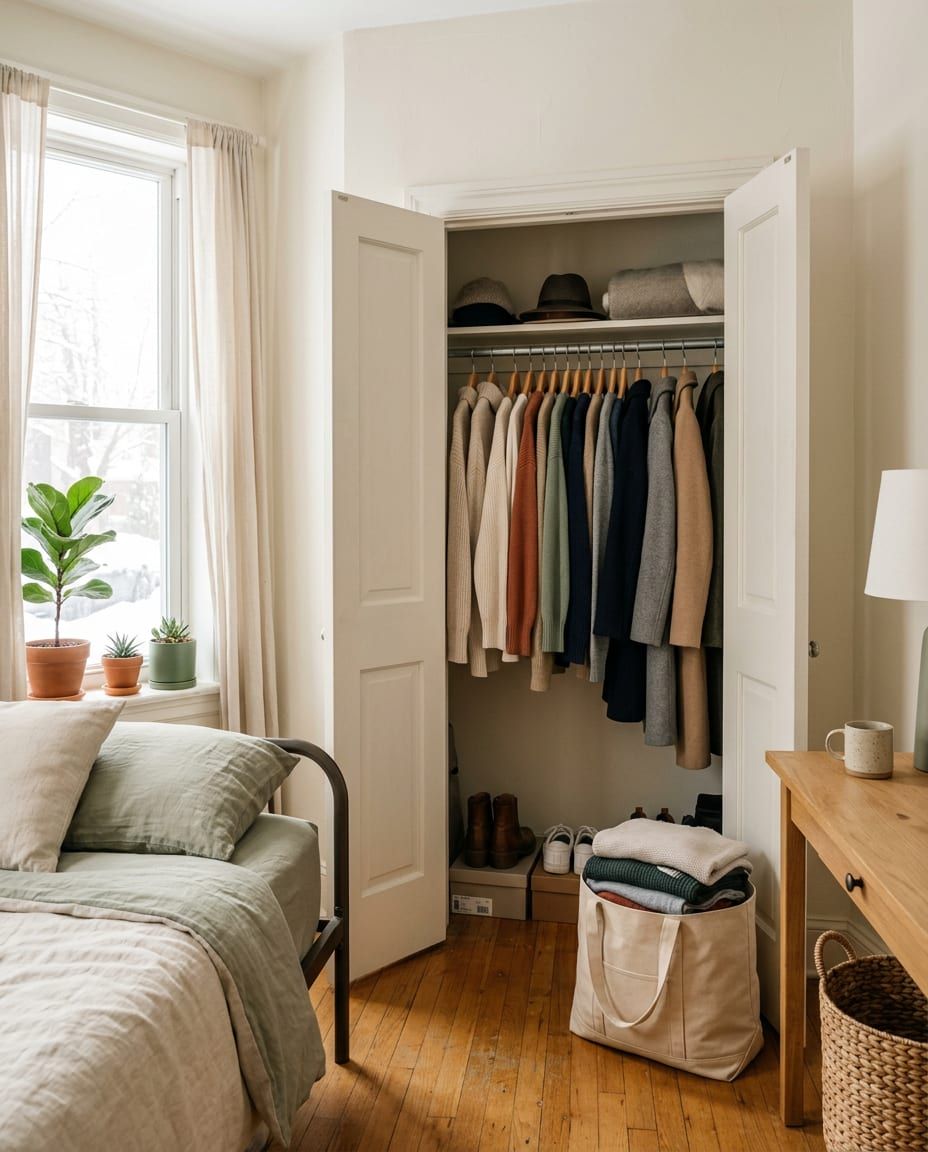
- Pull out anything that doesn’t fit, is worn out, or you skipped all of December.
- Turn every hanger backward; flip it when you wear the item, and by spring you’ll know what to donate.
- Bag out-of-season clothes for under the bed.
- More in our small closet organization ideas.
Why it works: You decide based on what you wore this winter, not what you might wear.
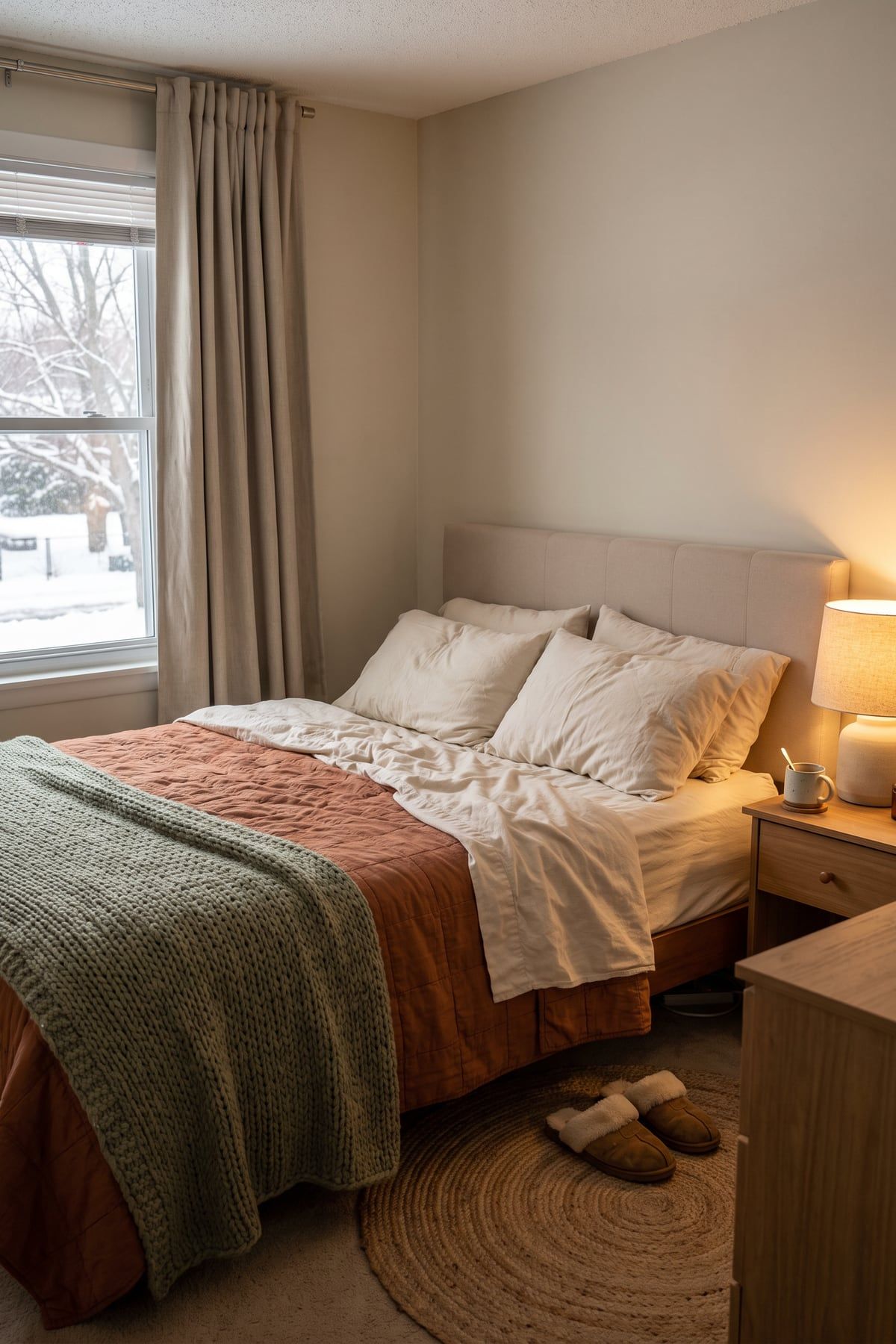
5. Session 5: Nightstand and dresser top
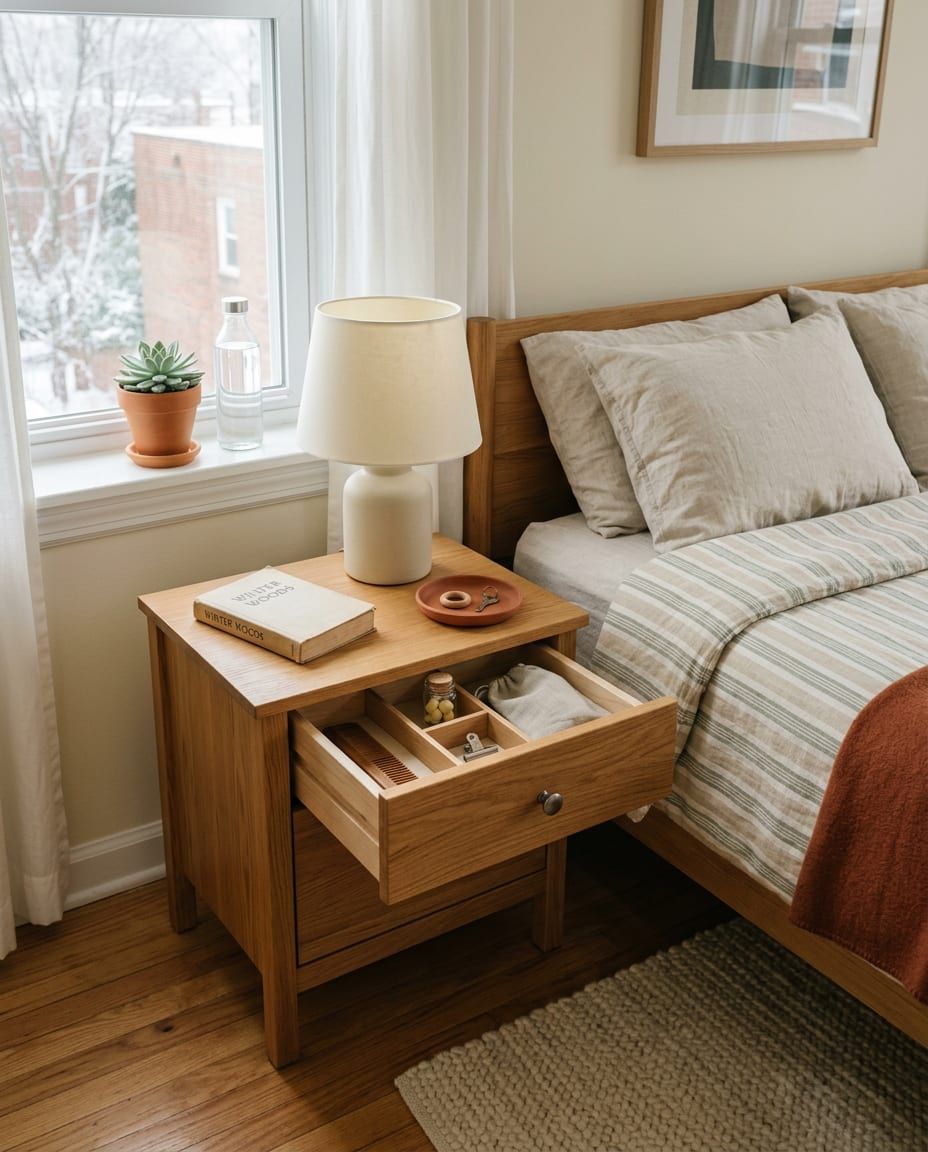
- Clear everything off and put back only a lamp, a book and one or two things you use nightly.
- Empty the nightstand drawer: old receipts, dead pens, loose cables.
- A small tray or divider keeps what’s left from turning into a pile again.
Why it works: Flat surfaces collect clutter first, and clearing them changes the whole room.
Adjustable drawer organizer trays
Measure drawer width and depth first.
Check on Amazon(opens in a new tab)6. Session 6: Under the bed and linens
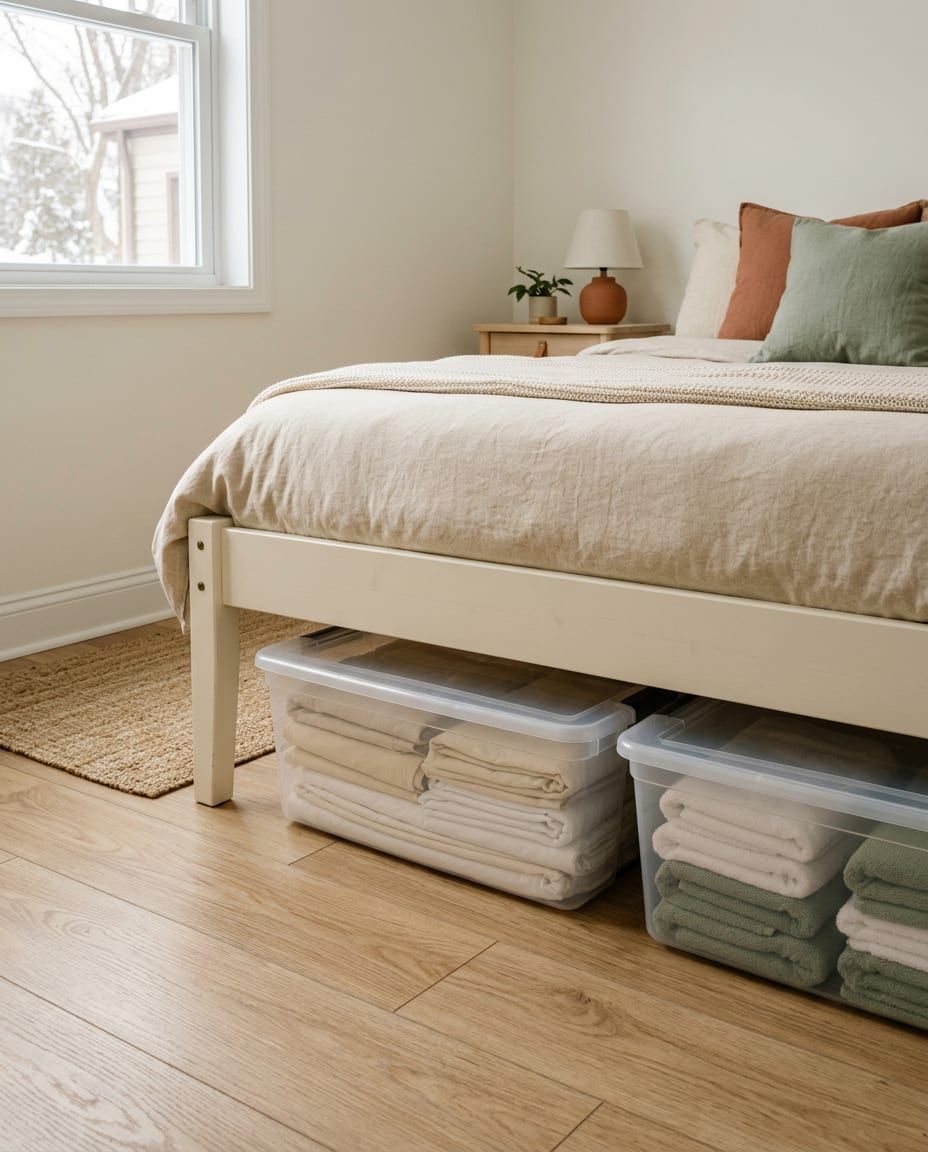
- Pull everything out from under the bed and decide on each item.
- Keep about two sets of sheets per bed and two towels per person; donate extras (many animal shelters take old towels and blankets, so call first).
- Store what stays in lidded bins so dust stays out.
Why it works: Under-bed space is valuable in a small apartment, so it should hold things you want.
Week 3: Bathroom and entry
Small zones, lots of expired products: these sessions go fast.
7. Session 7: Medicine cabinet
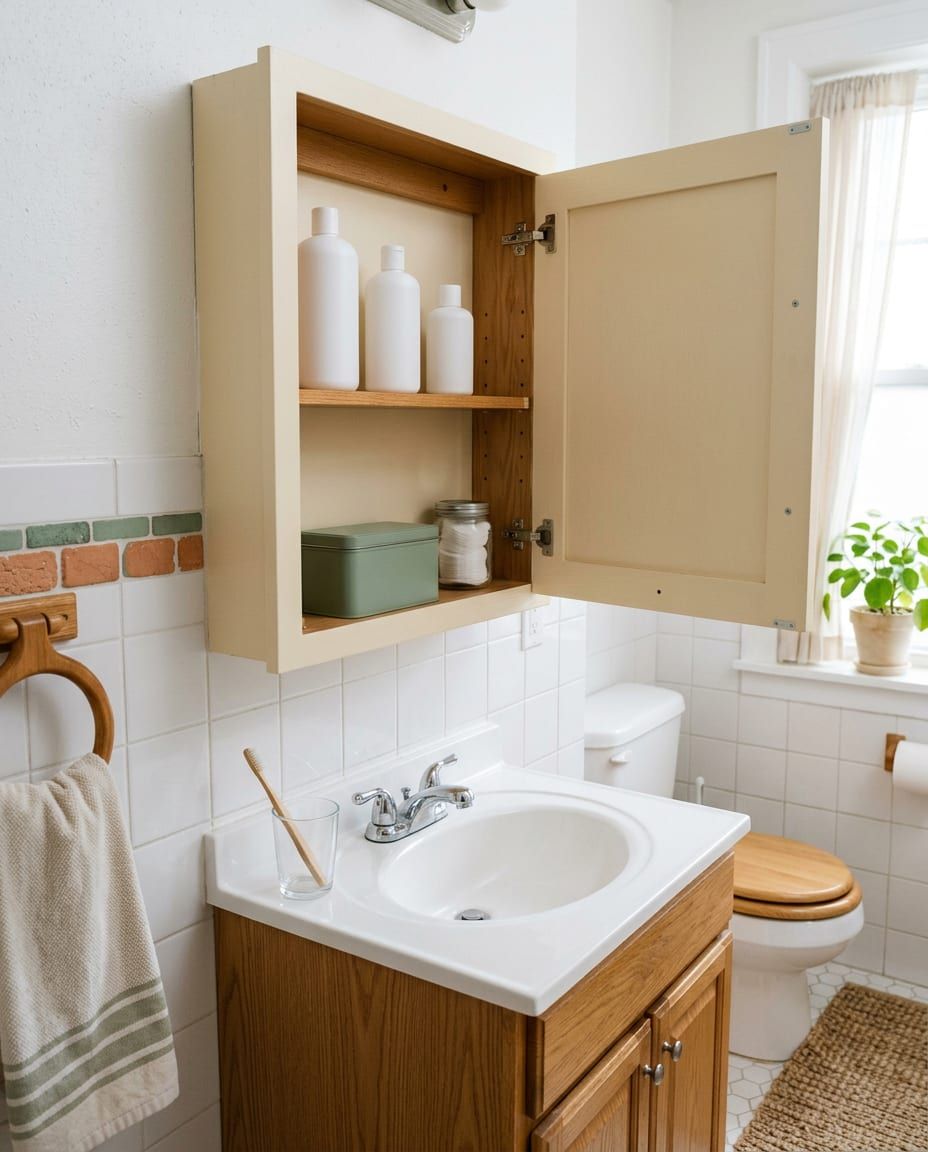
- Check expiration dates on medicine, sunscreen and first-aid supplies.
- Don’t throw old medicine loose in the trash: many pharmacies have take-back drop boxes, and the FDA website explains safe disposal when there’s no take-back option.
- Restock basics like bandages and pain relievers you ran out of.
Why it works: Expired medicine and sunscreen may not work as they should.
8. Session 8: Makeup, skincare and samples
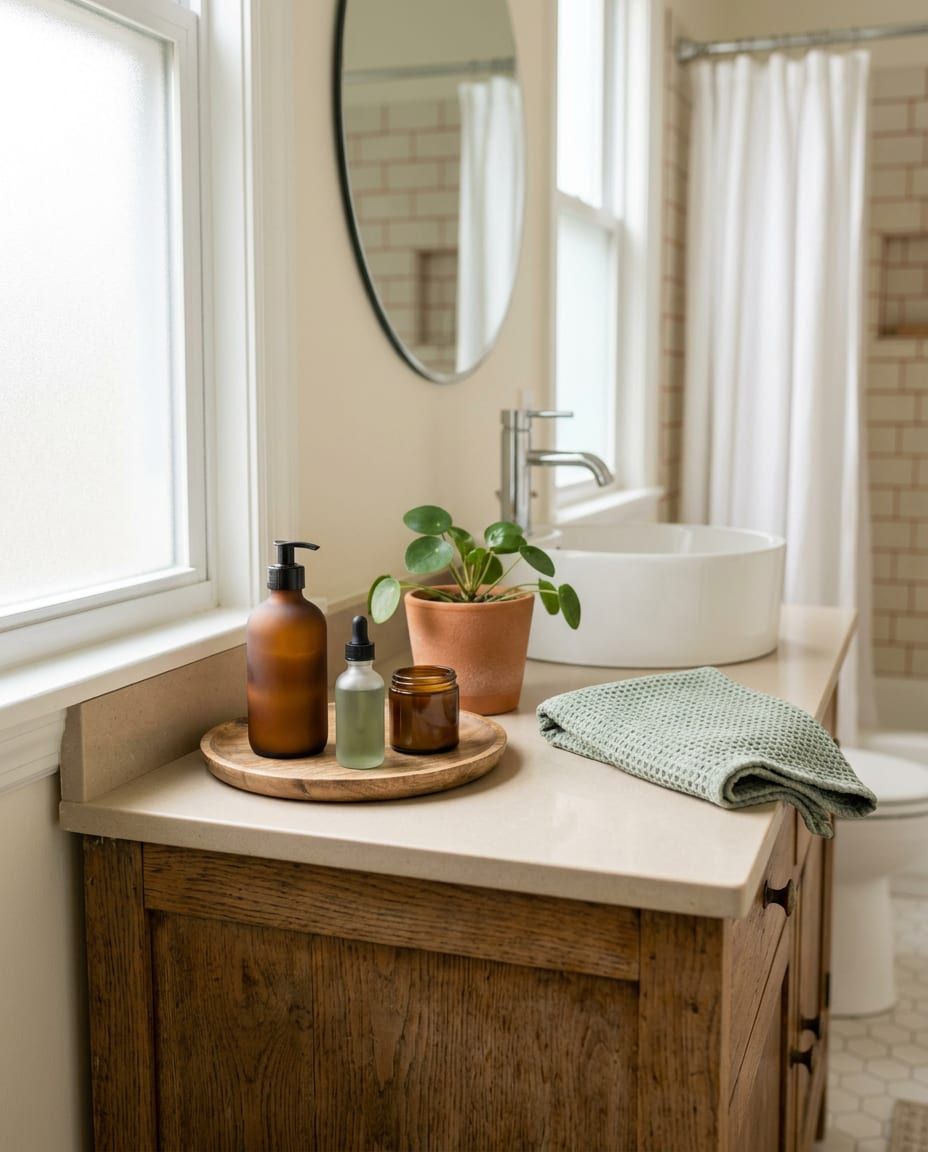
- Toss anything that smells off, has separated or changed texture.
- Many experts suggest replacing mascara about every three months.
- Use up or let go of the hotel and gift-set samples you’ve been saving.
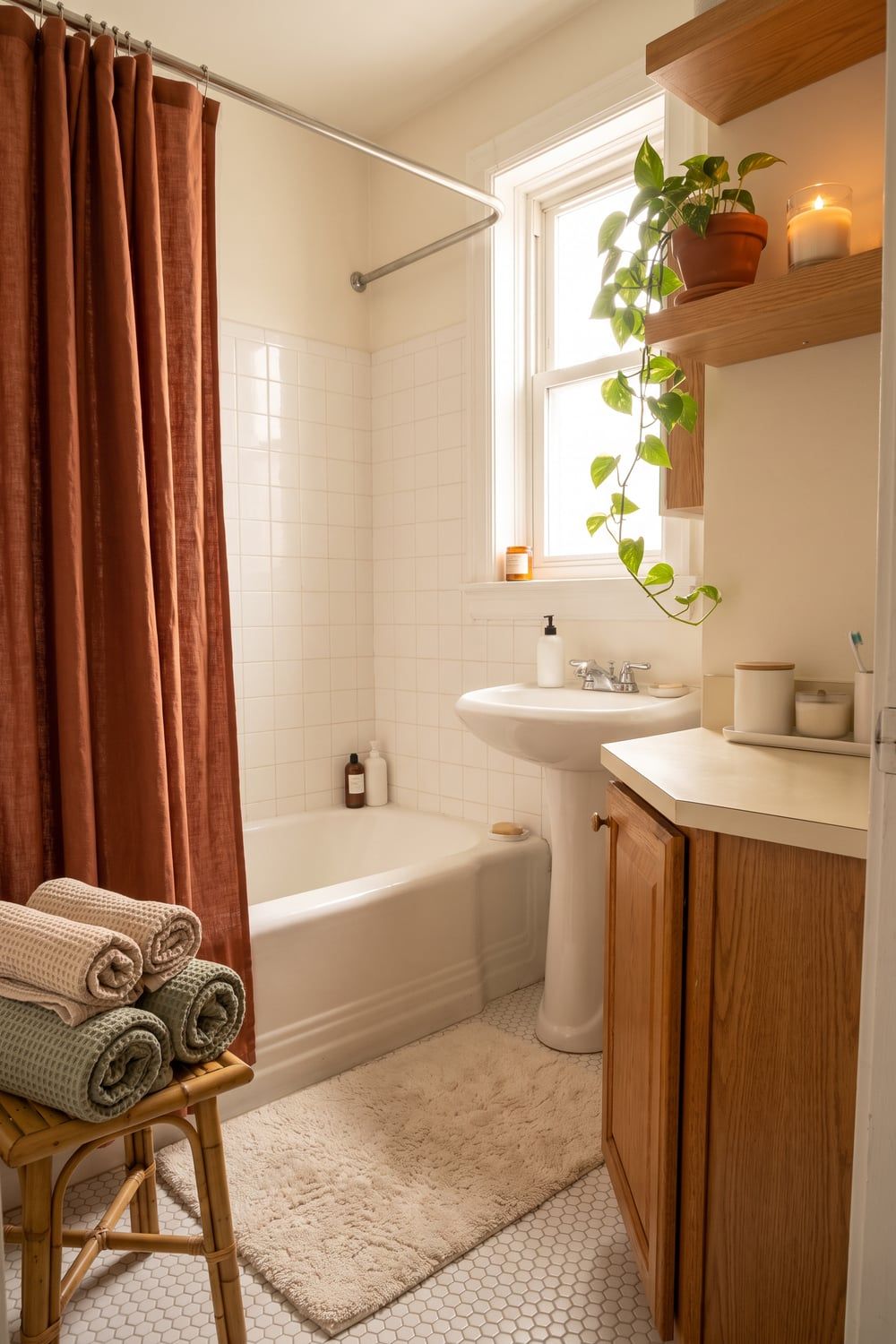
- For storage ideas, see small bathroom storage without drilling.
Why it works: Less on the counter means a bathroom that’s easier to clean.
9. Session 9: Entryway and the mail pile
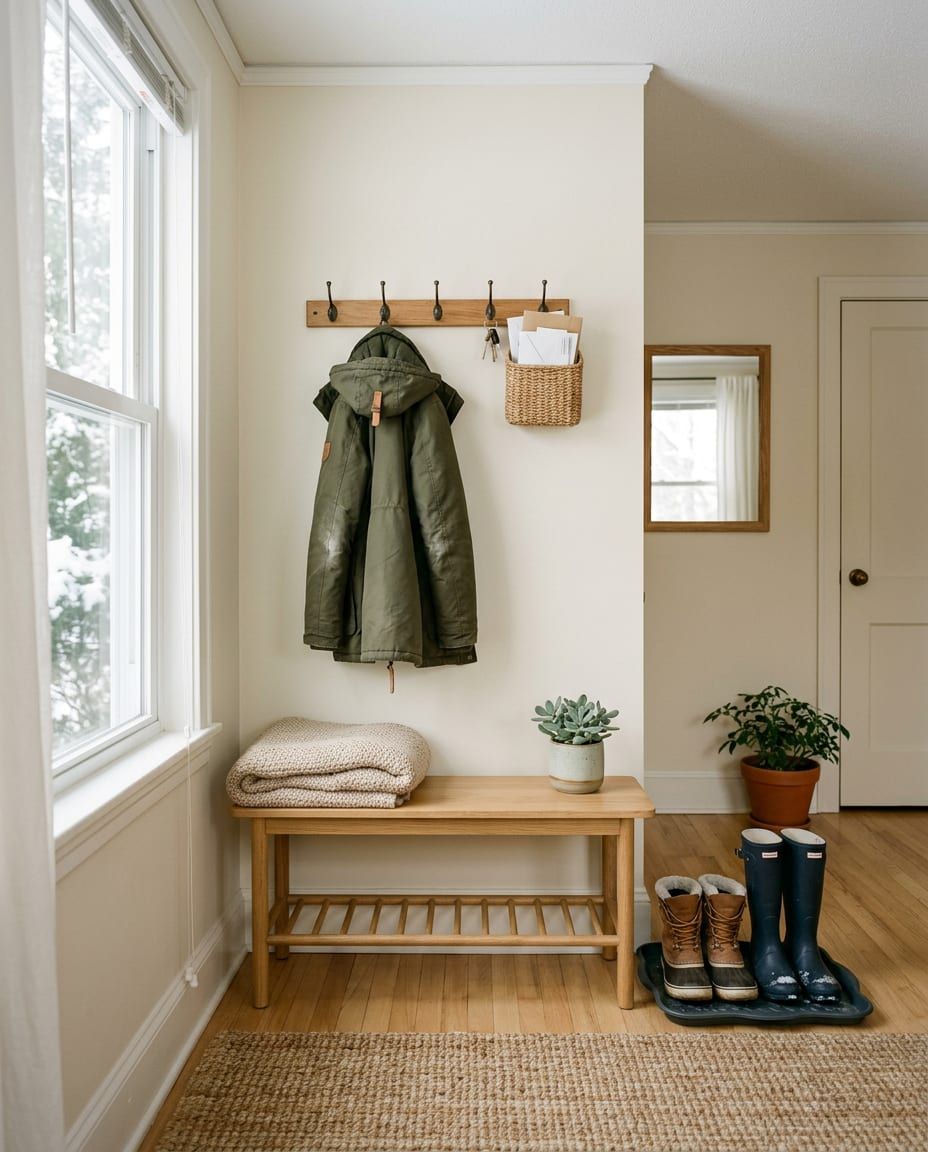
- Keep only the shoes and coats you wear this week by the door.
- Sort the mail pile: recycle junk mail, shred anything with account numbers, and keep tax documents together in one folder.
- Our small entryway ideas for winter help with wet boots and coats.
Why it works: The entryway is the first thing you see, so clutter there sets the tone.
Week 4: Holiday wrap-up
Pack the holidays away before the decorations become part of the furniture.
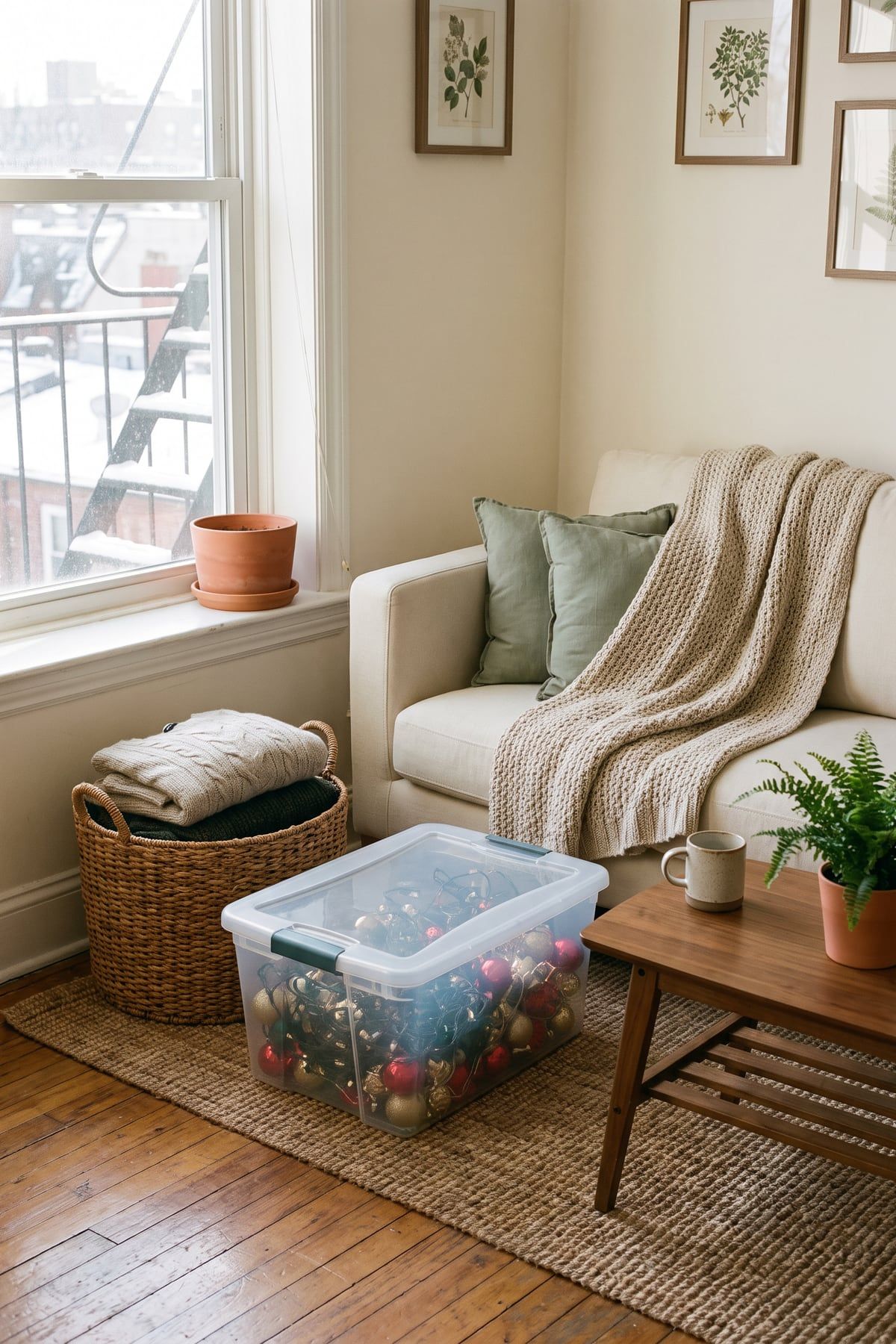
10. Session 10: Pack the holiday decor
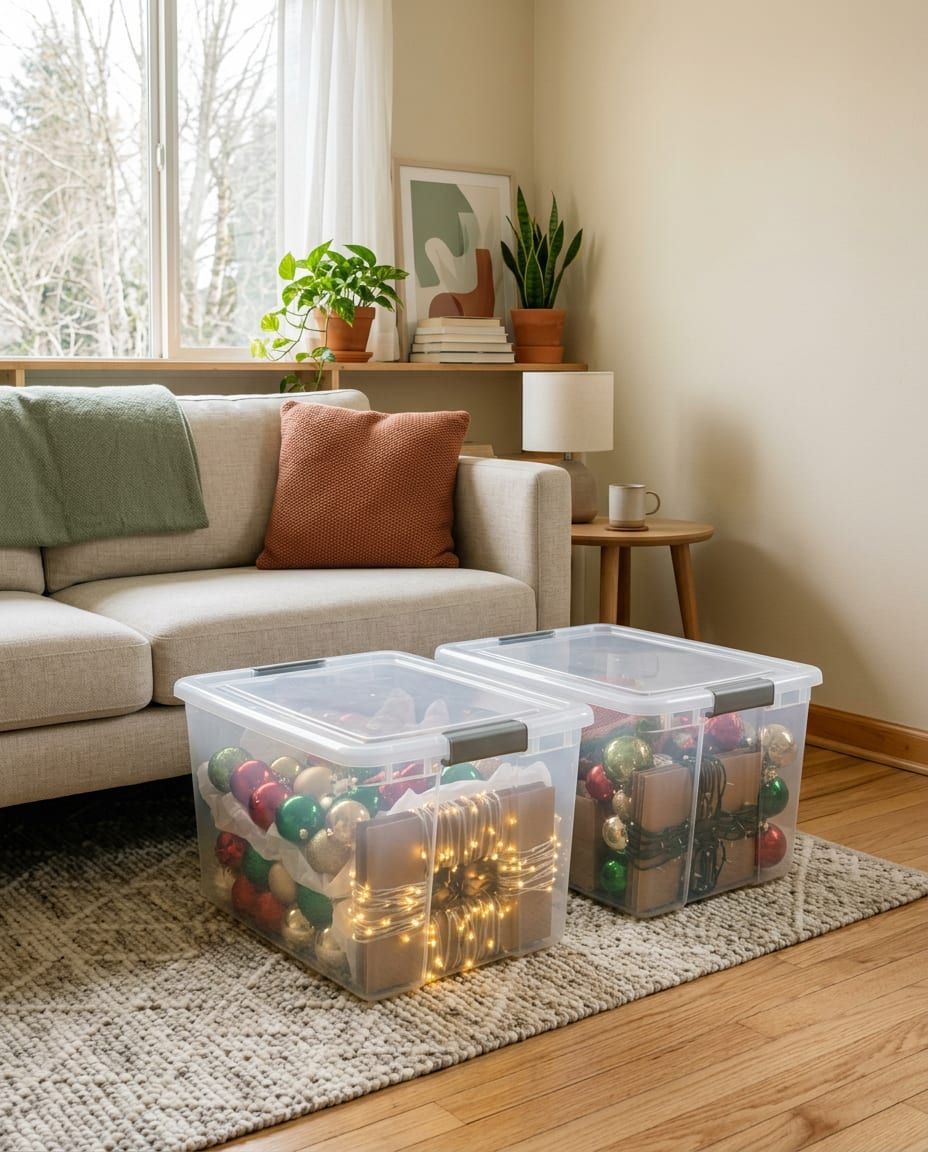
- Keep only what you actually put out this year; donate the rest while it’s still in good shape.
- Wrap string lights around a piece of cardboard so they don’t tangle.
- Pack everything into one or two labeled bins, with the lights on top.
Why it works: Decor you didn’t use this year will be in the way next year too.
11. Session 11: Gift bags, boxes and wrapping
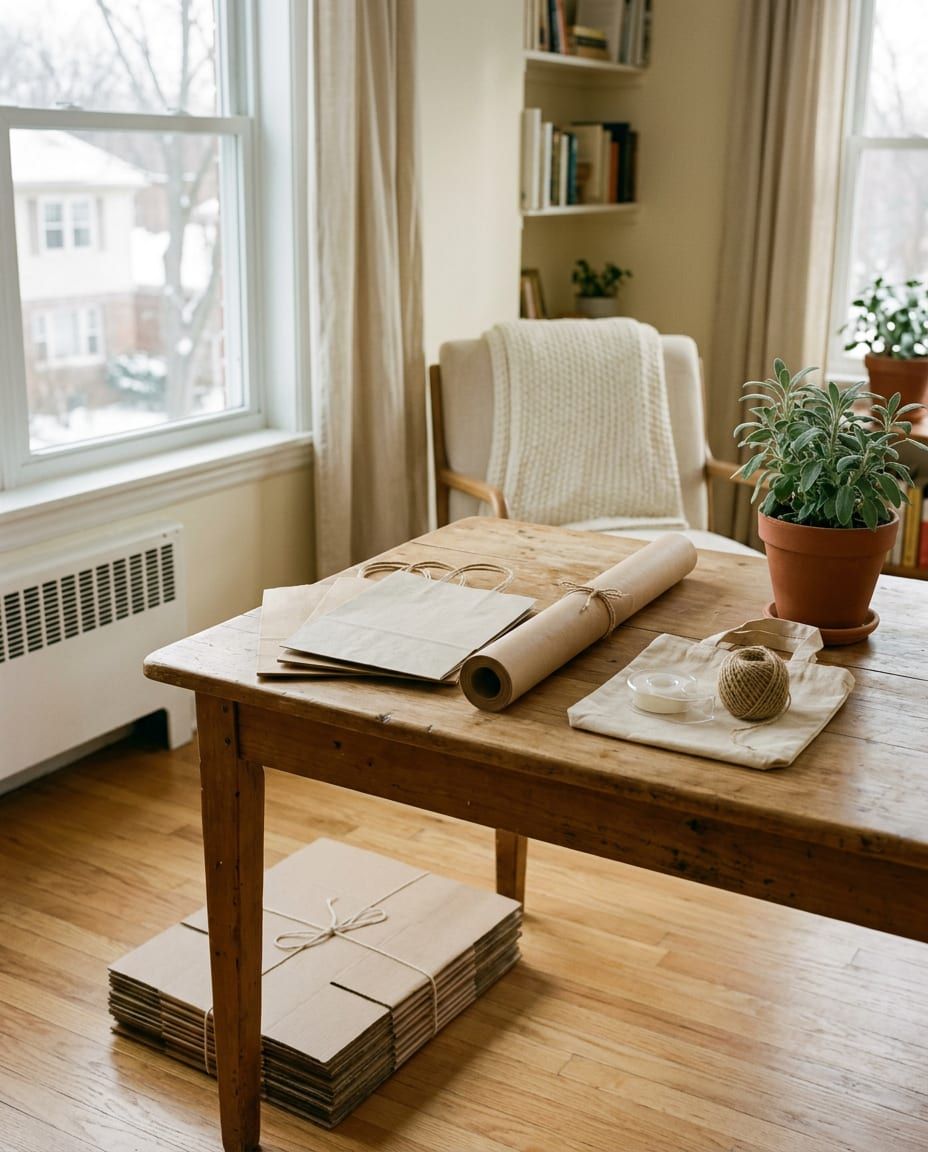
- Recycle boxes you’re not using (break them down first).
- Keep a small kit: a few gift bags, one roll of paper, tape and ribbon, all in one bag.
- Unwanted gifts in good condition can go to donation, or to a friend who’ll use them.
Why it works: One small kit is easy to store; a pile of paper isn’t.
12. Session 12: Cables, batteries and the junk drawer
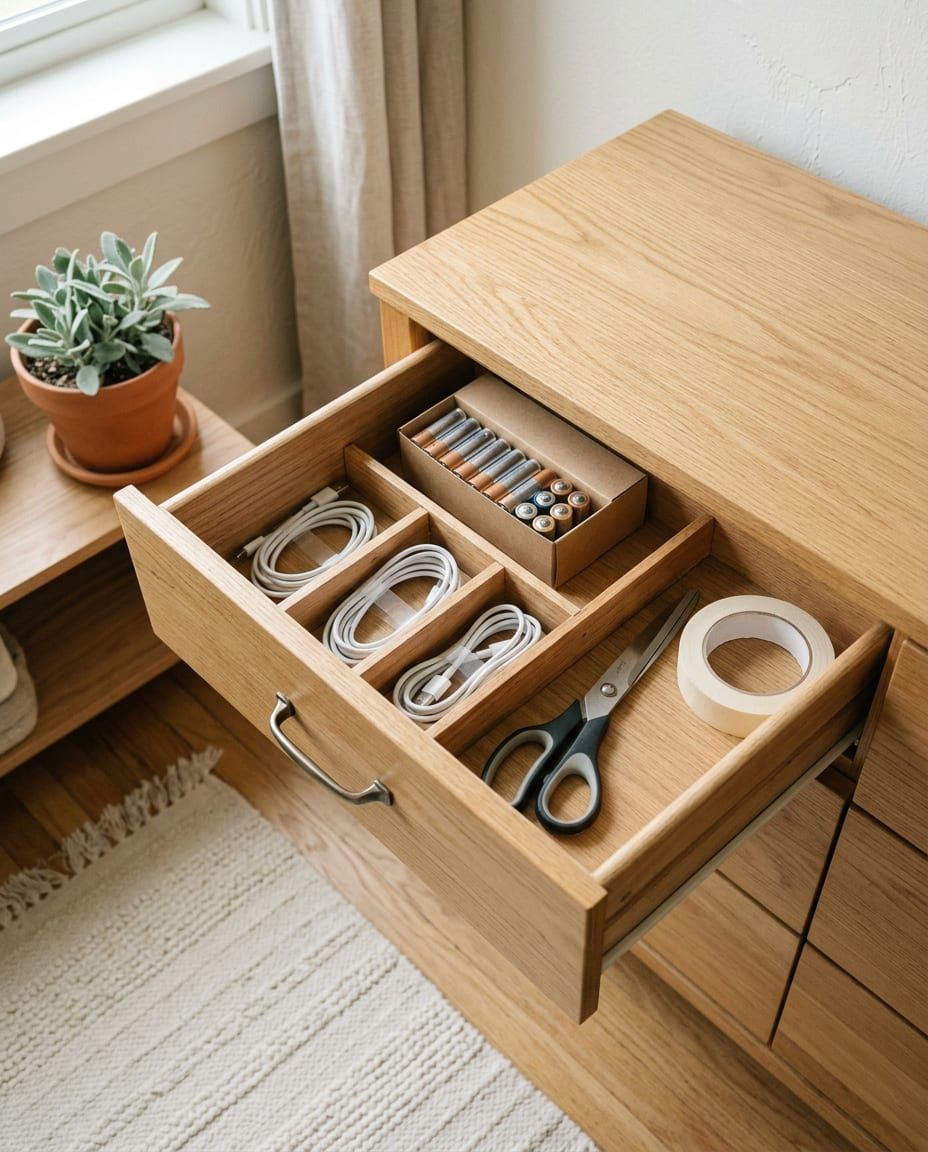
- Match every cable to a device you still own; the rest go to electronics recycling.
- Don’t put batteries in the trash: many stores have battery drop-off bins, and taping the ends of lithium batteries is a common safety step before recycling.
- Label small bags of cables so you know what each one is for.
Why it works: One clear drawer saves you hunting for a charger every week.

Where it all goes
Get the bags out of the apartment within a week, or they quietly turn back into clutter.
- Donate: check what your local donation center or shelter accepts before you go; most don’t take stained or broken items.
- Sell: only bother with things worth the time, like small furniture or appliances.
- Recycle: cardboard and paper at home; batteries, electronics and string lights at drop-off points (check your city’s website).
- Relocate: put the third bag away at the end of each session.
Our top picks
The short list, if you just want to get it done this weekend. We don’t list prices because they change daily — check the current price on the retailer’s site.
| Product | Best for | Link |
|---|---|---|
| Adjustable drawer organizer traysMeasure drawer width and depth first. | Nightstand, desk and junk drawers | Check on Amazon(opens in a new tab) |
| Clear lidded storage binsSee what's inside without opening them. | Holiday decor and under-bed storage | Check on Amazon(opens in a new tab) |
| Handheld label makerMasking tape and a marker work too. | Bins, shelves and cable bags | Check on Amazon(opens in a new tab) |
Frequently asked questions
How do I start decluttering in January without getting overwhelmed?
Set a 15-minute timer and do one small zone, like the fridge or one drawer, not a whole room. Three short sessions a week for four weeks covers a small apartment without losing a weekend.
What should I declutter first after the holidays?
Start with the kitchen, where old leftovers and holiday food pile up first, then pack away the holiday decor before it becomes part of the furniture. Both give you visible space fast.
What should I do with things I declutter?
Use three bags: trash and recycling, donate, and things that belong in another room. Check what your local donation center accepts before you drop things off, and take batteries, old medicine and electronics to proper drop-off points instead of the trash.
How long does it take to declutter a small apartment?
With this checklist, about three hours in total: twelve 15-minute sessions over four weeks. A first pass rarely catches everything, so a quick second round in spring helps.
How do I keep the apartment from filling up again?
Give every category one home, keep a donate bag in the closet all year, and try a one-in, one-out rule for clothes, mugs and books.
Start with the fridge
Twelve short sessions, about three hours in total, and the apartment is ready for the rest of winter. For the next step, see our winter ideas or grab the free checklist.
Free printable
Get the free Small Space Declutter Checklist
A printable, room-by-room checklist — plus one cozy small-space idea a week. No spam, unsubscribe anytime.
By subscribing you agree to our Privacy Policy.