15 Under-Sink Organization Ideas for Kitchen and Bathroom
Images in this post are AI-generated illustrations. Why?
Heads up: this post contains affiliate links. If you buy through them, we may earn a small commission at no extra cost to you. How it works. As an Amazon Associate, we earn from qualifying purchases.
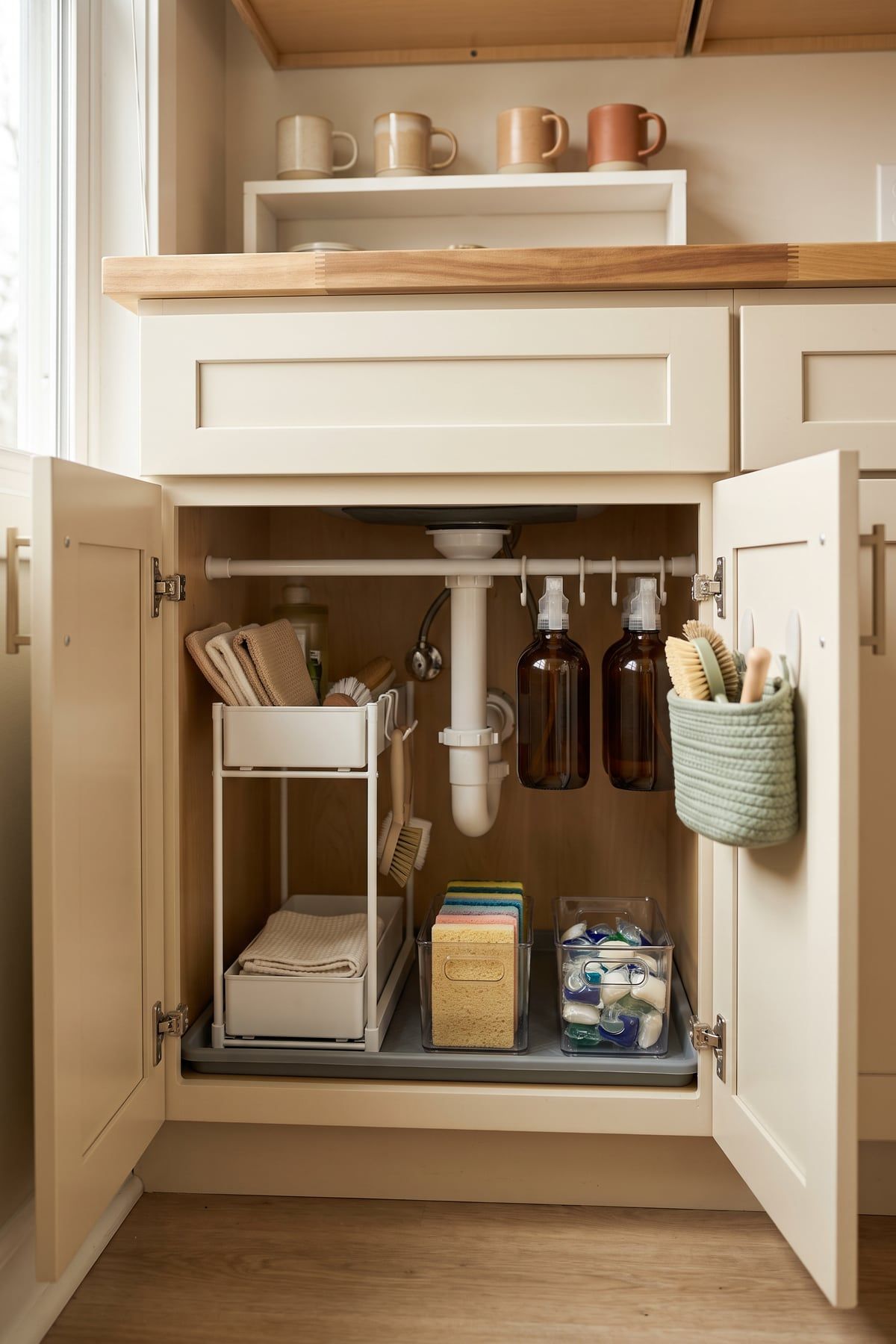
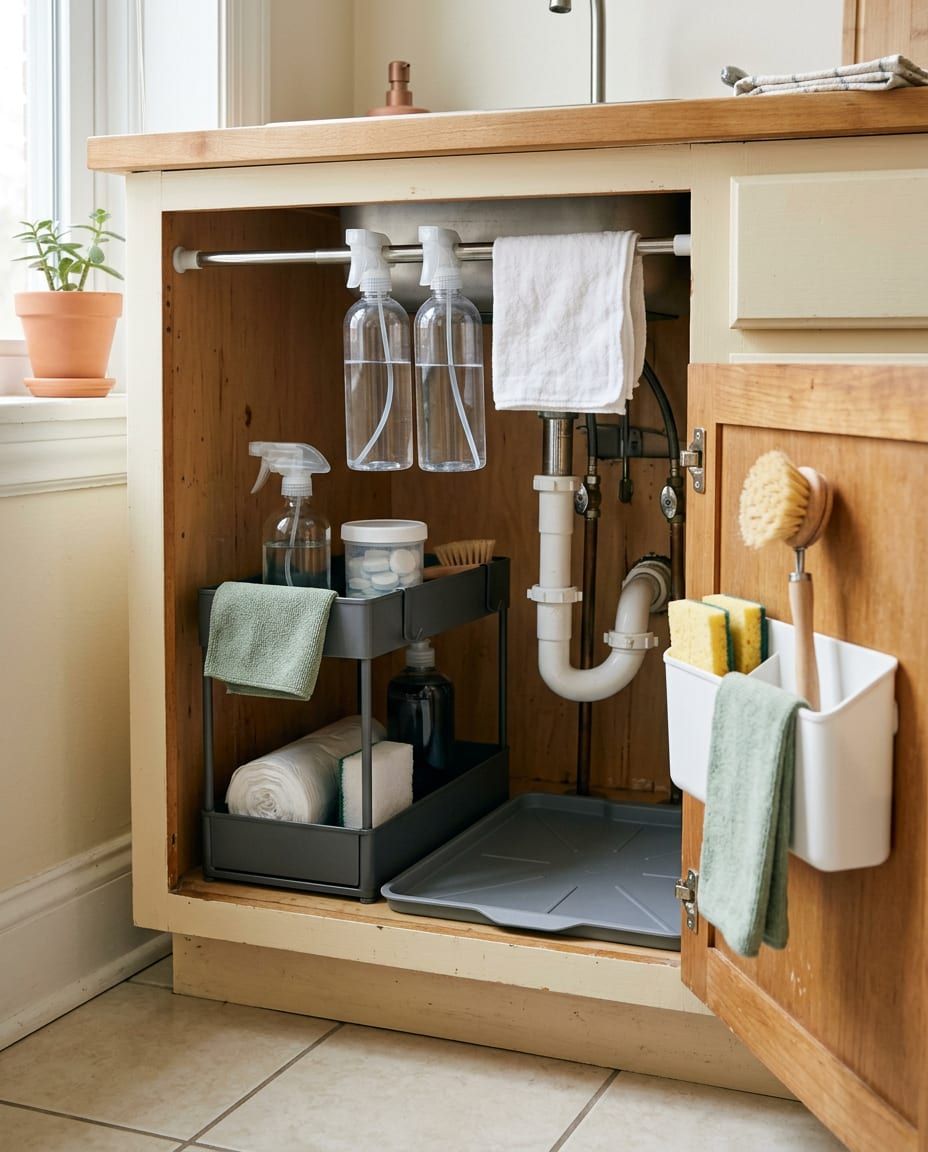
The best under-sink organization ideas work around the pipes instead of fighting them: organizers on each side, a rod across the top and storage on the door. Under the sink is the most awkward cabinet in a small apartment, but it can hold a surprising amount. These 15 under-sink organization ideas for the kitchen and bathroom need no drilling and mostly cost under $25.
In this post
- Measure around the pipes
- Under the kitchen sinkideas 1–7
- Under the bathroom sinkideas 8–12
- Keep it safe and dryideas 13–15
- Our top picks
- FAQ
Measure around the pipes
Measure the usable spaces beside and behind the pipes, not the whole cabinet. That’s where most under-sink organizers fail: they fit the cabinet but not the plumbing. Empty the cabinet and write down:
| What | Why it matters |
|---|---|
| Inside width of the opening | Kitchen sink bases are often 30 to 36 inches wide outside, less inside |
| Depth | Kitchen cabinets are often about 21 to 22 inches deep inside; bathroom vanities are shallower |
| Width left of the pipes, right of the pipes | This is the real space for each organizer |
| Height under the drain trap | Decides how tall a two-tier organizer can be |
| Door clearance | The door has to close with a caddy on it |
Under the kitchen sink
Start with the floor, then use the sides, the top and the door.
1. Line the floor with a drip tray
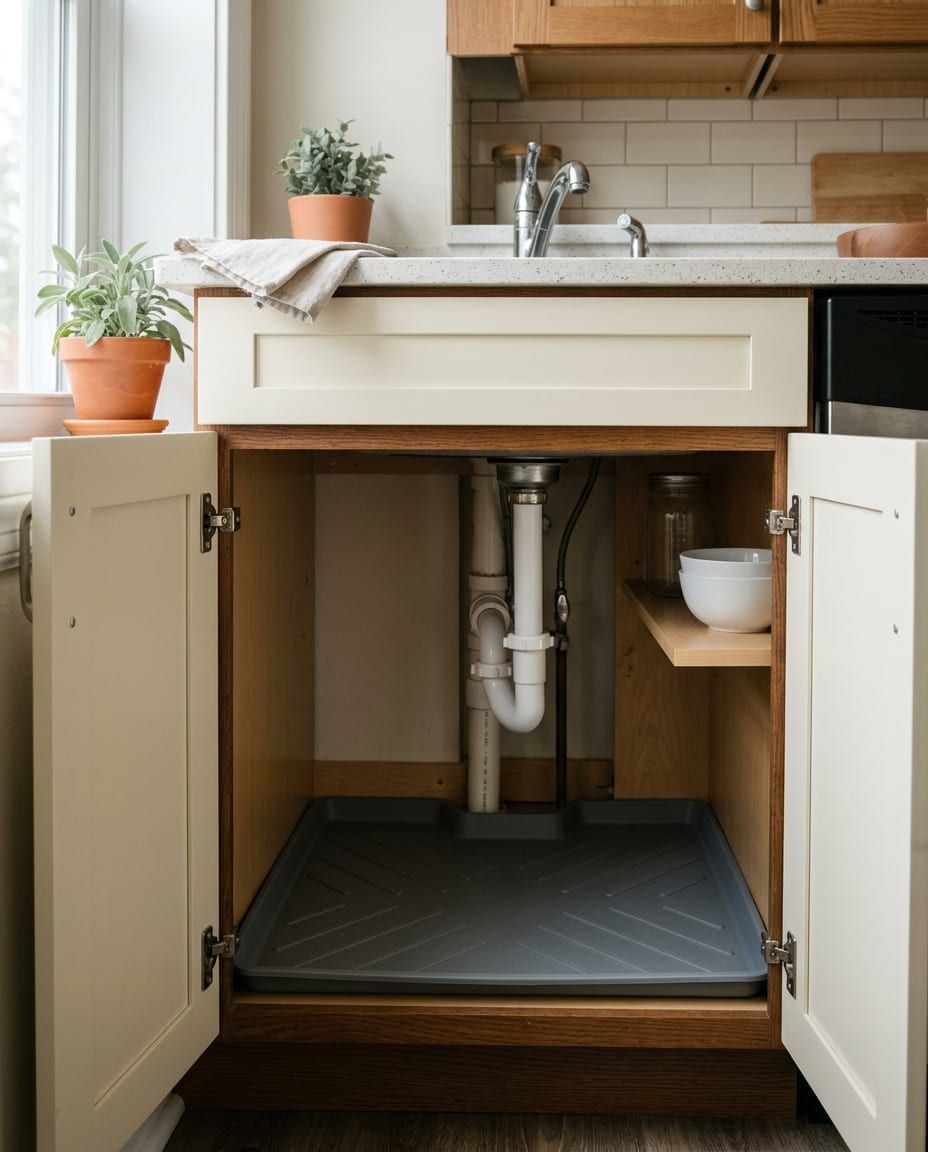
Empty the cabinet, wipe it out and lay a waterproof drip tray or a trim-to-fit silicone mat on the floor. The raised edge holds a small leak or a tipped bottle until you notice it. In a rental, it also protects the cabinet base, which is easy to damage and expensive to replace.
Why it works: A raised-edge tray catches small leaks and spills before they ruin the cabinet floor.

Waterproof under-sink drip tray
Trim-to-fit; raised edges hold small leaks.
Check on Amazon(opens in a new tab)2. Use a two-tier sliding organizer on each side
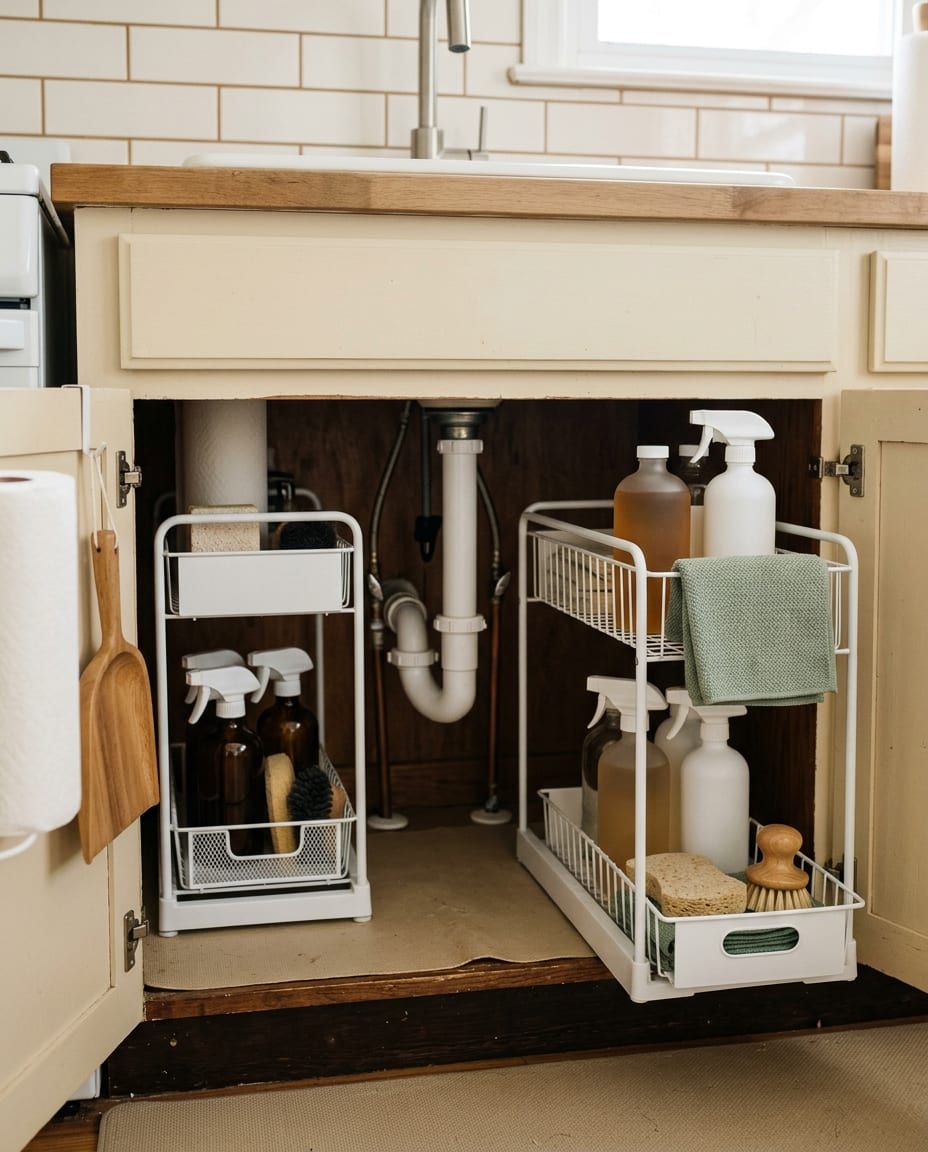
Two-tier organizers with sliding baskets fit beside the pipes and double the storage on each side. Measure the width and height of each side separately; many cabinets fit one taller unit on one side and a shorter one under the drain trap. Some models have adjustable shelves that notch around a pipe.
Why it works: Two levels double the space beside the pipes, and sliding baskets bring the back to the front.

Two-tier sliding under-sink organizer
Measure the space beside the pipes, not the whole cabinet.
Check on Amazon(opens in a new tab)3. Hang spray bottles from a tension rod
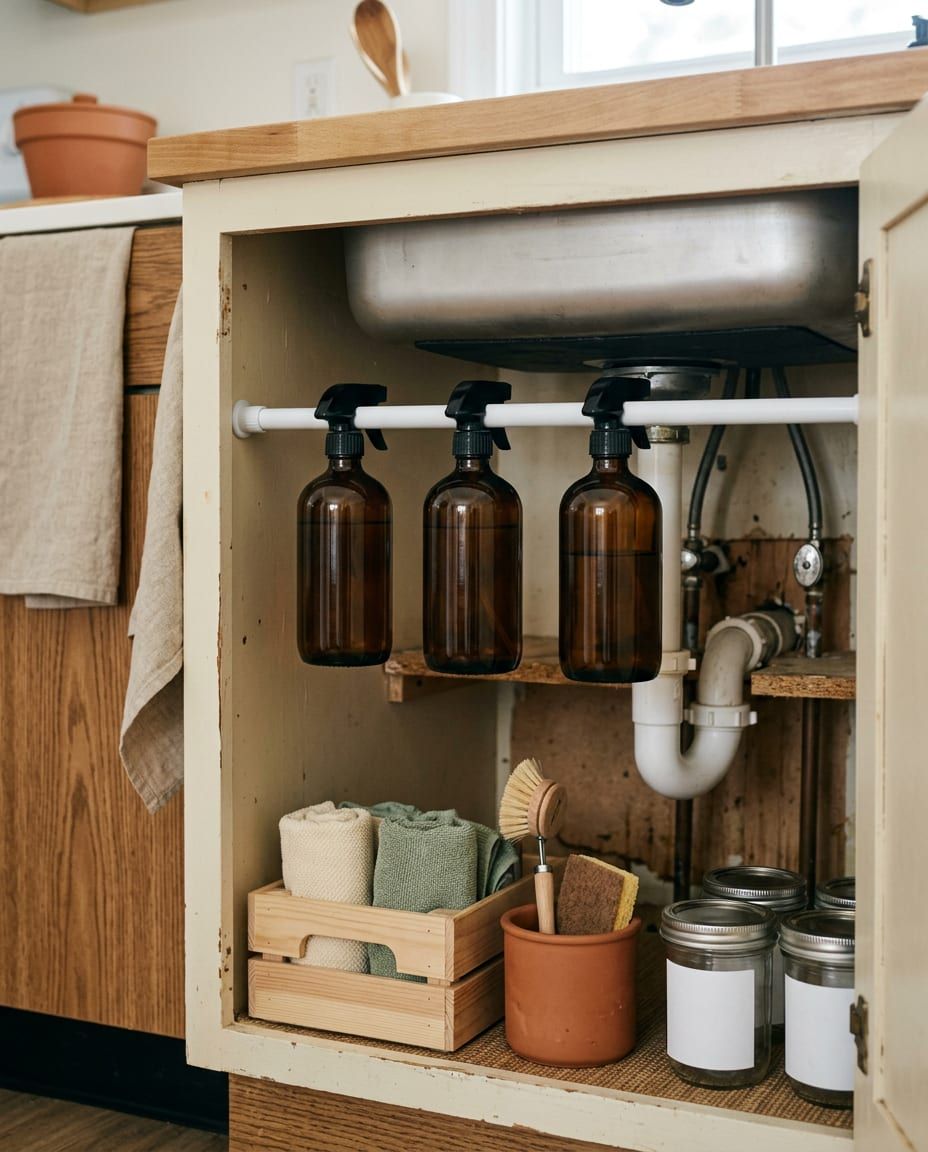
A small tension rod placed across the top of the cabinet, in front of the pipes, holds spray bottles by their triggers. It uses the empty space near the top and frees the floor for bins. Twist it tight enough to hold the weight and check that the doors still close.
Why it works: Bottles hang by their triggers, freeing the floor for bins.

4. Sort supplies into clear bins
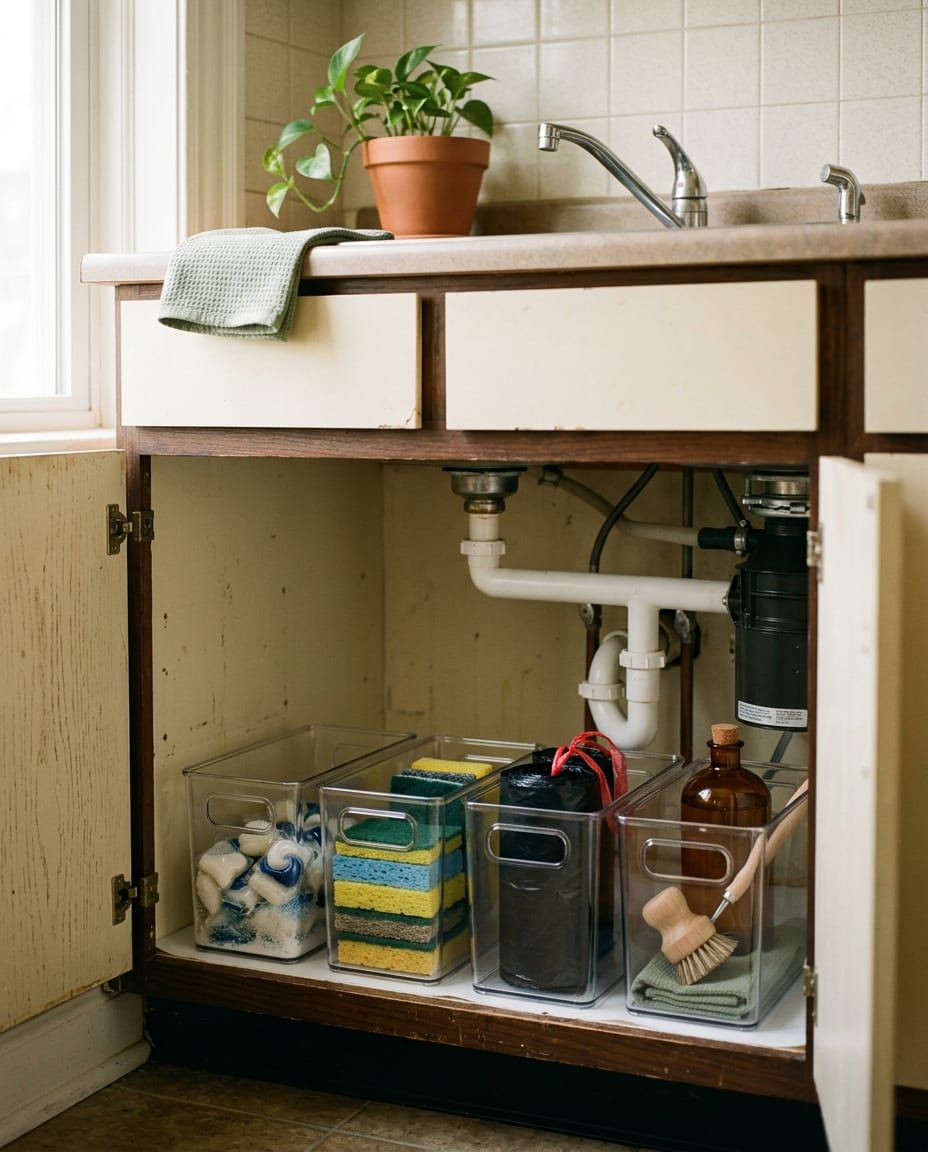
Group what’s left into a few clear bins: dishwasher supplies, sponges and scrubbers, trash bags, extra dish soap. Narrow bins with handles slide out easily from the back of the cabinet. Label them if more than one person shares the kitchen. Once a month, check the bins and toss empty bottles and worn-out sponges so the system keeps working.
Why it works: One bin per category means you pull out a bin instead of digging.
5. Put a caddy on the inside of the door
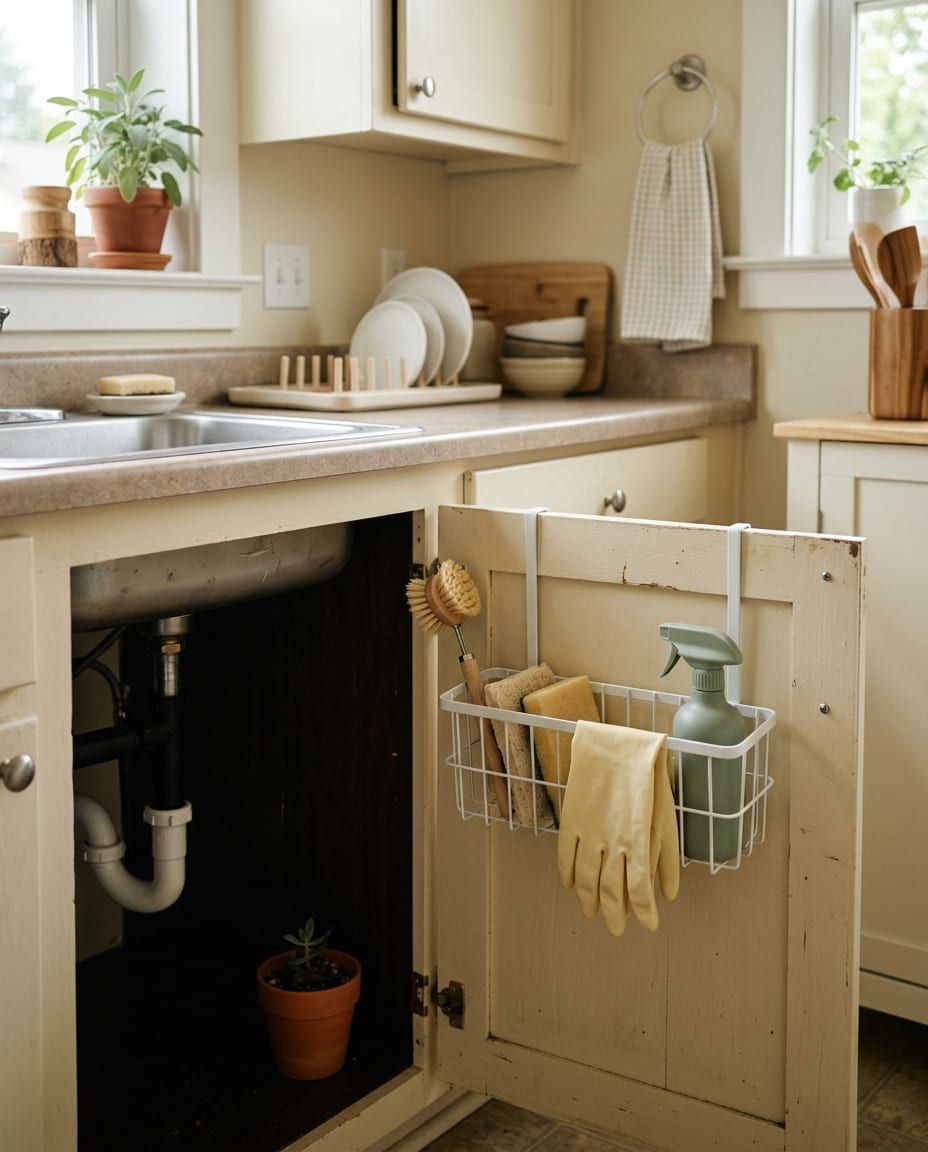
An over-the-door caddy or basket holds sponges, brushes and rubber gloves within reach. Hang it on the cabinet door, then close the door slowly to check it doesn’t hit the pipes or the organizers. Adhesive hooks on the inside of the door work for a dish brush or a small towel.
Why it works: The door is free space you see every time you open it.

Over-the-cabinet-door caddy
Check that the door still closes against the pipes.
Check on Amazon(opens in a new tab)6. Keep trash bags in a door dispenser
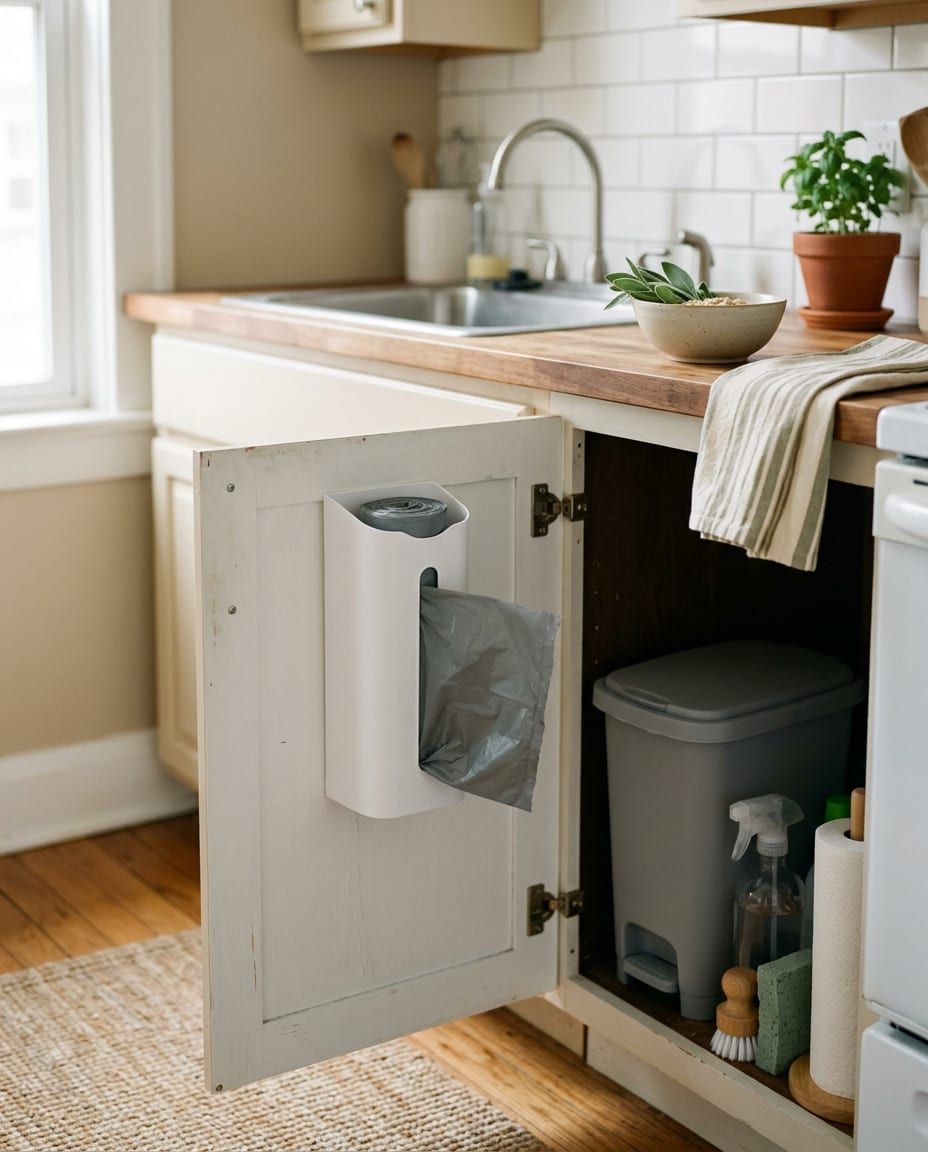
A slim bag dispenser on the inside of the cabinet door, or simply the roll in a narrow bin, keeps trash bags in one spot. If the trash can lives under the sink, store the bag roll right next to it so changing the bag takes one step.
Why it works: One bag pulls out at a time, and the box disappears from the cabinet floor.
7. Use a turntable in a deep corner
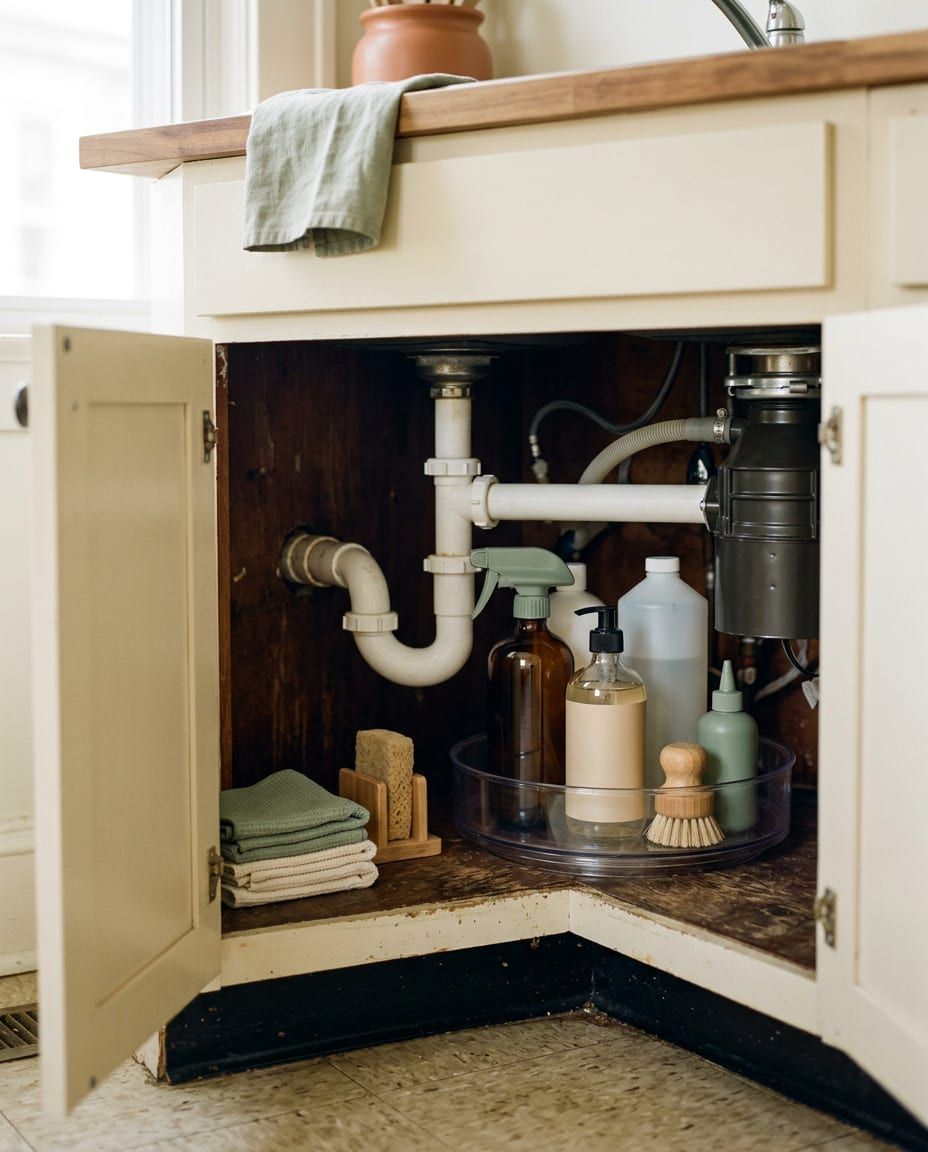
In a deep cabinet, a turntable in the back corner keeps bottles from getting lost. One spin and everything at the back is in reach. A version with a raised edge stops bottles from sliding off. It also makes a great gift for an organized friend; see our organization gifts.
Why it works: A spin brings bottles from the back corner to the front.
Under the bathroom sink
Bathroom vanities are smaller and shallower, so small drawers beat deep bins.
8. Add clear stacking drawers
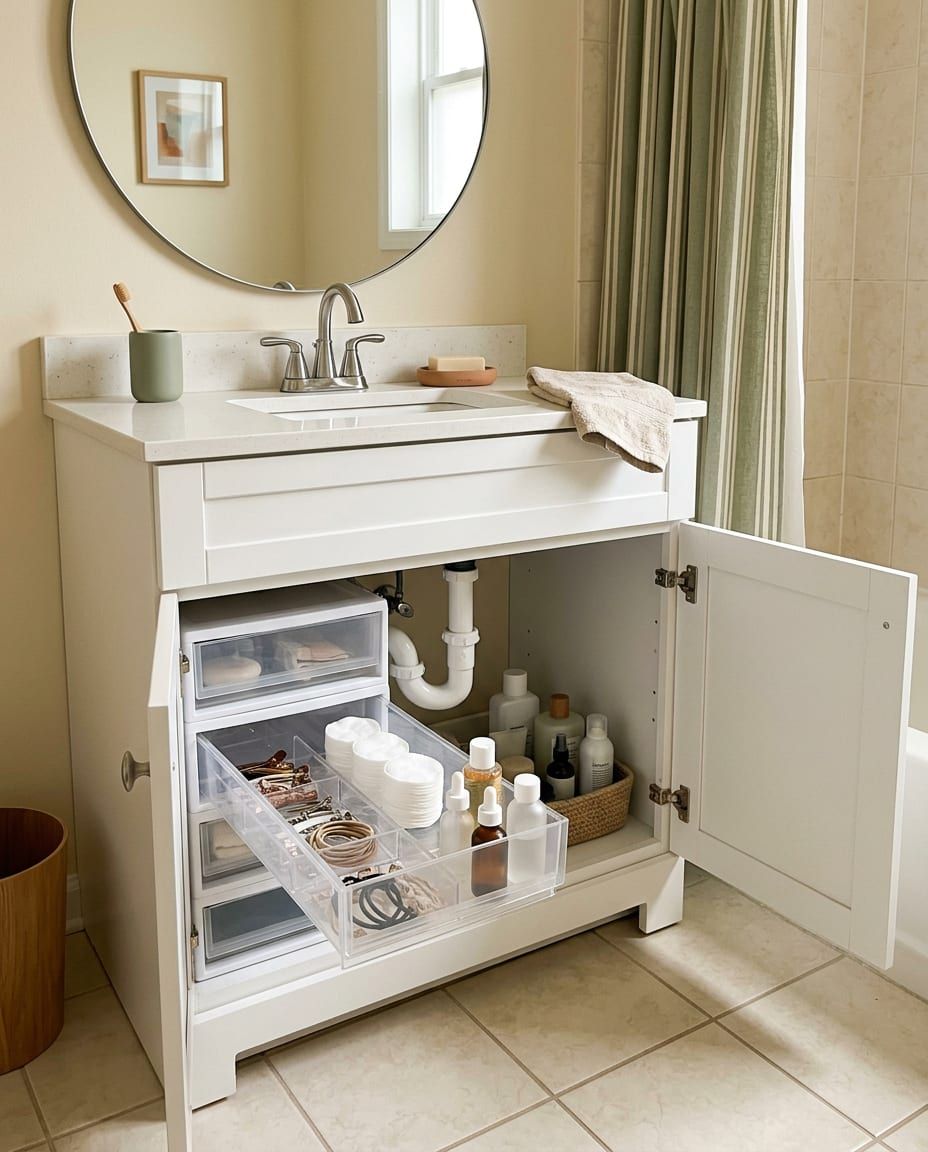
Clear stacking drawers turn a vanity into a small dresser for toiletries: one drawer for skincare, one for hair ties and clips, one for first aid. Measure the depth of the vanity first; many are shallower than kitchen cabinets, so look for drawers around 12 to 14 inches deep.
Why it works: Pull-out drawers keep small things visible instead of buried at the back.

Clear stacking drawers
Pull-out drawers beat deep bins in a vanity.
Check on Amazon(opens in a new tab)9. Give backups one bin
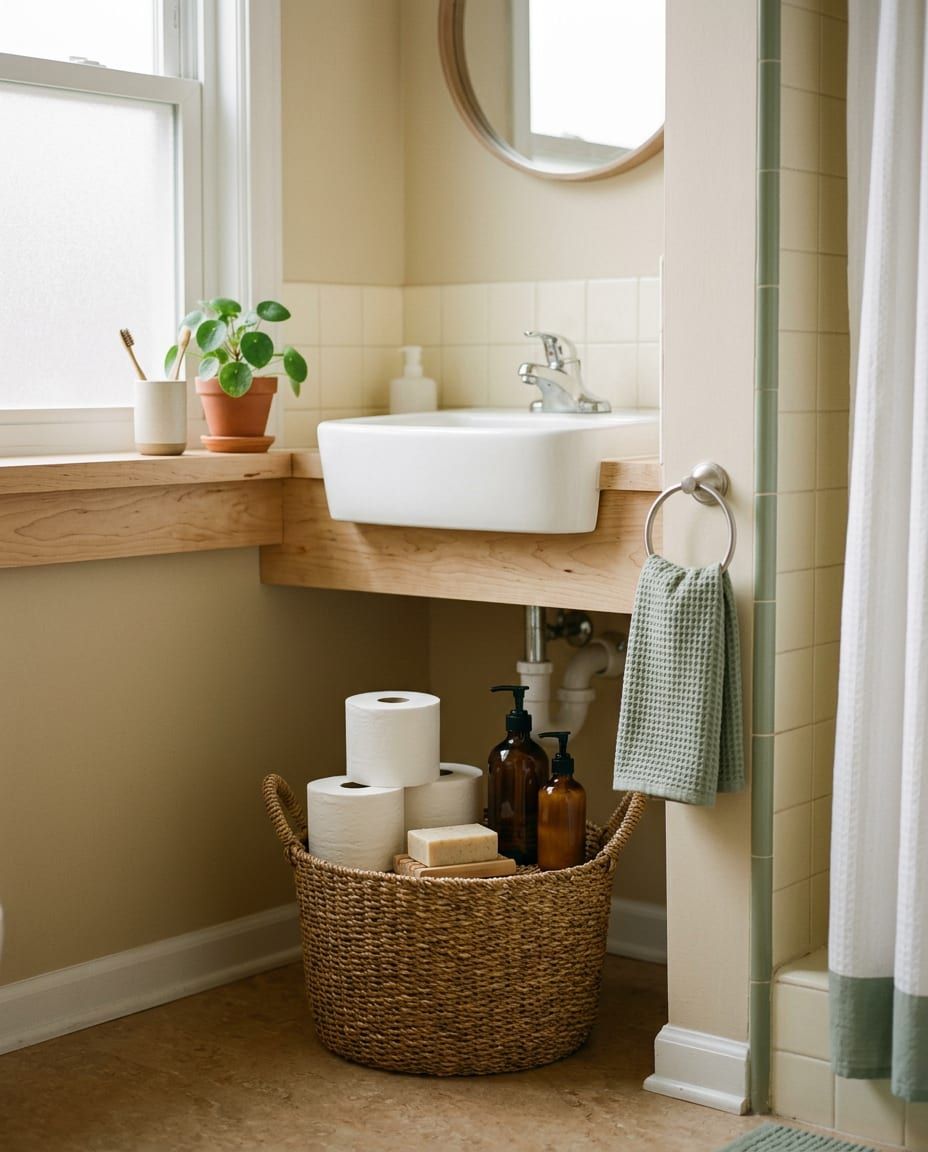
Toilet paper, extra toothpaste, soap and shampoo refills all go into one bin, so you can see at a glance what’s running low. A bin with a handle slides out easily. If space is tight, keep only a few spare rolls under the sink and the rest in a closet.
Why it works: When all the spares live in one place, you stop buying duplicates.
10. Hang hair tools on the door
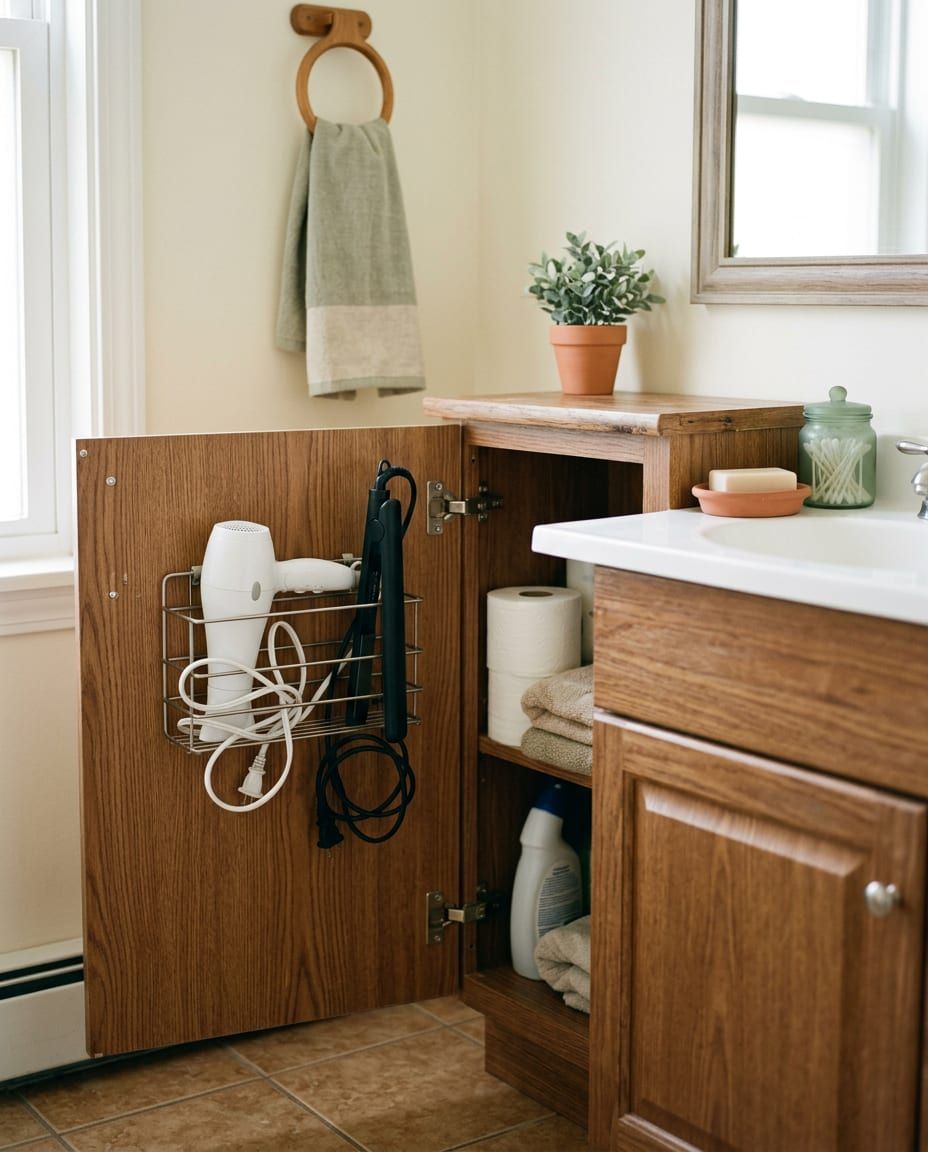
A door-mounted holder for a hair dryer and straightener keeps cords from tangling with your toiletries. Let hot tools cool completely before storing them, and don’t wrap the cord tightly around the dryer; loose coils last longer.
Why it works: Dryers and straighteners stop tangling with everything else in the cabinet.
11. Keep cleaning supplies in a carry caddy
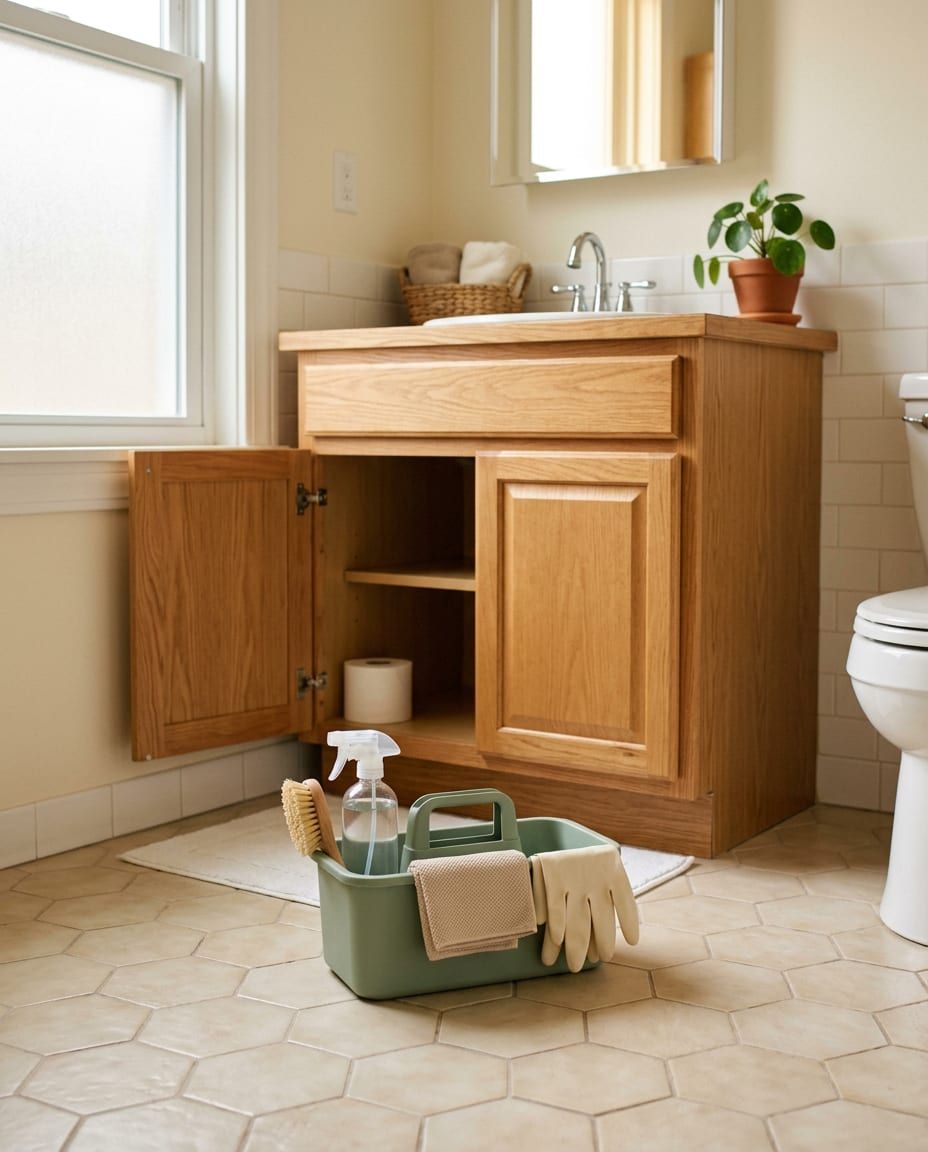
A small caddy with a handle holds the bathroom spray, a brush, a cloth and gloves. When it’s time to clean, you carry everything at once, and it all goes back in one place. Our small bathroom storage ideas without drilling have more ways to use the space.
Why it works: Everything you need to clean the bathroom moves with you in one trip.
12. Use a small turntable for daily products
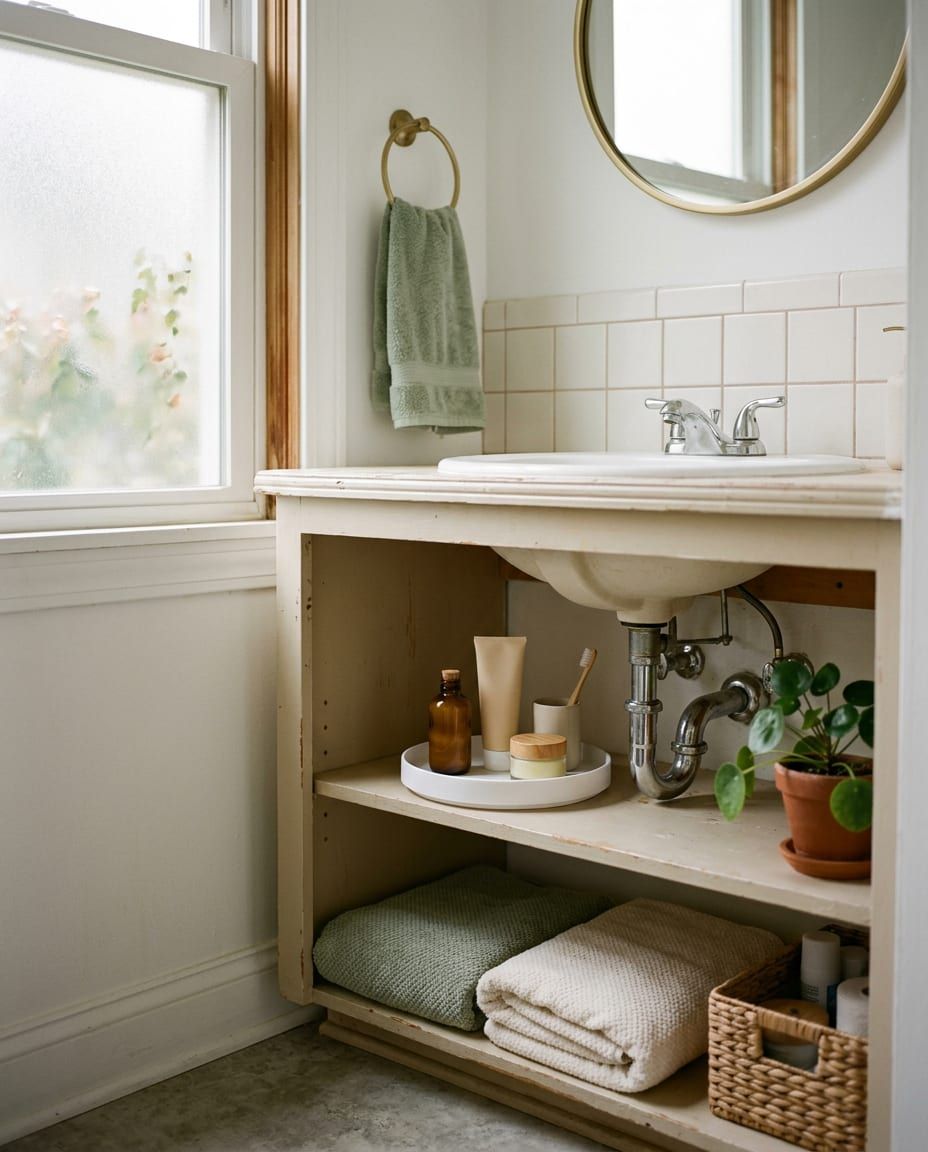
A small turntable, around 9 inches across, holds lotions, sunscreen and the products you reach for every day. It fits beside the pipes in most vanities. Wipe it every few weeks; bathroom products tend to leave sticky rings.
Why it works: Lotions and bottles you use every day spin to the front.
Keep it safe and dry
Under the sink is also where leaks start and where cleaning products live, so a few precautions matter.
13. Keep the shutoff valves clear
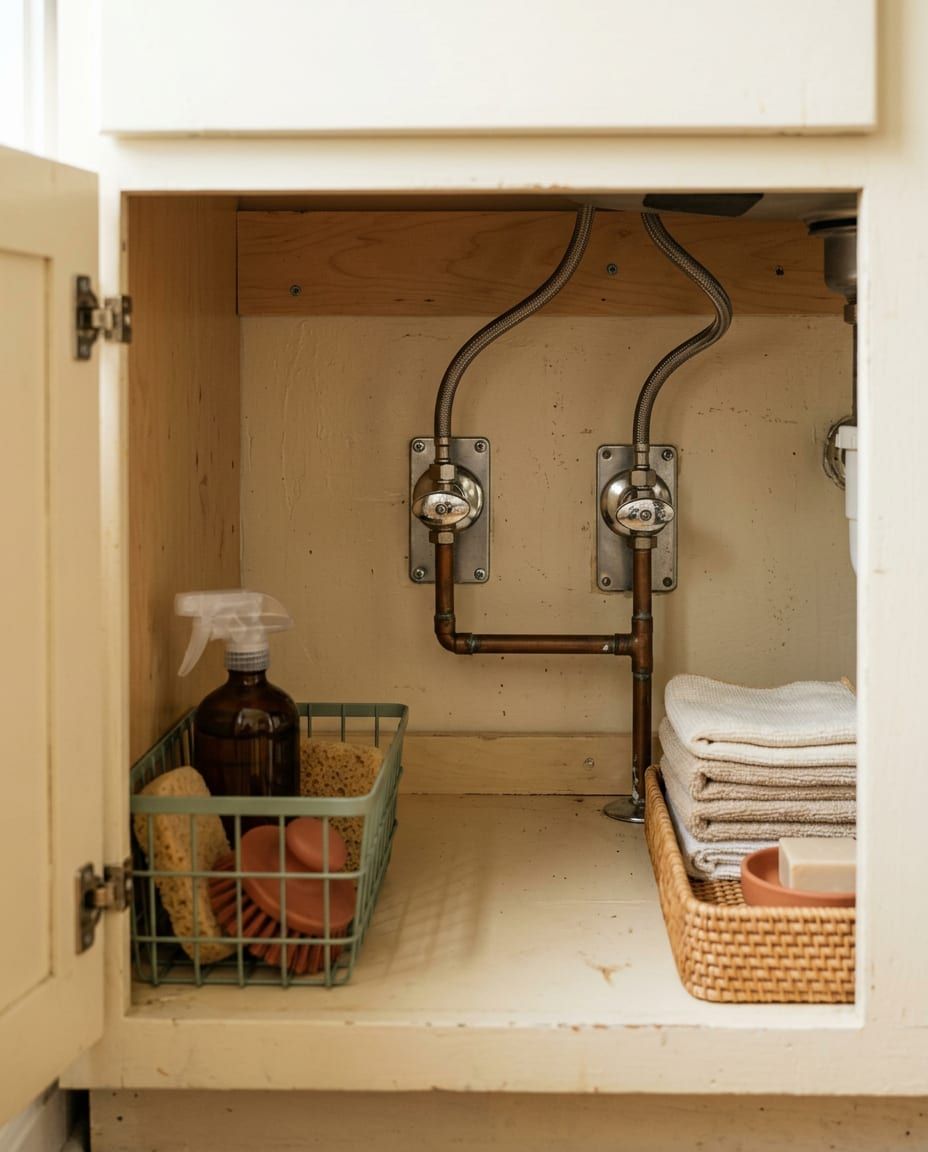
Find the shutoff valves under each sink and make sure nothing blocks them. Organize around them, not in front of them. If you’re not sure how they work, ask your landlord or building manager to show you; it’s much easier to learn before something leaks.
Why it works: If a pipe leaks, you need to reach the valves in seconds, not after emptying the cabinet.
14. Add a battery leak sensor
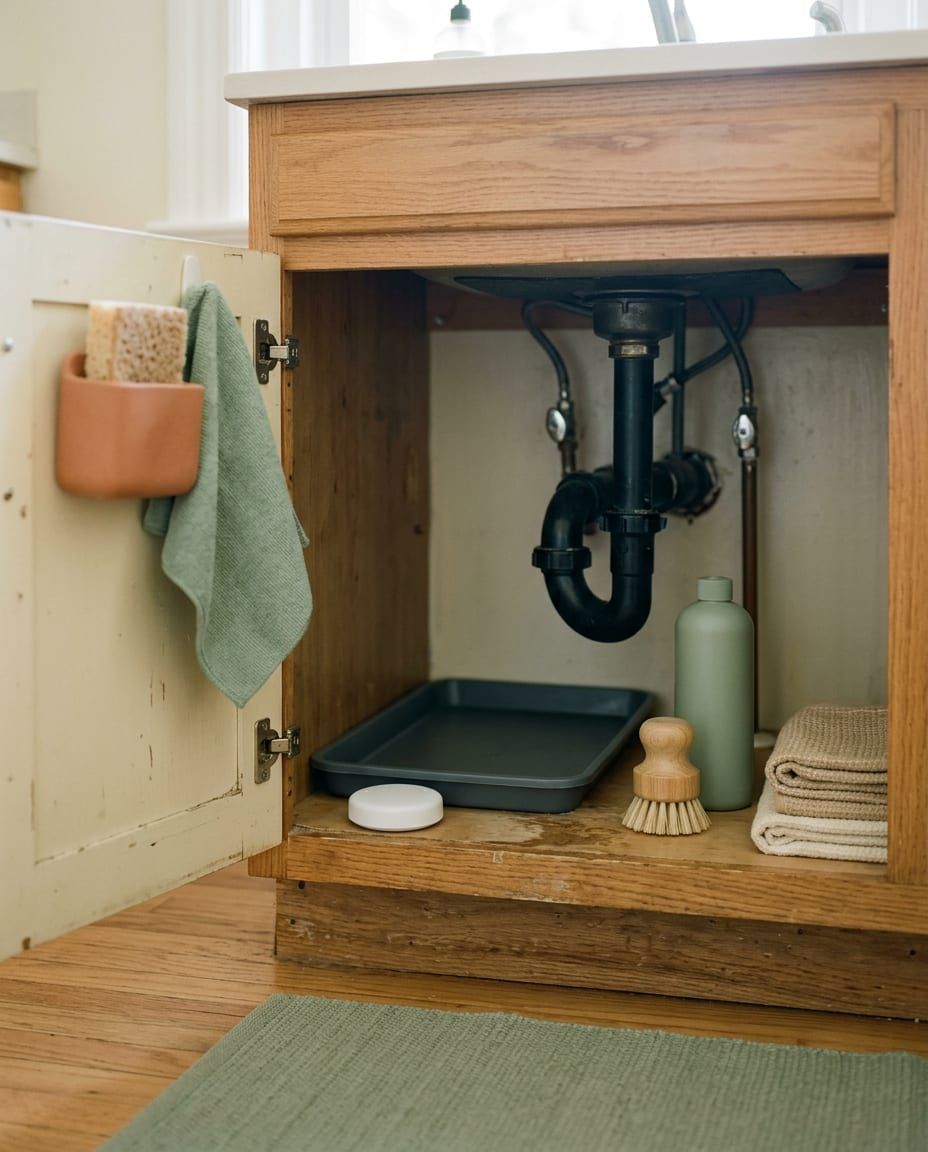
A small battery leak sensor sits on the cabinet floor and sounds an alarm when it touches water. Some also send a phone notification. It’s an easy way to catch a slow drip before it damages the cabinet or the apartment below, and it needs no installation.
Why it works: A slow drip can go unnoticed for weeks; a sensor beeps the moment it gets wet.

15. Store cleaners safely
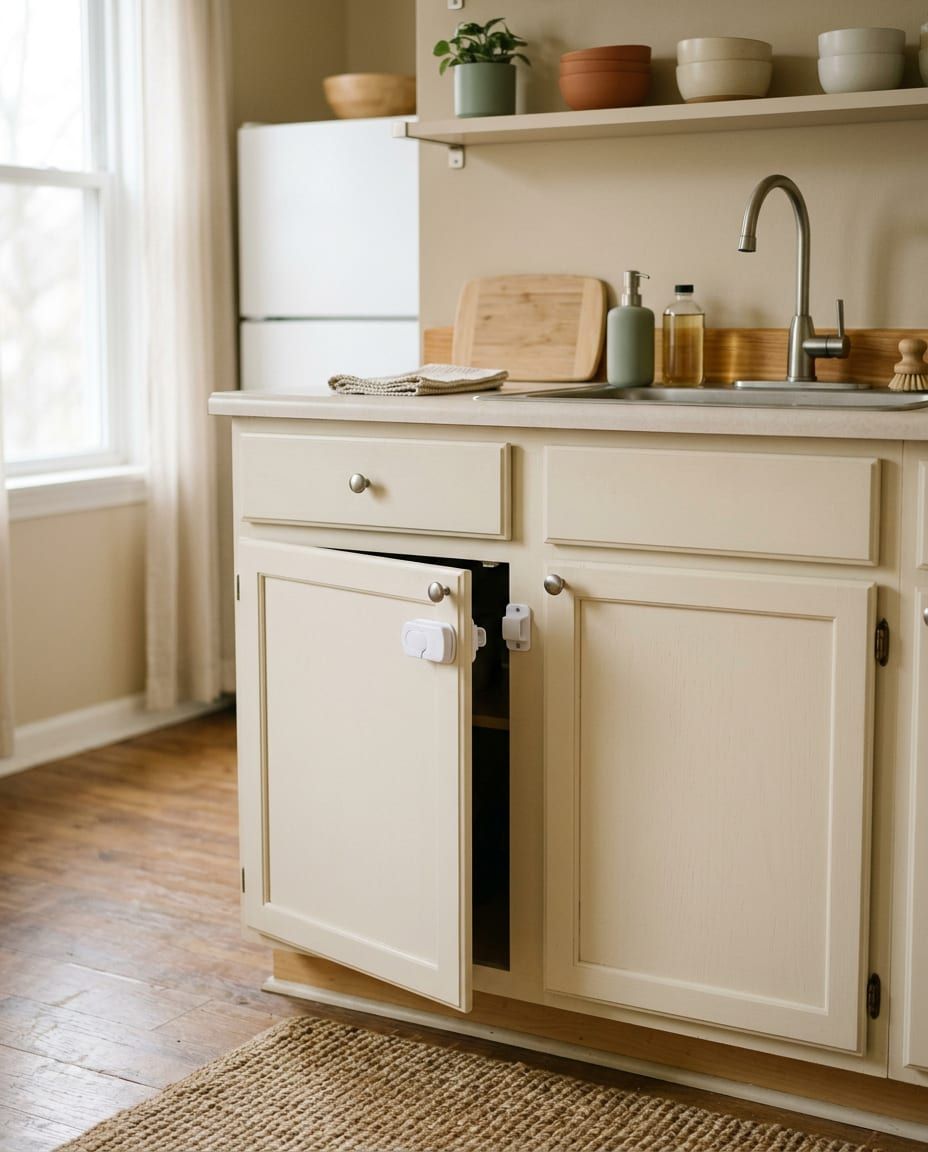
Keep cleaning products in their original containers with their labels, and never mix them; bleach and ammonia together, for example, release dangerous fumes. If you have small children or pets, add adhesive or magnetic cabinet locks, which need no drilling, or move the strongest products up high.
Why it works: Under the sink is exactly where small children and pets explore.
Our top picks
The short list, if you just want to get it done this weekend. We don’t list prices because they change daily — check the current price on the retailer’s site.
| Product | Best for | Link |
|---|---|---|
| Waterproof under-sink drip trayTrim-to-fit; raised edges hold small leaks. | Protecting the cabinet floor | Check on Amazon(opens in a new tab) |
| Two-tier sliding under-sink organizerMeasure the space beside the pipes, not the whole cabinet. | Cleaning supplies | Check on Amazon(opens in a new tab) |
| Small tension rodSpray bottles hang from the trigger. | Using the empty space up top | Check on Amazon(opens in a new tab) |
| Over-the-cabinet-door caddyCheck that the door still closes against the pipes. | Sponges, brushes and gloves | Check on Amazon(opens in a new tab) |
| Clear stacking drawersPull-out drawers beat deep bins in a vanity. | Bathroom toiletries | Check on Amazon(opens in a new tab) |
| Battery water leak sensorBeeps when it gets wet. | Catching slow leaks early | Check on Amazon(opens in a new tab) |
Shop the look
Frequently asked questions
How do I organize under my kitchen sink with pipes in the way?
Measure the space on each side of the pipes and buy organizers for those spaces, not the whole cabinet. Two-tier sliding organizers, a tension rod for spray bottles and a caddy on the door use the space around the plumbing without blocking it.
What should not be stored under the sink?
Avoid food, anything that can't get wet, and large stacks that block the shutoff valves. If you have small children or pets, keep cleaning products locked or stored up high instead.
How do I protect the cabinet from leaks?
Line the floor with a waterproof drip tray or mat that you can wipe or empty, and add a battery leak sensor that beeps when it gets wet. Check under the sink every few weeks for drips.
Are under-sink organizers renter-friendly?
Yes. Freestanding organizers, tension rods and over-the-door caddies need no drilling. Adhesive hooks work on the inside of doors, but test one on a hidden spot first and remove them slowly when you move out.
How do I organize under a bathroom sink?
Use clear stacking drawers for small toiletries, a bin for backup toilet paper and refills, and a caddy for cleaning supplies you can carry out. Keep the pipes and valves clear.
Work around the pipes, not against them
Start with a drip tray and one organizer on each side of the pipes; the rest can follow. For more, see our small kitchen organization ideas, our vertical storage ideas for small spaces, or all kitchen organization ideas.
Free printable
Get the free Small Space Declutter Checklist
A printable, room-by-room checklist — plus one cozy small-space idea a week. No spam, unsubscribe anytime.
By subscribing you agree to our Privacy Policy.