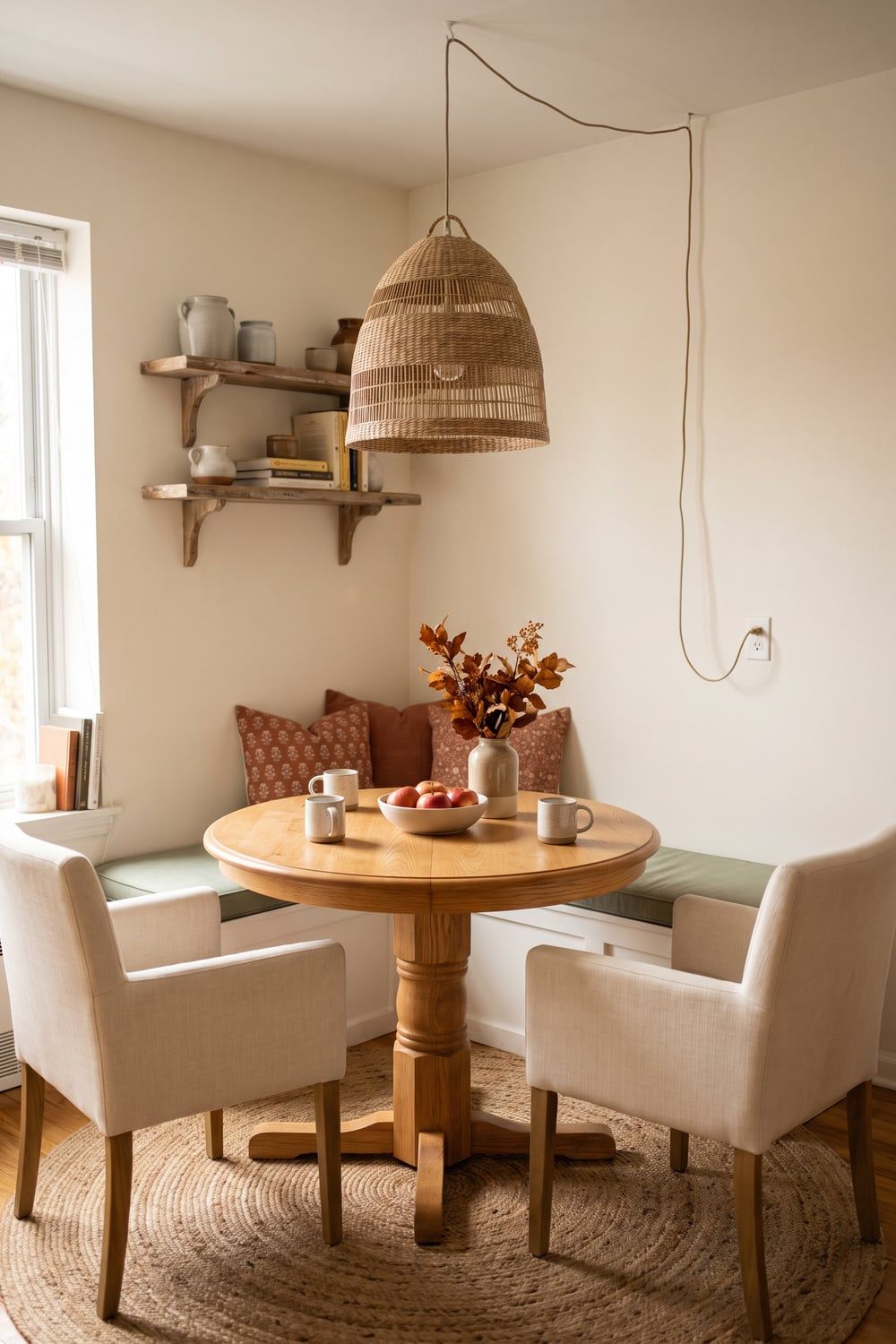
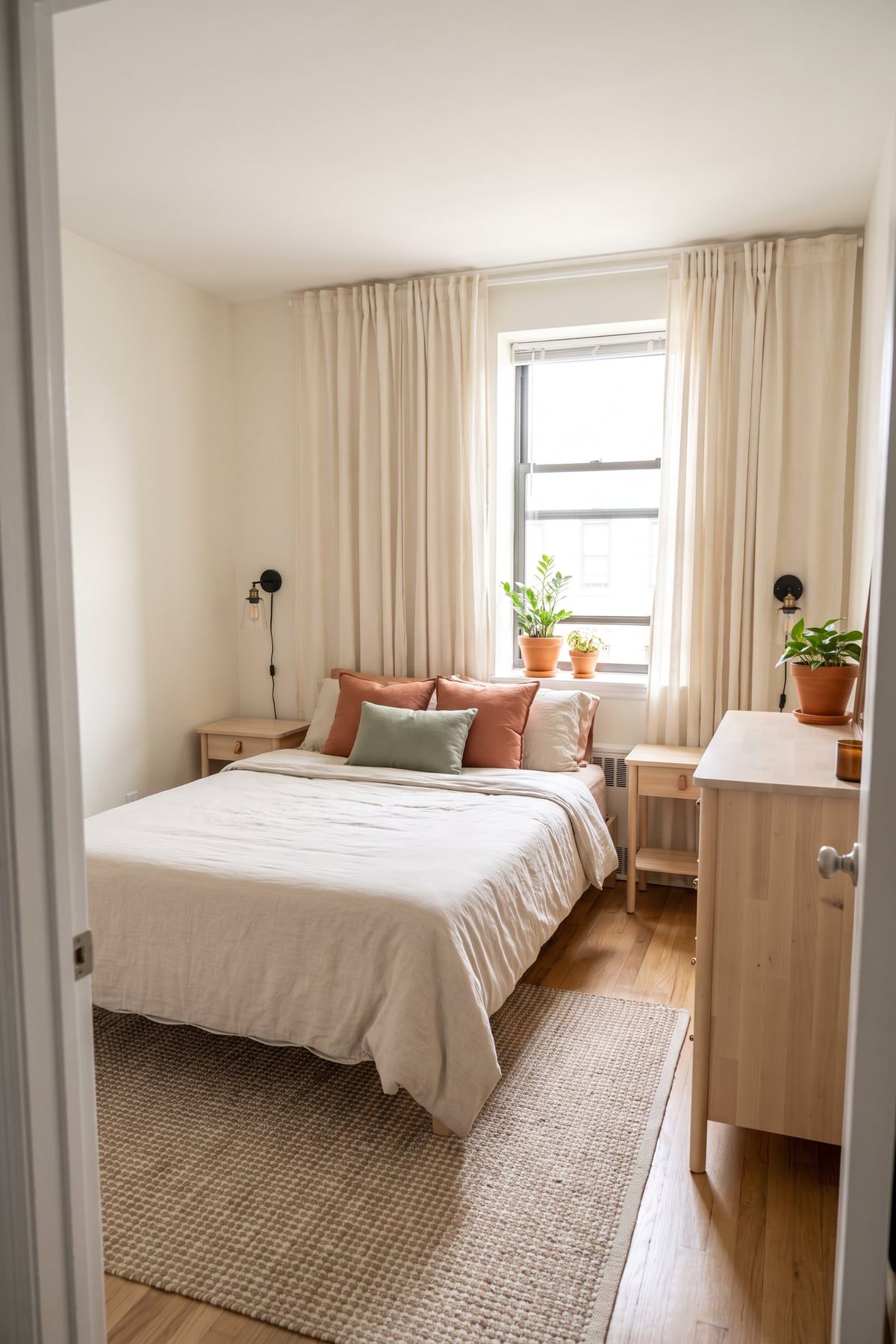
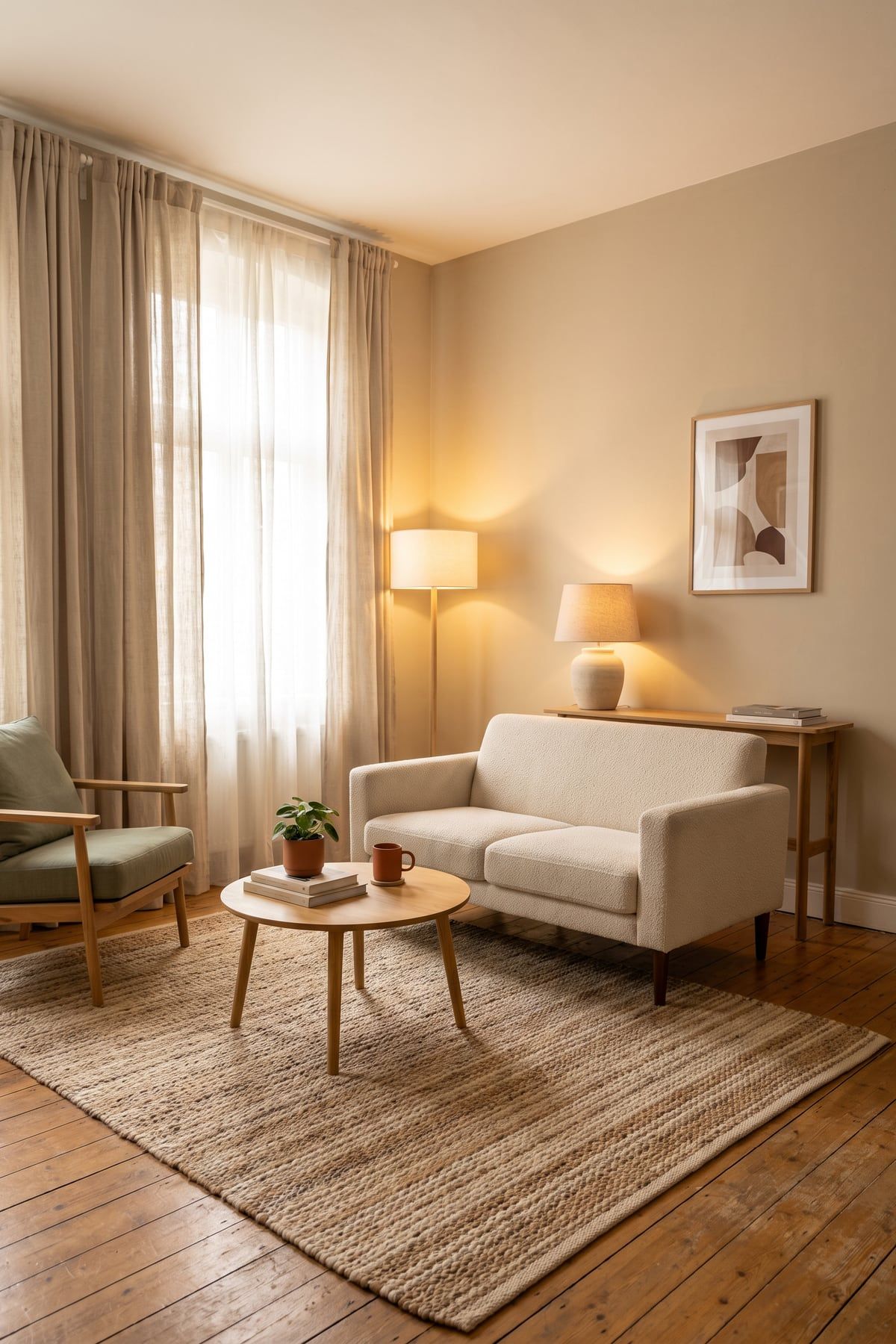
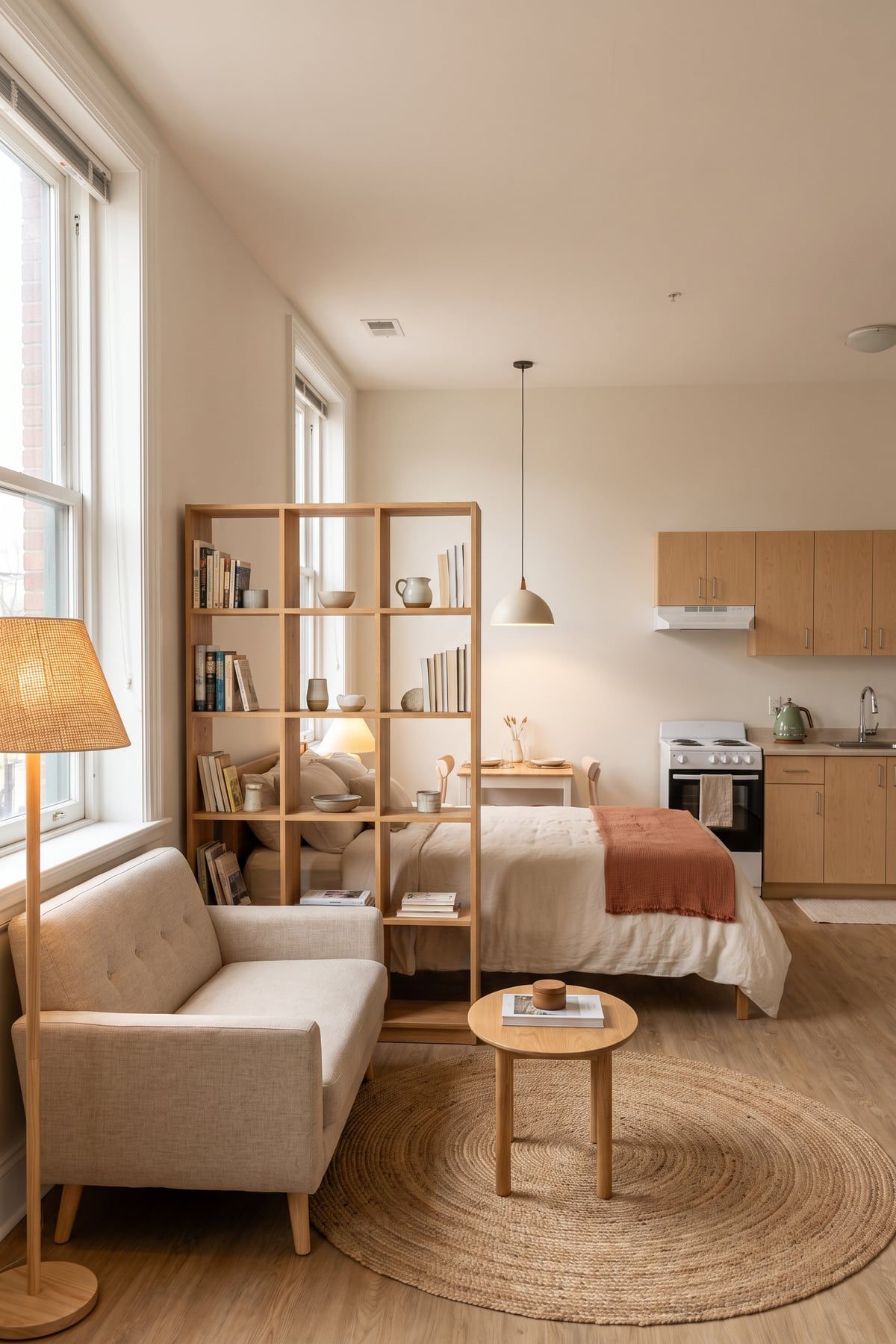
15 Japandi Small Apartment Ideas on a Budget
Images in this post are AI-generated illustrations. Why?
Heads up: this post contains affiliate links. If you buy through them, we may earn a small commission at no extra cost to you. How it works. As an Amazon Associate, we earn from qualifying purchases.
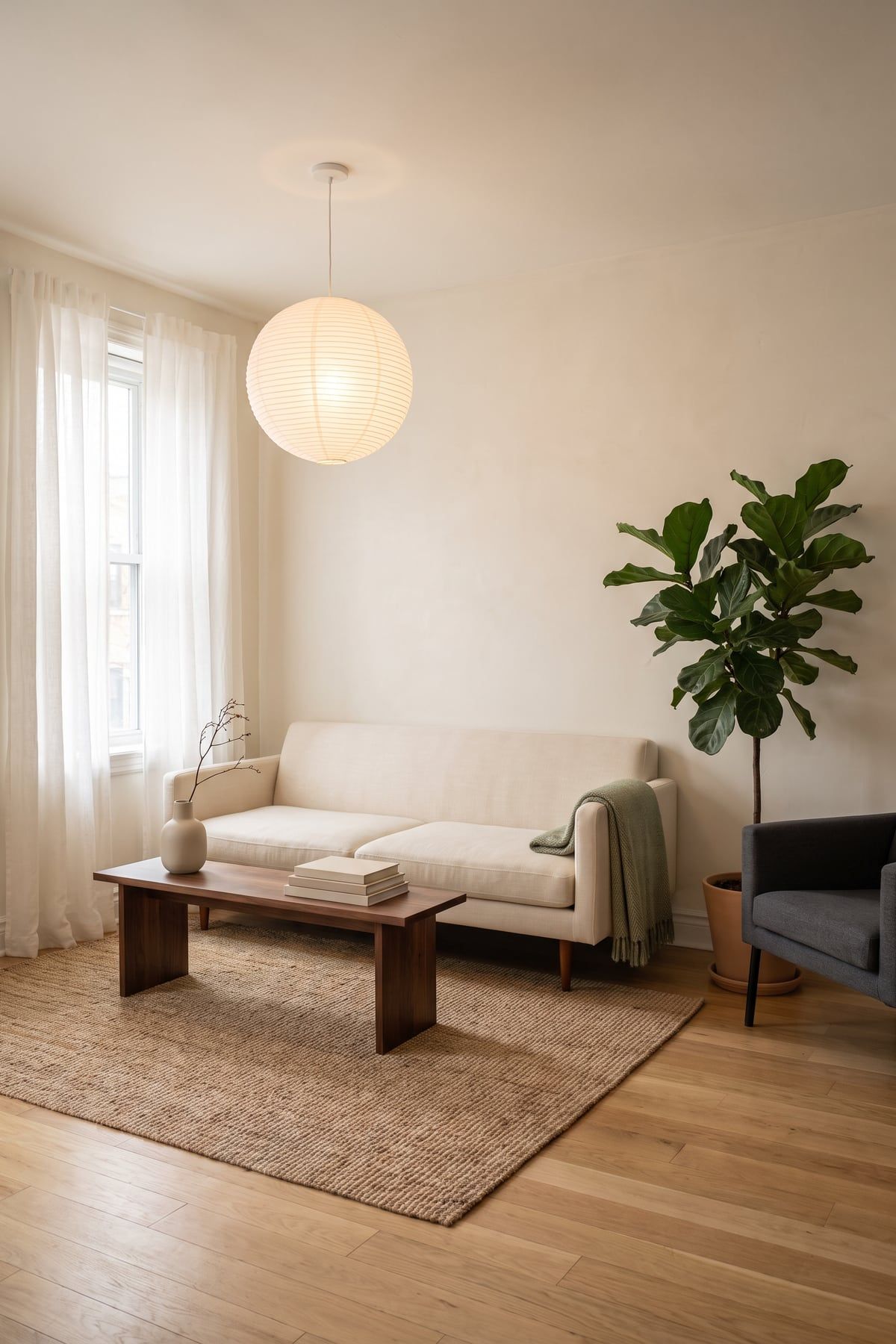
A Japandi small apartment uses warm wood, soft neutral colors, low furniture and fewer, better things, so even one room feels calm instead of crowded. The style mixes Japanese minimalism with Scandinavian coziness, and it suits small spaces because it’s built on having less. These 15 Japandi small apartment ideas start with the cheap swaps (light, textiles, clearing surfaces) and save the bigger buys for last, all renter-friendly.
In this post
- What Japandi means in a small apartment
- Colors and materialsideas 1–4
- Low, calm furnitureideas 5–8
- Soft lightideas 9–11
- A few good thingsideas 12–15
- Our top picks
- FAQ
What Japandi means in a small apartment
Japandi is less stuff, warmer materials and calmer colors, and none of it requires a renovation. Quick rules to keep in mind:
| Japandi does | Japandi avoids |
|---|---|
| Warm whites, oat, clay, charcoal accents | Bright colors and busy patterns |
| Wood, linen, cotton, jute, paper, ceramic | Shiny plastic and lots of chrome |
| Low furniture with legs | Bulky pieces that block the floor |
| Closed storage, a few objects on display | Crowded open shelves |
| Warm, soft light from several lamps | One bright overhead light |
Colors and materials
The fastest way to get the look is to calm the colors and add natural textures.
1. Pick a warm neutral palette
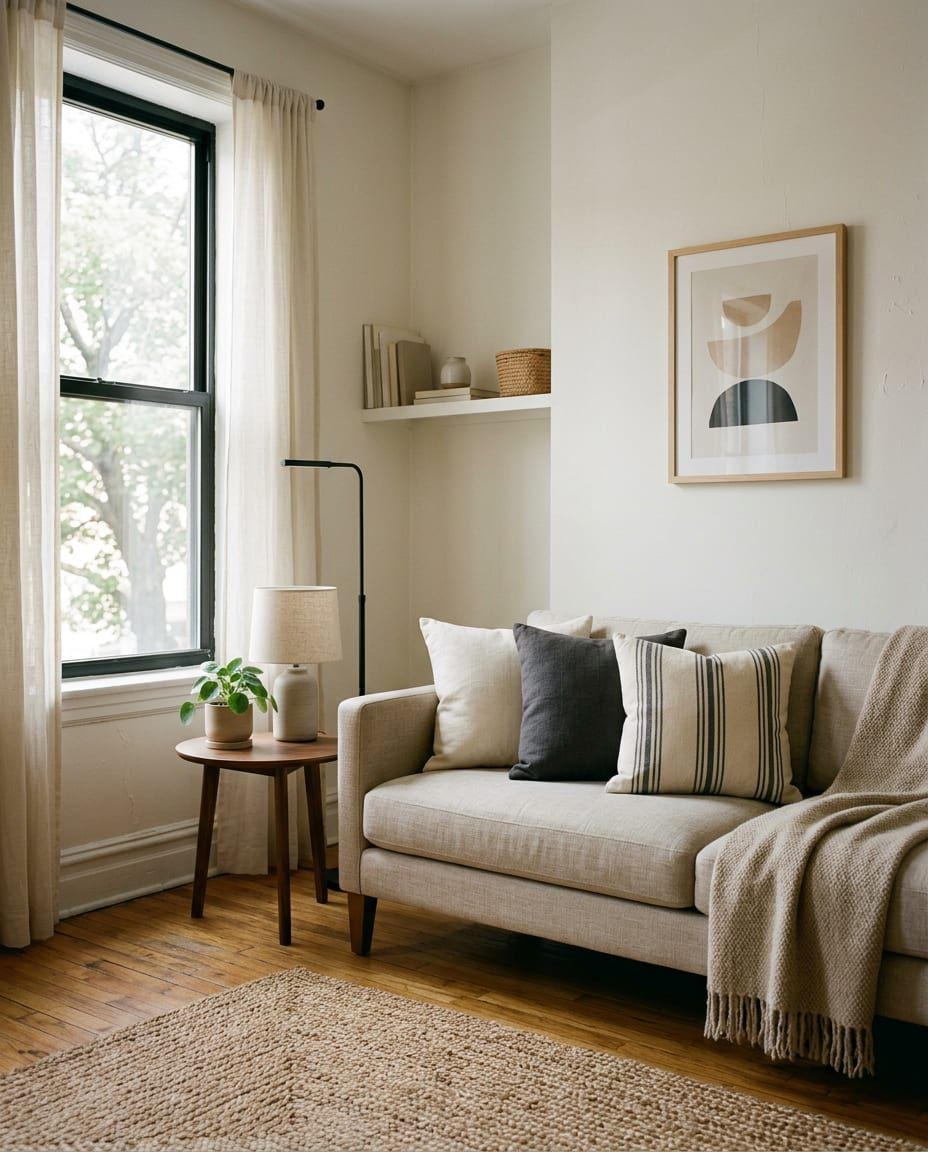
Choose three or four colors: a warm white or oat for the big surfaces, a wood tone, and one darker accent like charcoal or black. If you can’t paint, bring the palette in with bedding, pillow covers and a throw. Swap bright or patterned covers for plain ones in linen or cotton; pillow covers alone cost about $10 to $20 each and change the room more than you’d expect.
Why it works: A short palette makes a small room look calm and bigger, because nothing fights for attention.
2. Mix two wood tones, not five
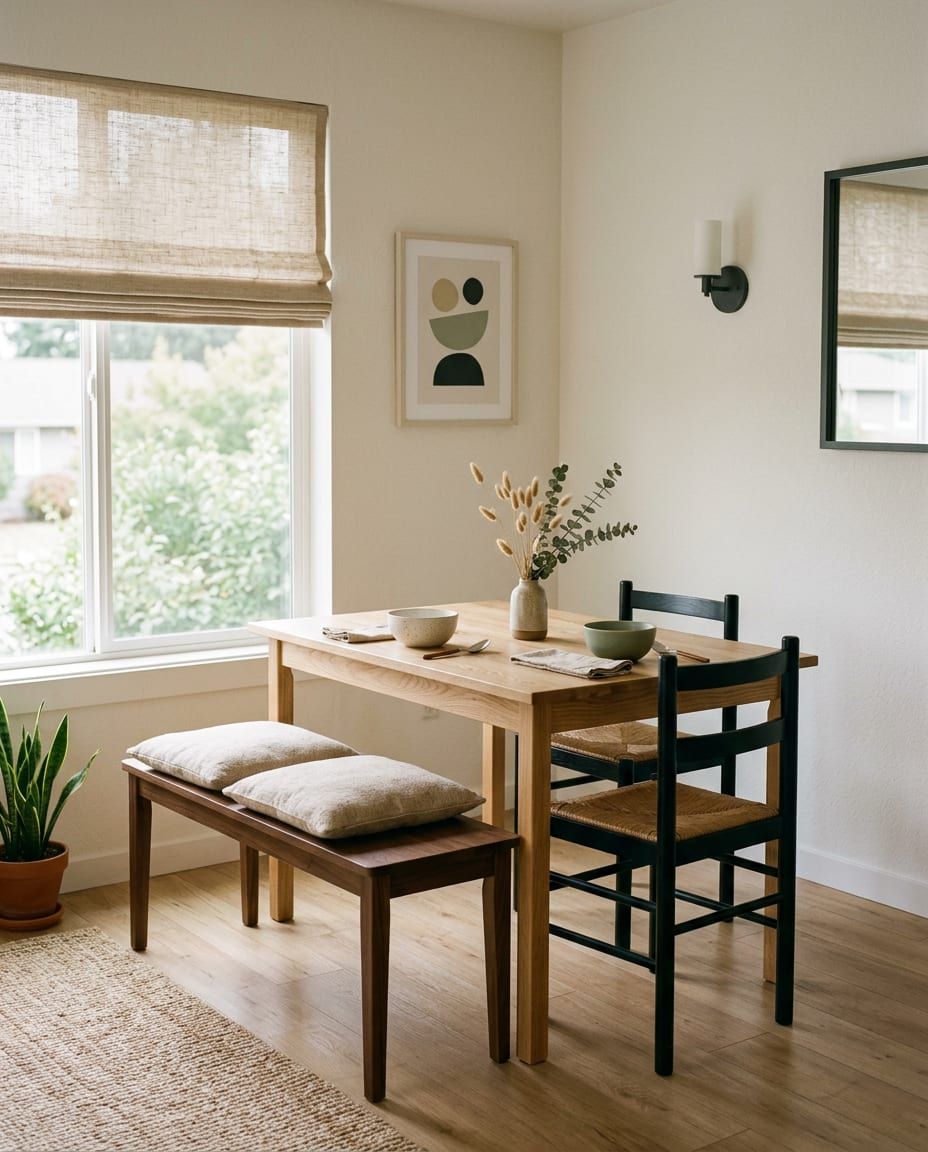
Japandi often pairs a light wood (oak, ash, pine) with a darker one (walnut or black-stained wood). Pick two and repeat them around the room: a light wood table and shelf, a darker frame and bench. If you have mismatched furniture, group the pieces by tone, or hide the odd one out with a linen cloth or by moving it to another room.
Why it works: Two tones look intentional; many look like leftovers.
3. Switch to linen and cotton
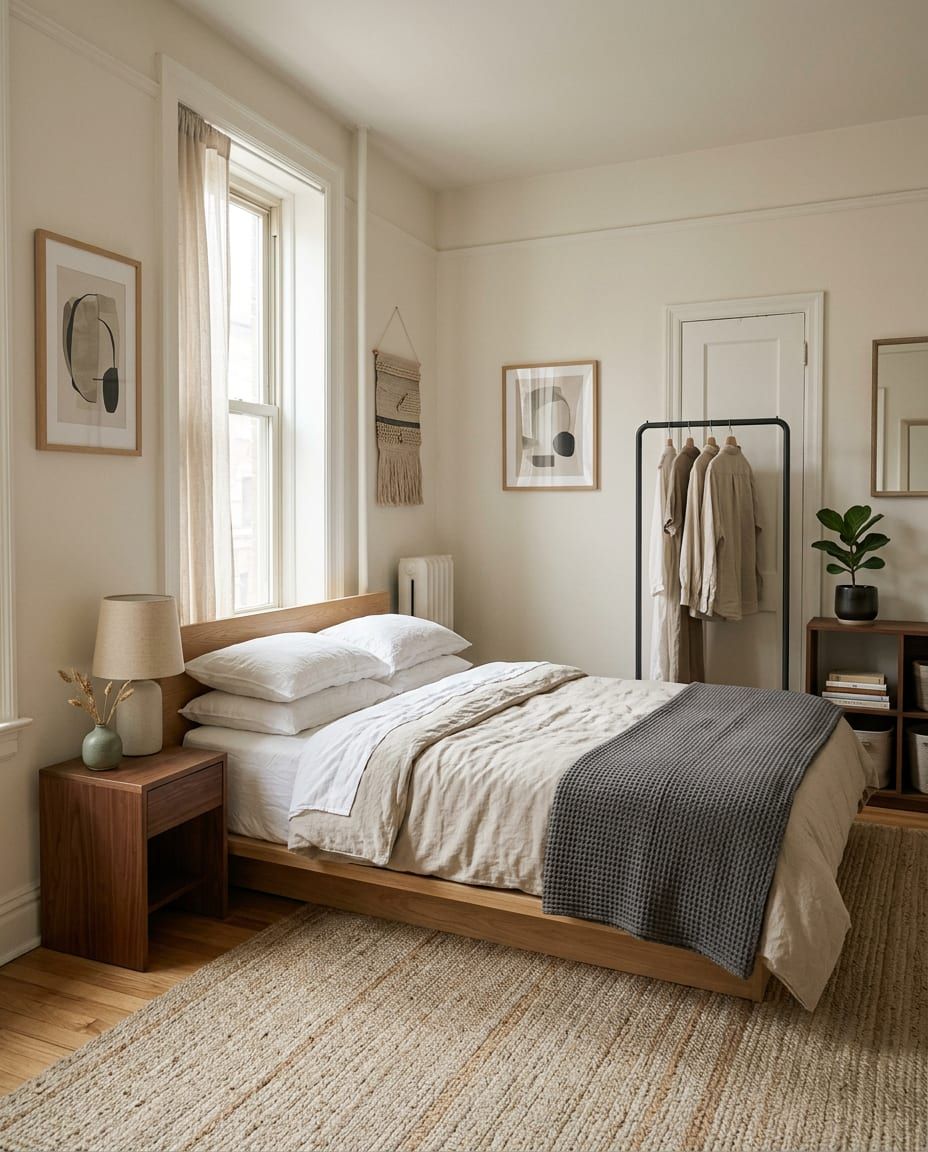
Natural fabrics are a big part of the style. Look for washed linen or linen-look bedding in oat, sand or soft gray, plus a cotton or waffle-weave throw. You don’t need a full linen set: a linen duvet cover with plain cotton sheets underneath gives most of the look for less. Keep patterns minimal, like a simple stripe or nothing at all.
Why it works: Washed linen looks relaxed on purpose, so the bed looks made even when it isn’t perfect.
4. Add texture instead of pattern
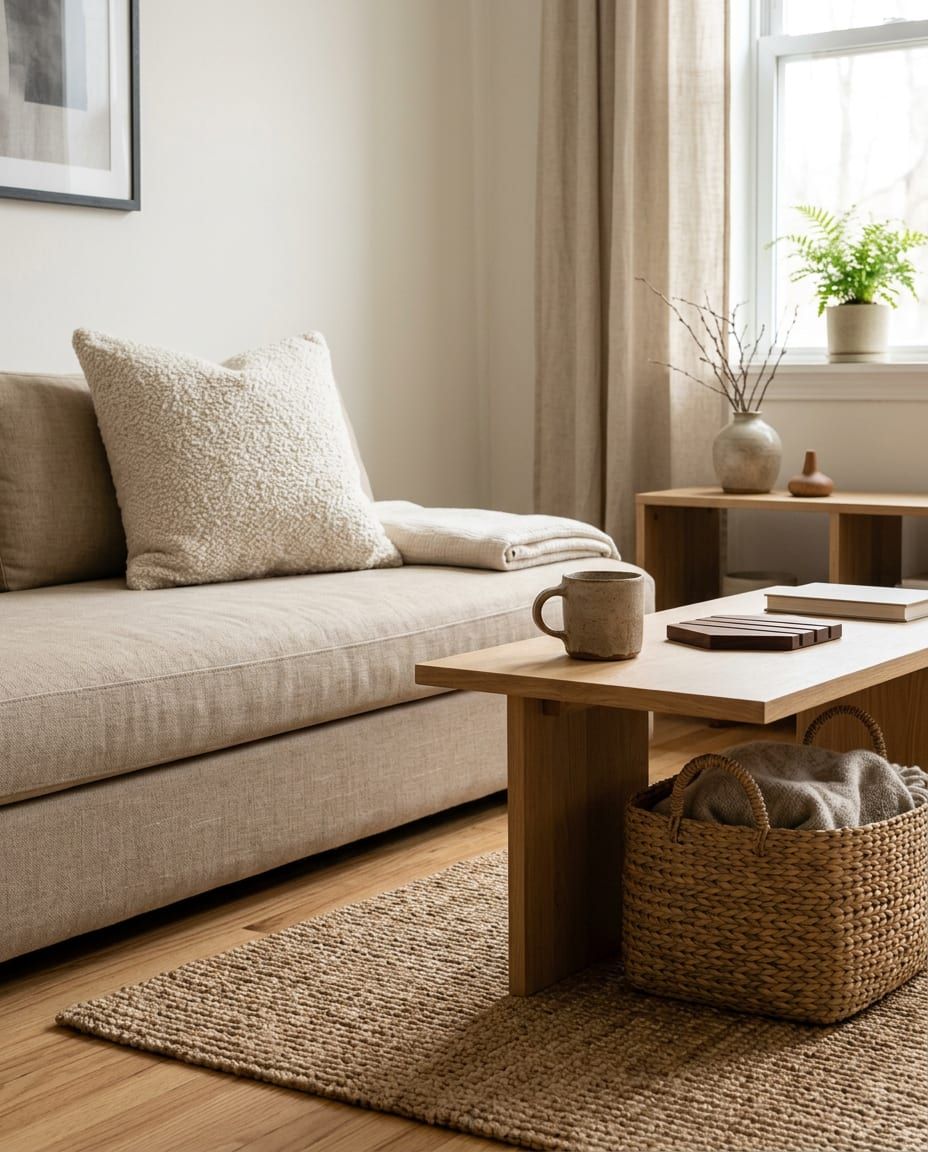
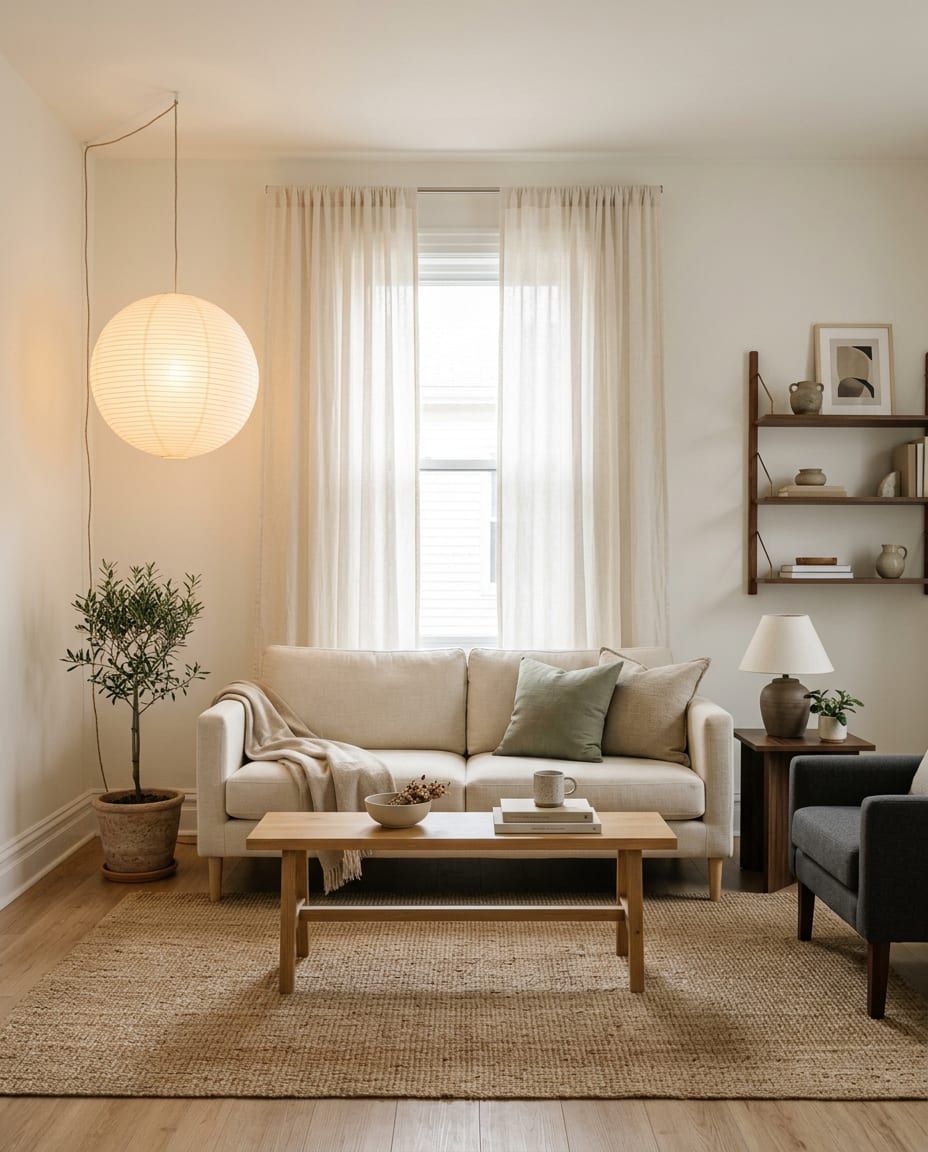
When everything is neutral, texture does the work that color usually does. A flat-woven jute rug, a nubby boucle or knit pillow, a rough ceramic cup and a woven basket are enough. In a small living room, a 5×8 rug usually fits under the front legs of the sofa and chairs; add a rug pad so it doesn’t slide on hard floors.
Why it works: Texture makes neutral colors feel warm instead of flat.

Low, calm furniture
Japandi furniture sits lower and lighter, which leaves more wall and floor visible.
5. Go lower
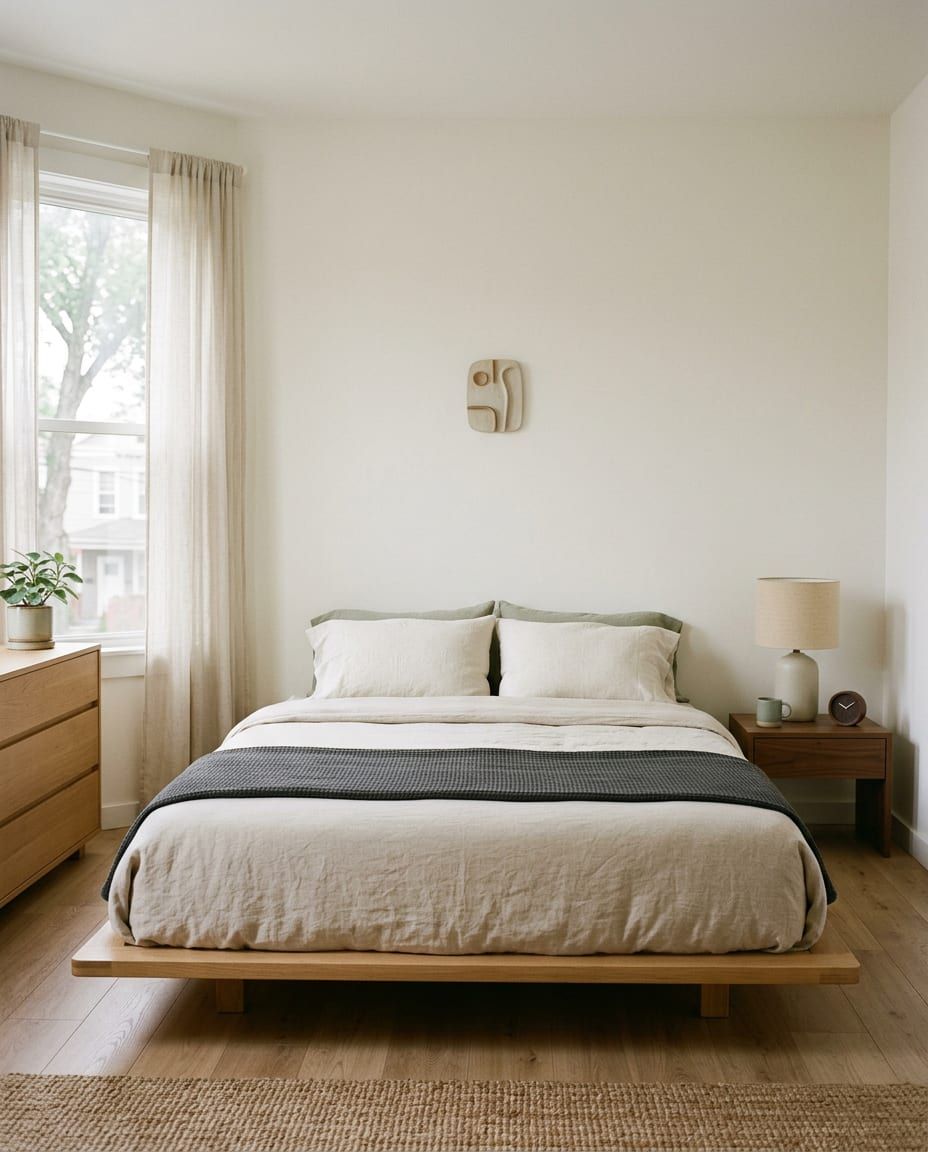
A low bed frame or platform, a low media console and a low coffee table give the room the grounded Japandi feel. You don’t need to buy a new bed: removing a bulky headboard or using a simple frame without one can be enough. Keep in mind that very low beds are harder to get out of, so a frame around 12 to 16 inches high is a comfortable middle ground.
Why it works: Low furniture leaves more empty wall above it, so the ceiling looks higher.
6. Choose pieces with legs
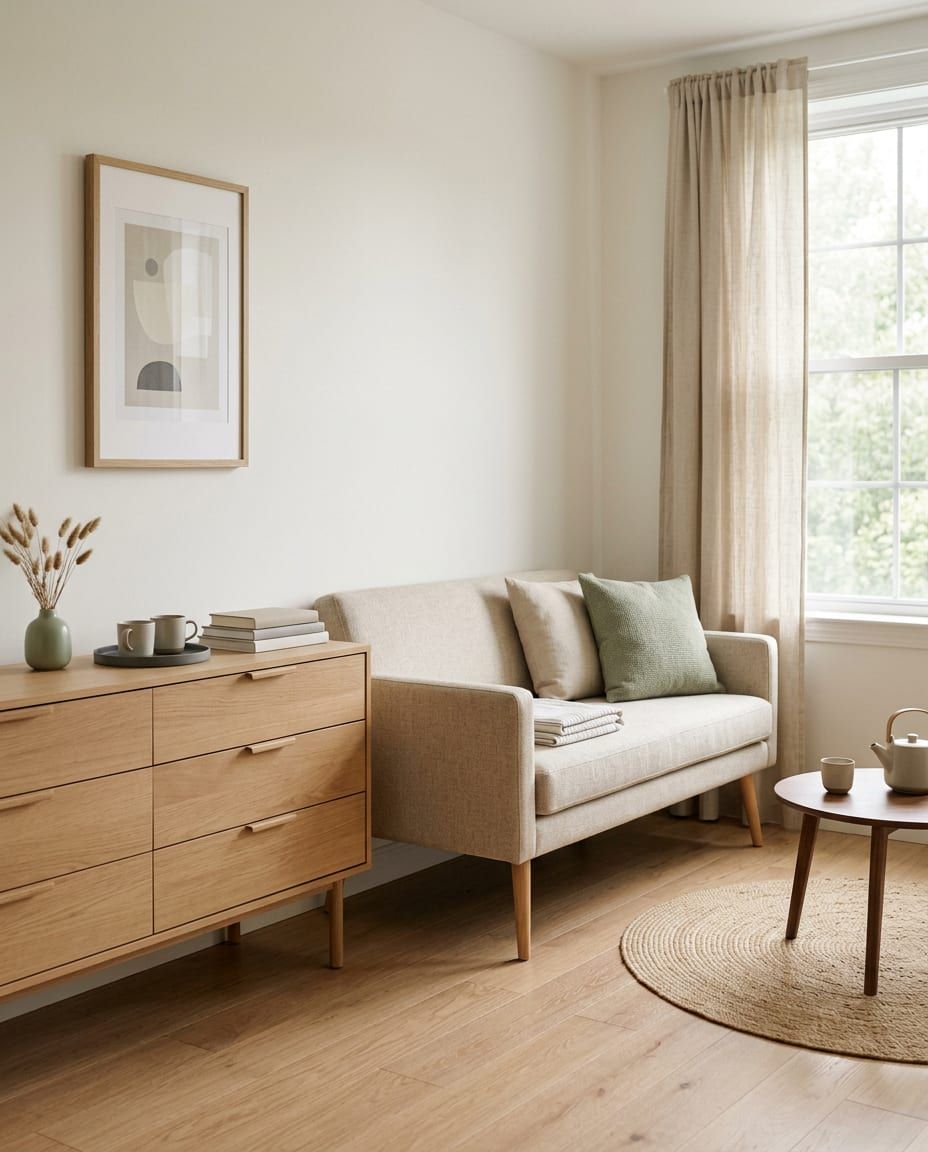
Sofas, dressers and side tables on slim legs let light pass under them, so the room reads as more open. When you replace something, pick the version with visible legs and simple lines. It’s also practical in an apartment: you can see and clean under it, and a flat storage bin can slide underneath.
Why it works: Seeing the floor under furniture makes a small room feel bigger.
7. Make one wood piece the star
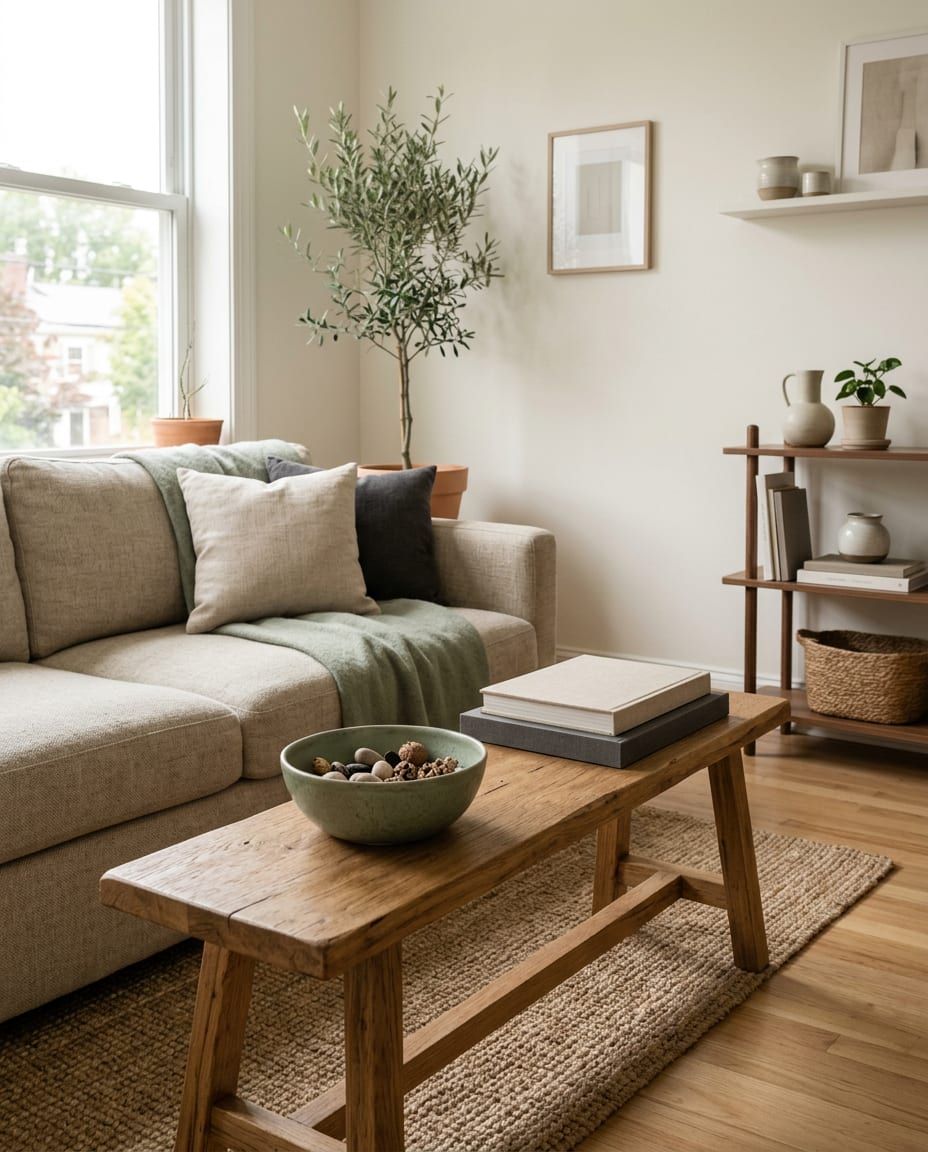
Instead of many small decor buys, put your budget into one solid-wood piece, like a low bench. It can be a coffee table, a plant stand by the window, extra seating or a spot to drop your bag by the door. Check secondhand shops and marketplace listings first; simple wood benches and stools are often cheap there, and a light sanding plus oil refreshes them.
Why it works: One good piece looks better and lasts longer than several cheap ones.
Low solid-wood bench
Works as a coffee table, plant stand or seat.
Check on Amazon(opens in a new tab)8. Hide most things behind doors
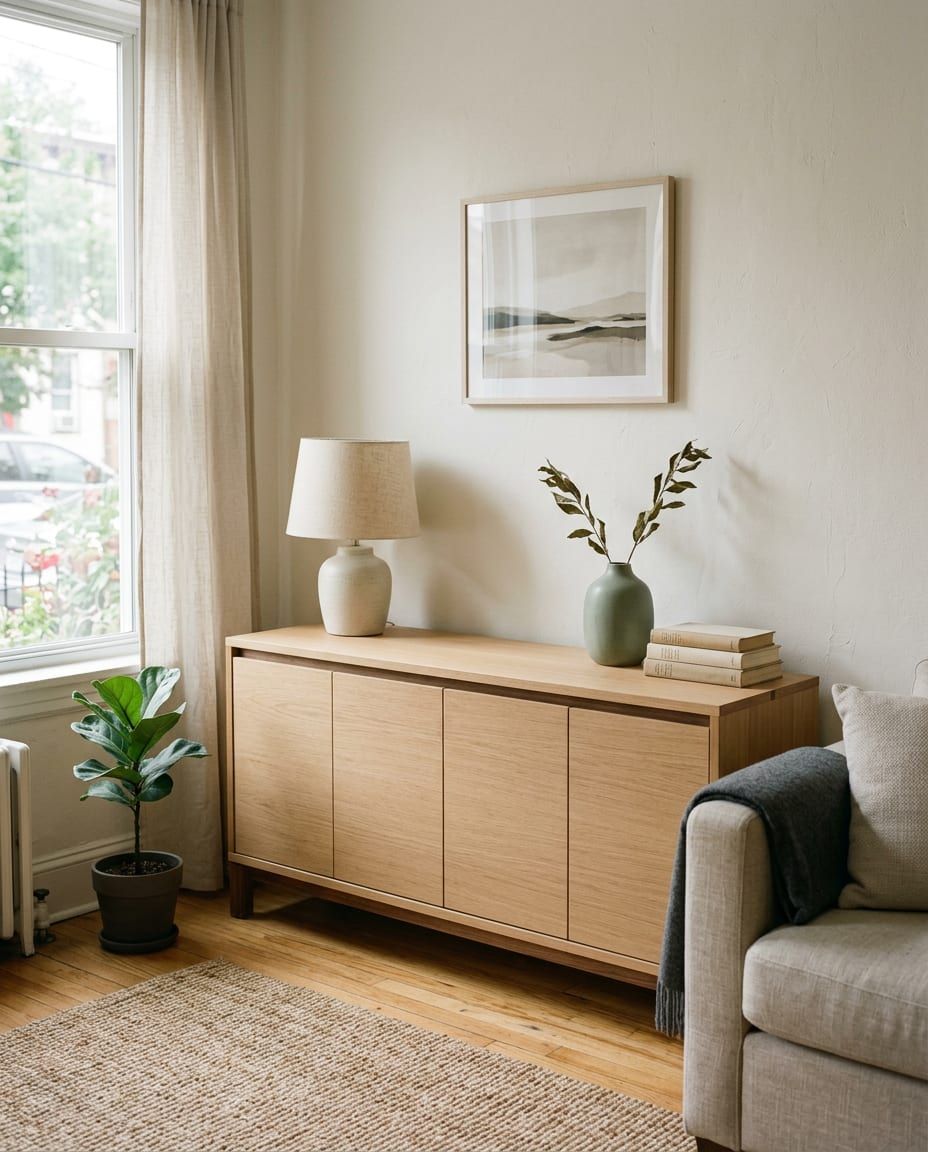
Open shelves full of stuff are the opposite of Japandi. Use cabinets, closed sideboards or lidded baskets for most of your things, and leave only a few objects out. A good rule of thumb: about two-thirds of storage closed and one-third open. If you already own open shelving, add matching baskets or boxes so the shelves read as calm blocks.
Why it works: Closed storage is how Japandi rooms look so clear without owning nothing.
Soft light
Light changes a room more than any furniture, and it’s the easiest thing for renters to fix.
9. Hang or stand a paper lantern
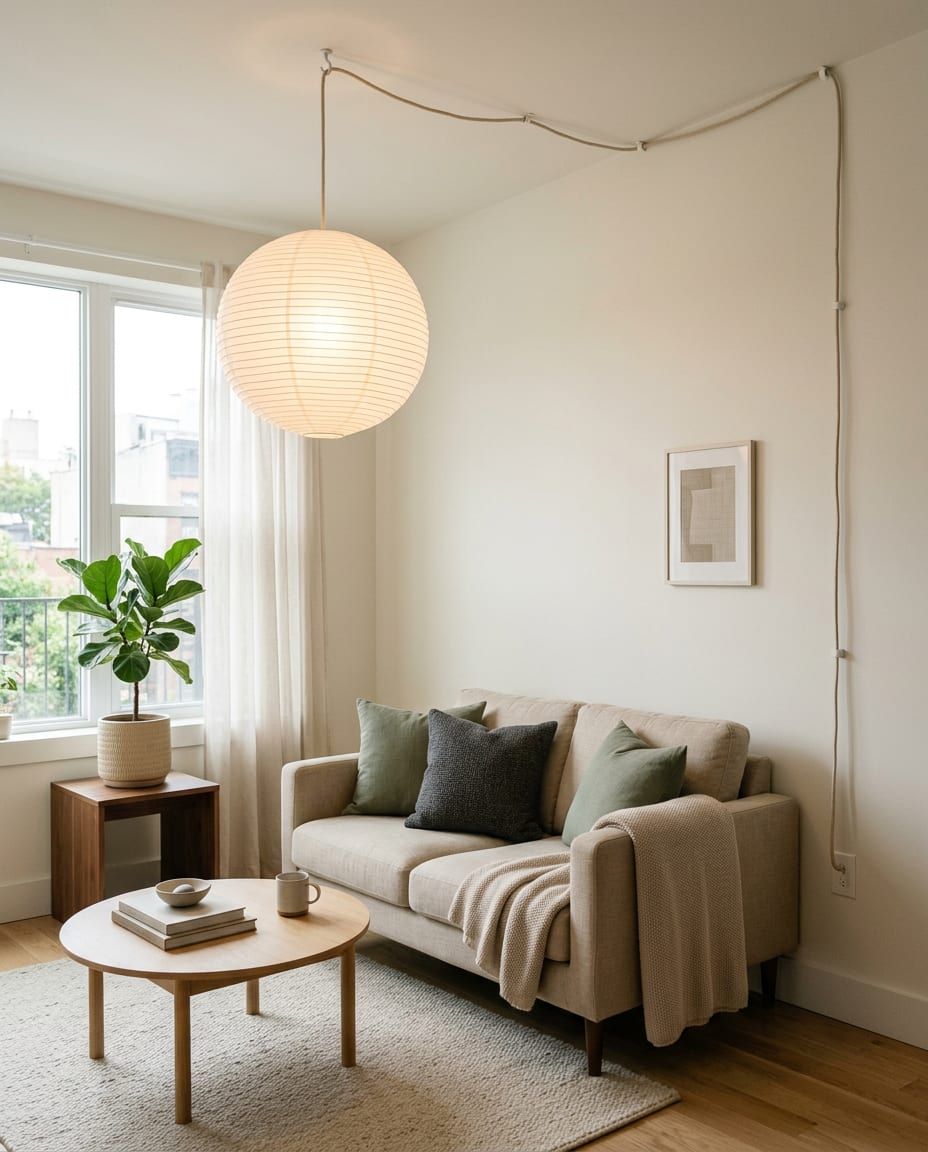
A rice-paper lantern is the cheapest way to get the look. Use it as a plug-in pendant hung from a ceiling hook, or choose a paper floor lamp if you can’t touch the ceiling fixture. Use an LED bulb, which stays cool, and check the maximum wattage printed on the shade. A lantern around 18 to 24 inches wide suits most small living rooms.
Why it works: Paper spreads light softly and evenly, which is the warm glow Japandi is known for.

Paper lantern pendant or floor lamp
Use an LED bulb and check the shade's max wattage.
Check on Amazon(opens in a new tab)10. Use warm bulbs and several lamps
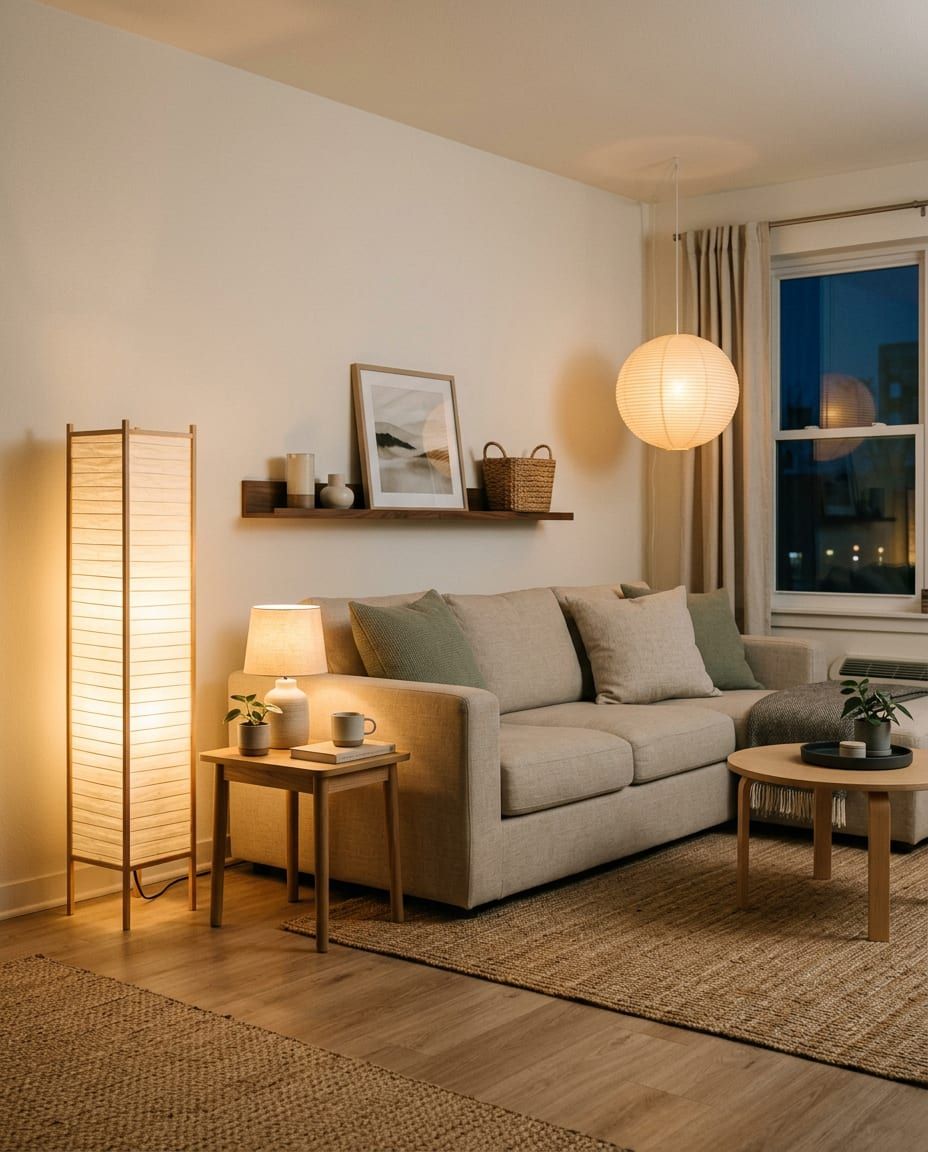
Swap cool bulbs for warm white ones, around 2700K (the number is on the box). Then use two or three lamps at different heights: a floor lamp, a small table lamp and the lantern. In the evening, leave the ceiling light off. Plug-in smart bulbs or simple timers turn lamps on before you get home, which is cozy in winter.
Why it works: Three soft light sources make a room feel calm; one bright ceiling light makes it feel like an office.
11. Soften windows with sheer linen
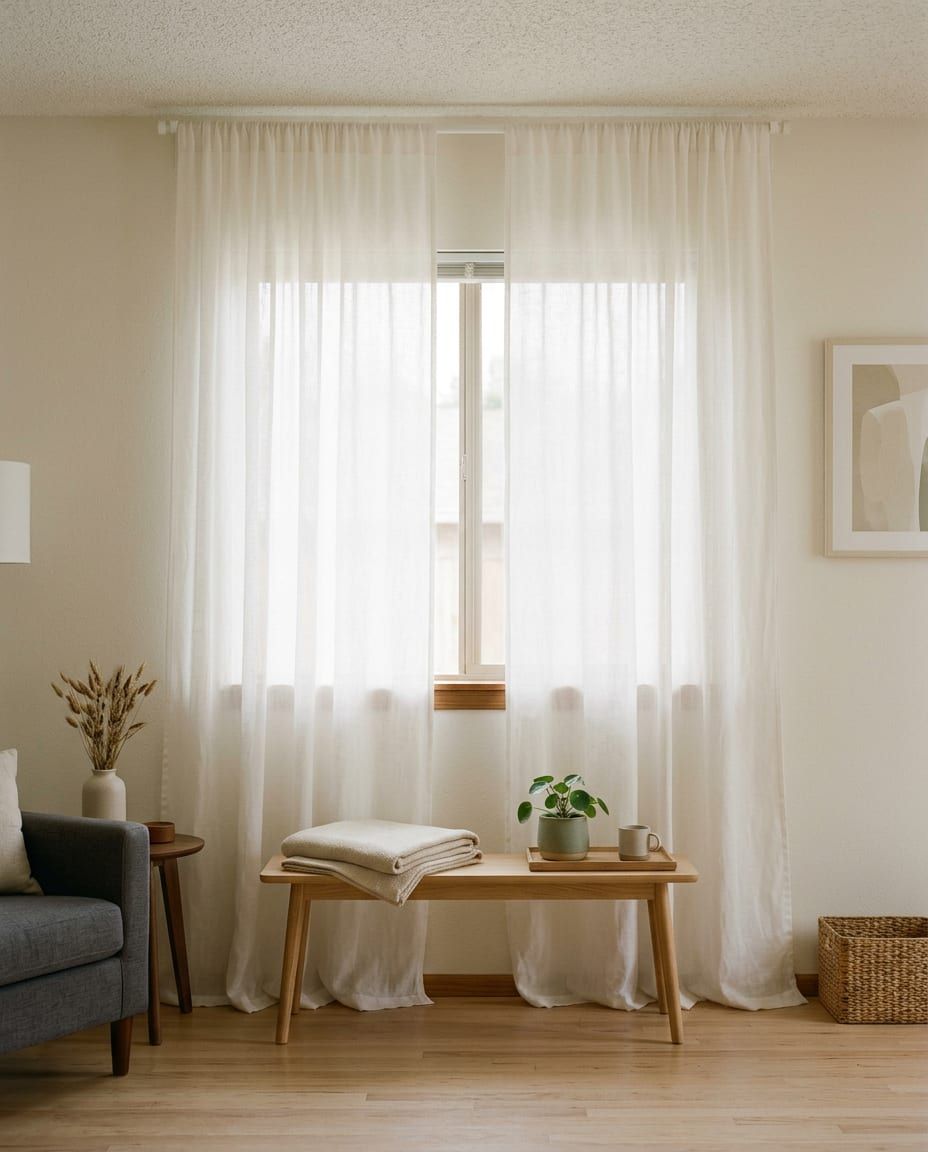
Hang sheer linen-look curtains in white or oat, as close to the ceiling and as wide as your rod allows, so the window looks bigger. You can keep the landlord’s blinds behind them. If you can’t drill, use a tension rod inside the window frame or curtains made for existing rods. Avoid heavy dark drapes, which shrink a small room.
Why it works: Sheers keep daylight in while hiding the view and the blinds that came with the apartment.

Sheer linen-look curtains
Hang them high and wide on a tension or existing rod.
Check on Amazon(opens in a new tab)A few good things
Japandi rooms aren’t empty, they’re edited. A few objects with space around them look better than many.
12. Display one branch in a vase
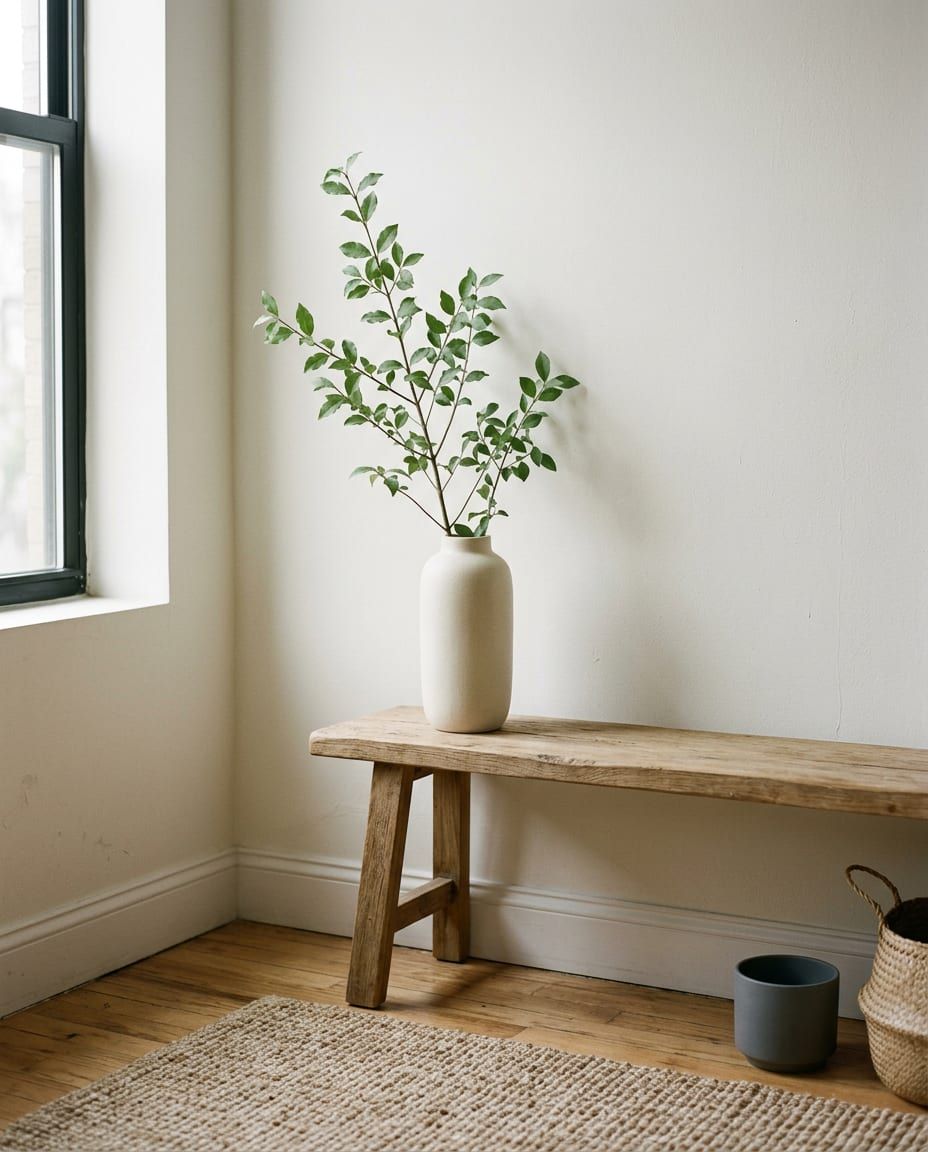
Inspired by Japanese flower arranging, a single branch in a matte ceramic vase is classic Japandi. Change it with the seasons: eucalyptus or pine in winter, cherry or forsythia branches in spring, dried grasses in fall. Dried stems last for months, so it costs very little over a year. Put it where it has space around it, like a bench or a sideboard corner.
Why it works: One tall natural shape adds life and height without clutter.

13. Use handmade-looking ceramics
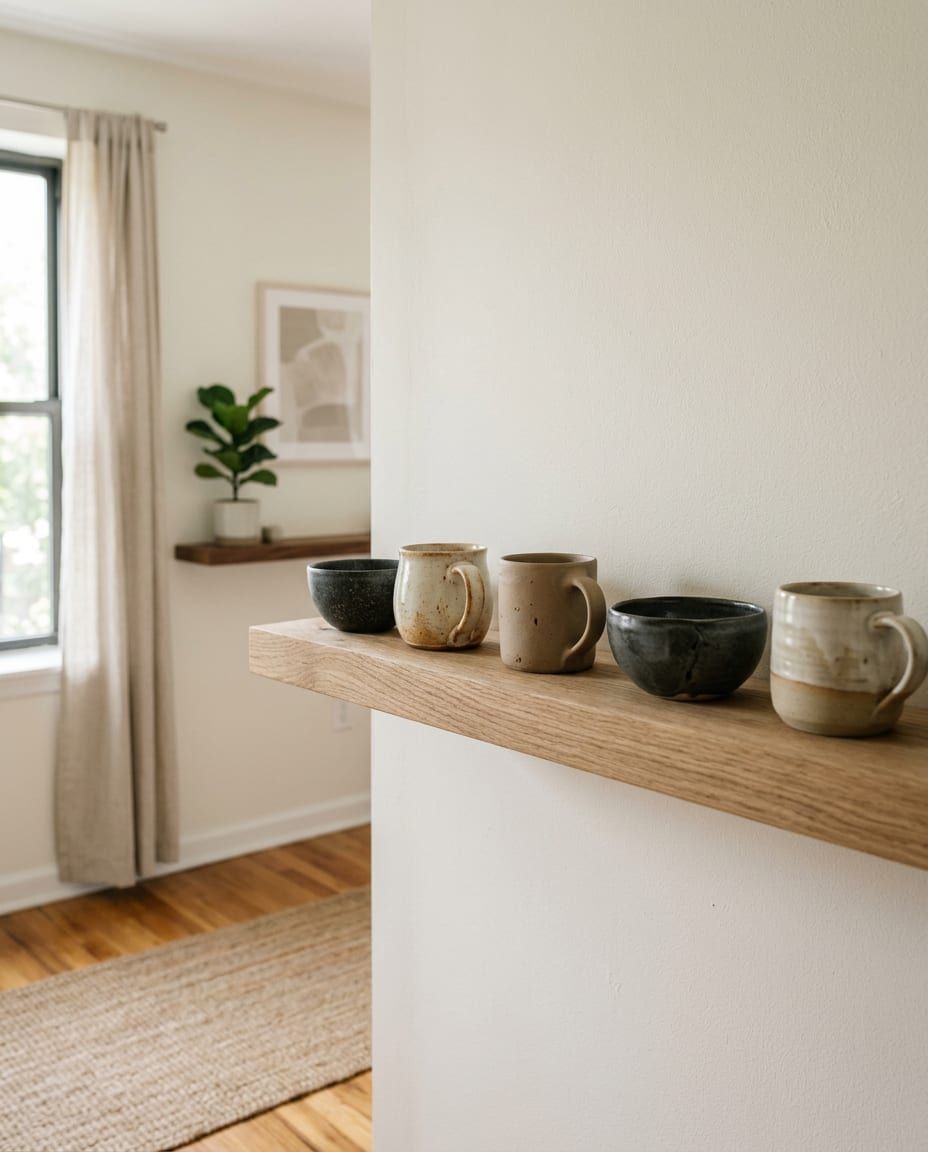
Wabi-sabi, the Japanese idea of finding beauty in simple and imperfect things, shows up in Japandi through ceramics. A few mugs, bowls or a small tray with an uneven glaze in clay, cream or charcoal can live out on a shelf or counter. Thrift stores and local makers’ markets often have them for less than big-box decor. Keep it to three or five pieces per surface.
Why it works: Slightly imperfect pieces feel warm and personal, in the spirit of wabi-sabi.
14. Choose one or two sculptural plants
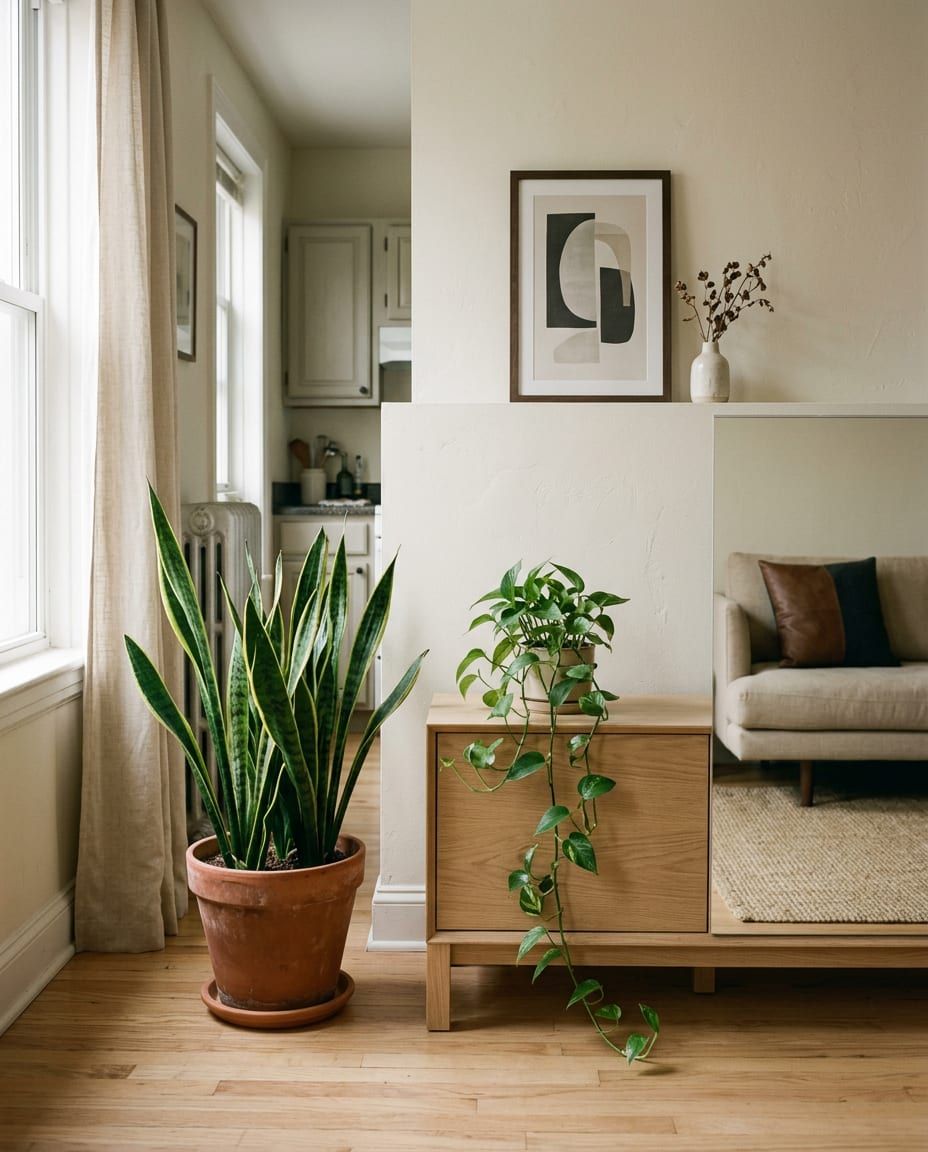
Pick plants with a clear shape, like a snake plant, a small olive tree or a leggy pothos trained up a stake, in a plain ceramic or terracotta pot. One floor plant and one small tabletop plant are usually enough for a studio. If you have pets, check the ASPCA list of toxic and non-toxic plants before you buy, because some common houseplants aren’t safe for cats and dogs.
Why it works: One strong plant shape reads as calm; a crowd of small pots reads as clutter.
15. Leave empty space on purpose
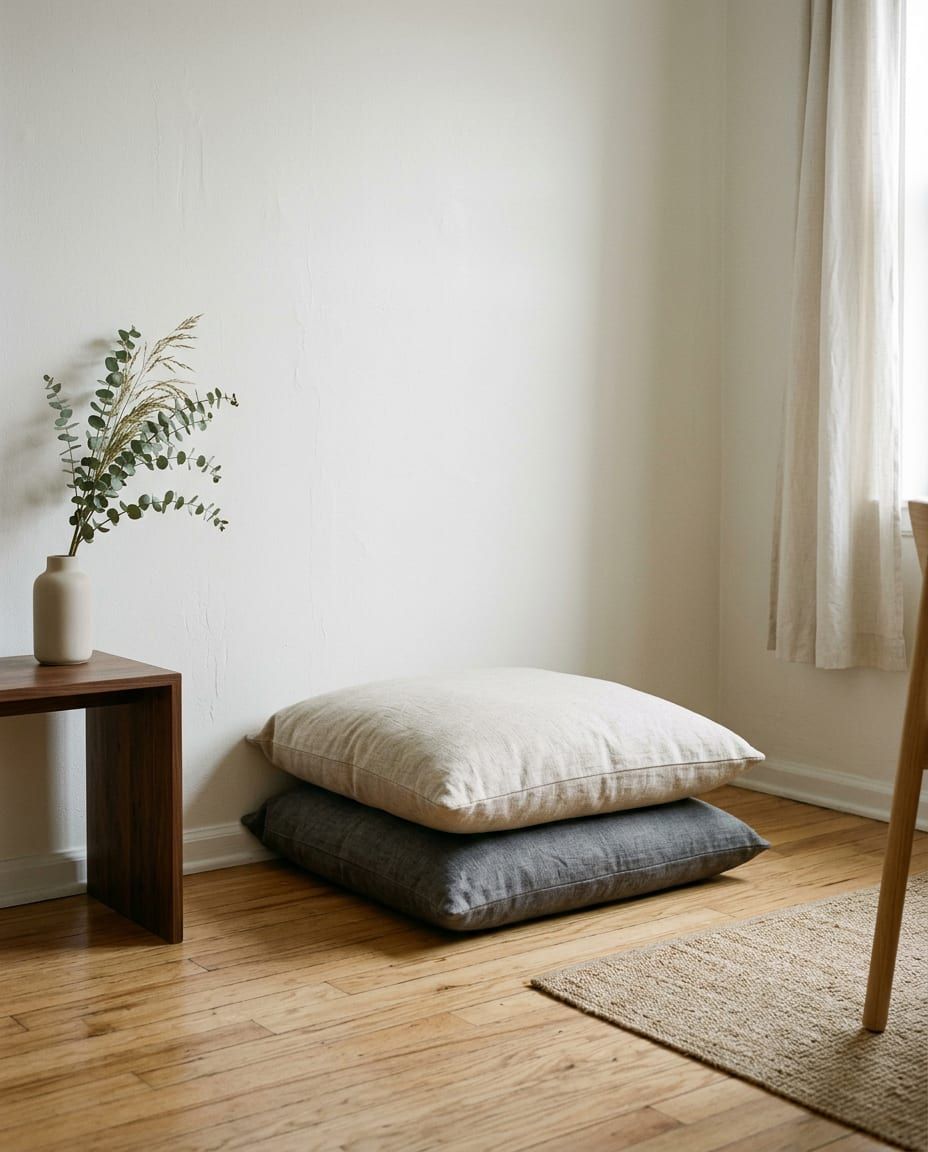
Leave at least one surface bare and one wall with nothing on it. Before you add something new, take something out. Floor cushions are a good Japandi trick for small spaces: extra seating for guests that stacks in a corner instead of another chair taking up floor space all the time.
Why it works: Empty space is free, and it’s what makes the room feel calm.

Our top picks
The short list, if you just want to get it done this weekend. We don’t list prices because they change daily — check the current price on the retailer’s site.
| Product | Best for | Link |
|---|---|---|
| Paper lantern pendant or floor lampUse an LED bulb and check the shade's max wattage. | Soft, even light | Check on Amazon(opens in a new tab) |
| Sheer linen-look curtainsHang them high and wide on a tension or existing rod. | Filtered daylight | Check on Amazon(opens in a new tab) |
| Flat-woven jute rugAdd a rug pad so it doesn't slide. | Texture underfoot | Check on Amazon(opens in a new tab) |
| Low solid-wood benchWorks as a coffee table, plant stand or seat. | One statement wood piece | Check on Amazon(opens in a new tab) |
| Matte ceramic vaseOne tall vase beats five small ones. | A single branch | Check on Amazon(opens in a new tab) |
| Linen floor cushionExtra seating that stacks away. | Low seating for guests | Check on Amazon(opens in a new tab) |
Shop the look
Frequently asked questions
What is Japandi style?
Japandi mixes Japanese minimalism with Scandinavian coziness: warm wood, soft neutral colors, natural materials, low furniture and very little clutter. The goal is a room that feels calm and lived-in, not empty.
How do I make a small apartment Japandi on a budget?
Start by clearing surfaces, then change the cheap, big-impact things: warm light bulbs, a paper lantern, linen-look curtains, a jute rug and a few natural textures. Add one good wood piece later instead of many cheap ones.
What colors are used in Japandi?
Warm whites, oat, beige, greige and soft clay tones, with darker accents like charcoal, black or walnut. Muted greens from plants fit too. Avoid bright, saturated colors and busy patterns.
Is Japandi the same as minimalism?
Not quite. Japandi is minimal, but warmer: it uses wood, texture, plants and soft textiles so the room feels cozy. Plain minimalism can feel colder and more stark.
Can renters decorate in Japandi style?
Yes. Most of it is movable: lamps, curtains, rugs, furniture with legs, plants and ceramics. You can hide white walls with warm light and textiles instead of paint.
Start with the light
Change the bulbs, add a paper lantern and clear one surface this weekend; the rest can come slowly. For layouts that keep the floor open, see our studio apartment layout ideas and small bedroom layout ideas, for warm textures our cozy winter living room ideas, or browse all style ideas.
Free printable
Get the free Small Space Declutter Checklist
A printable, room-by-room checklist — plus one cozy small-space idea a week. No spam, unsubscribe anytime.
By subscribing you agree to our Privacy Policy.